
Watering
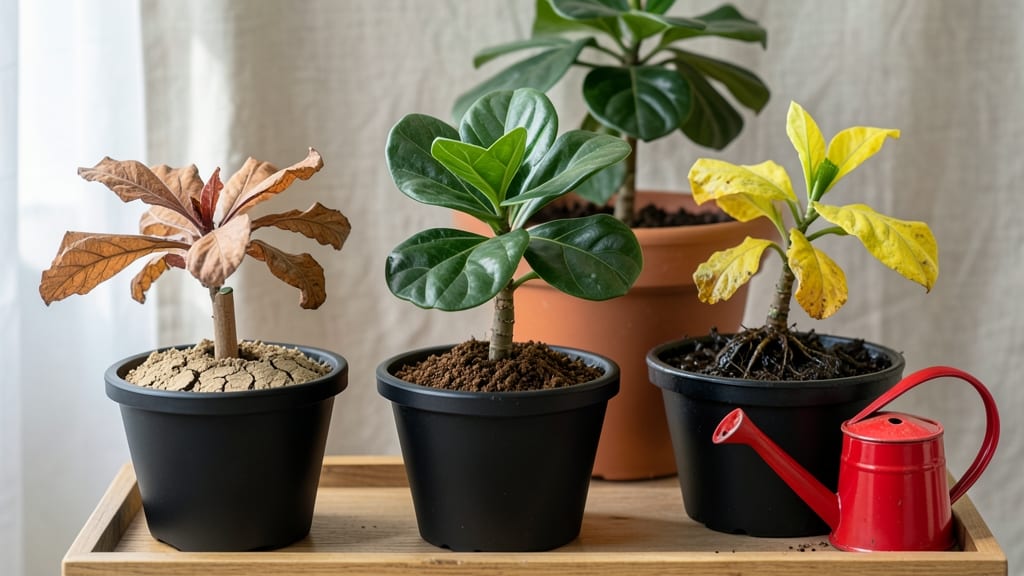
Your fiddle leaf fig’s yellowing leaves aren’t just a phase—they’re screaming for help over the underwatered vs overwatered fiddle leaf fig confusion. 🌿 The difference between the two is subtle but critical, and I've seen both wreck beautiful plants in weeks.
One leaves soil bone-dry, the other turns roots to mush, and both cause that dreaded yellowing you're seeing.
Underwatered plants show crispy brown edges and pull away from the pot, while overwatered ones feel soggy at the base with mushy stems. Stick your finger in the soil—if it's dry past 1 inch, it's thirsty.
If it's damp deeper than 2 inches, you're drowning the roots. I learned this the hard way after losing three figs to root rot last winter.
Fix it fast with a simple routine: water only when the top 1-2 inches of soil feel dry, and always use a pot with drainage holes. Overwatered? Let the soil dry completely between waterings.
Underwatered? Give it a deep soak and check the moisture every 3-4 days until it stabilizes. You'll see new growth within 2-3 weeks if you catch it early.
Prevention is easier than cleanup—stick to this schedule, and your fiddle leaf fig will stay lush and green all year. The key is consistency: check the soil before you water, and you'll avoid both extremes. Trust me, your plant will thank you.
The first product explained
Meet your new watering buddy: the Moisture Meter for Plants by Xylella! 🌱💧 This sleek, tech-savvy tool is designed to take the guesswork out of keeping your fiddle leaf fig (and other plants) perfectly hydrated—no more yellowing leaves or soggy roots! Whether you're a plant parent with a green thumb or a beginner just starting your indoor jungle, this gadget is your secret weapon for spot-on watering.
🔍 Key Specs & Features
Don’t let the compact design fool you—this moisture meter packs a punch with:
- Precision Probes: Two stainless-steel probes (4.7" long) that penetrate soil effortlessly to measure moisture levels accurately.
- Digital Display: A bright, easy-to-read LCD screen that shows moisture levels as a percentage (0-100%) or in a color-coded scale (green = happy, yellow = thirsty, red = drowning).
- Battery-Powered: Runs on 2 x AAA batteries (included!), so you’re always ready to check your plant’s hydration status.
- Durable & Portable: Made with a sturdy, water-resistant exterior—perfect for both indoor and outdoor plants.
- Multi-Use: Works for fiddle leaf figs, succulents, herbs, and even your veggie garden!
🎯 Who’s It For?
This moisture meter is a game-changer for:
- Fiddle Leaf Fig Lovers: Say goodbye to yellowing leaves caused by overwatering or underwatering! 🌿
- Busy Plant Parents: No more second-guessing—just check the meter and water with confidence.
- Tech-Savvy Gardeners: Love gadgets? This is your new favorite tool for data-driven plant care.
- Beginners: Perfect for those just dipping their toes into houseplant ownership.
💰 Price Point & Value
Priced at $19.99, the Xylella Moisture Meter offers insane value for what it brings to the table. For less than the cost of a fancy coffee, you’ll get a tool that:
- Saves your plants from overwatering or dehydration.
- Reduces waste by helping you water only when needed.
- Lasts for years with minimal maintenance.
Pro Tip: 💡 Pair it with a self-watering pot for the ultimate fiddle leaf fig care combo!
The second product explained
Next up, let’s dive into Product B: The Self-Watering Smart Pot for Fiddle Leaf Figs—a game-changer for plant parents who want to set it and forget it while keeping their fiddle leaf fig thriving! 🌿✨ This high-tech solution is perfect for those who struggle with remembering watering schedules or want to avoid the guesswork of manual watering.
📏 Key Specs & Features
Designed with precision and convenience in mind, this smart pot comes packed with features tailored for fiddle leaf figs:
- Self-watering system: Uses a built-in reservoir and wicking mechanism to deliver moisture directly to the roots, ensuring consistent hydration without soggy soil.
- Smart moisture sensor: Monitors soil moisture levels in real-time and adjusts watering automatically—no more underwatering or overwatering!
- Drainage control: Includes an adjustable overflow valve to prevent root rot while maintaining optimal moisture.
- Aeration design: Features a breathable fabric liner to promote healthy root growth and prevent compaction.
- Compact & stylish: Sleek ceramic or fabric exterior fits seamlessly in modern or minimalist decor.
🎯 Who’s It For?
This product is ideal for:
- 🌱 Busy plant lovers: Perfect for those with hectic schedules who still want a lush fiddle leaf fig.
- 📱 Tech-savvy gardeners: Users who enjoy smart home integration (compatible with Alexa/Google Assistant for voice-controlled watering reminders).
- 🚫 First-time fiddle leaf fig owners: Eliminates the trial-and-error phase of watering, making it beginner-friendly.
- 🌿 Small-space dwellers: Compact yet functional, great for apartments, offices, or sunrooms.
💰 Price Point & Value
The Self-Watering Smart Pot retails for $89.99–$129.99, depending on the material (ceramic or fabric). While it’s an investment upfront, the long-term benefits—like fewer brown leaves and healthier growth—make it a cost-effective solution compared to replacing multiple underwatered or overwatered plants.
Plus, the durability and smart features add significant value over time.
💡 Pro Tip: Pair this pot with a moisture meter (like the Xiaomi Smart Plant Monitor) for an extra layer of precision if you’re still learning your fiddle leaf fig’s preferences!
Head-to-head comparison
Now that we’ve explored the telltale signs of underwatered and overwatered fiddle leaf figs, let’s dive into a side-by-side comparison to help you spot the differences like a pro! 🌿🔍 Whether you’re a plant parent troubleshooting yellowing leaves or just curious about the care nuances, this breakdown will give you clarity in seconds.
🌱 1. Leaf Appearance & Color
This is the most obvious giveaway—and where most plant owners first notice the problem.
| Underwatered Fiddle Leaf Fig | Overwatered Fiddle Leaf Fig |
|---|---|
|
|
💧 2. Soil & Root Health
Peek beneath the surface (gently!) to see what’s really going on with your fiddle leaf fig’s roots.
| Underwatered | Overwatered |
|---|---|
|
|
🌡️ 3. Growth & Recovery Rate
How quickly (or slowly) your plant reacts to watering changes can tip you off to the real issue.
| Underwatered | Overwatered |
|---|---|
|
|
💰 4. Long-Term Cost & Care
Fixing the problem now saves you money (and heartache) later!
| Underwatered | Overwatered |
|---|---|
|
|
🛠️ 5. Fixing the Problem: Speed & Effort
How quickly can you turn things around?
| Underwatered | Overwatered |
|---|---|
|
|
💡 Pro Tip: If you’re unsure whether your fiddle leaf fig is underwatered or overwatered, the soil test is your best friend. Stick your finger in—if it’s dry past the first knuckle, water it. If it’s still damp after a week, hold off!
Which one should you choose?
So, you’ve spotted those not-so-happy yellow leaves on your fiddle leaf fig, and now you’re stuck between "Is it underwatered or overwatered?" 🌿💦 The good news?
Once you know the difference, fixing it is totally doable! Here’s your verdict and action plan, tailored to your plant’s needs and your lifestyle.
| Sign | Underwatered | Overwatered | |-------------------------|------------------------------------------|------------------------------------------| | Leaf Color | Crispy, brown edges; dry, papery leaves | Yellowing (especially lower leaves) | | Soil Feel | Dry, pulls away from pot edges | Soggy, stays clumpy, smells funky | | Stem/Leaves | Drooping but perks up after watering | Soft, mushy stems; wilting despite water | | Growth | Slow or stalled growth | Stunted or root rot (check for black roots) | #### **💧 If Your Fiddle Leaf Fig Is Underwatered:Your plant is basically thirsty but proud—it’s not begging, but it’s definitely asking for a drink! Here’s how to revive it:
- Water deeply but infrequently: Stick your finger 2 inches into the soil. If it’s bone-dry, it’s time! Water until it drains from the bottom, then empty the saucer. 💡 Pro tip: Use room-temperature water to avoid shocking the roots.
- Adjust your schedule: Fiddle leaf figs like their soil to dry out 50-75% between waterings. In summer? Every 7-10 days. Winter? Stretch it to 2-3 weeks.
- Boost humidity: These tropical babes love moisture in the air. Mist leaves, use a pebble tray, or invest in a humidifier near your plant.
- Prune the damage: Trim any crispy, brown leaves with clean scissors. It’ll grow back healthier!
Uh-oh, your plant might be drowning in its own drama—root rot is the silent killer here. Don’t panic; act fast!
- Stop watering immediately: Let the top 3-4 inches of soil dry out completely before watering again. This could take 1-2 weeks—be patient!
- Check the roots: Gently remove the plant from its pot and inspect the roots. If they’re black, mushy, or smell bad, trim the rotten ones with sterilized scissors and repot in fresh, well-draining soil. 🔪
- Upgrade the pot and soil: If the pot doesn’t have drainage holes, get a new one ASAP. Mix in perlite or orchid bark to improve drainage.
- Give it space to breathe: Overcrowded roots = more rot risk. If the pot is too small, repot into one just 1-2 inches larger.
If you’re not a plant whisperer but still want a happy fiddle leaf fig:
- Get a self-watering pot: These bad boys have built-in moisture sensors and only water when needed. Chef’s kiss. ✨
- Use moisture meters: Stick one in the soil—when it beeps "dry," water away. No guesswork!
- Group plants together: Fiddle leaf figs thrive in humidity-rich zones. Cluster them with other houseplants for an instant jungle vibe.