
Propagation
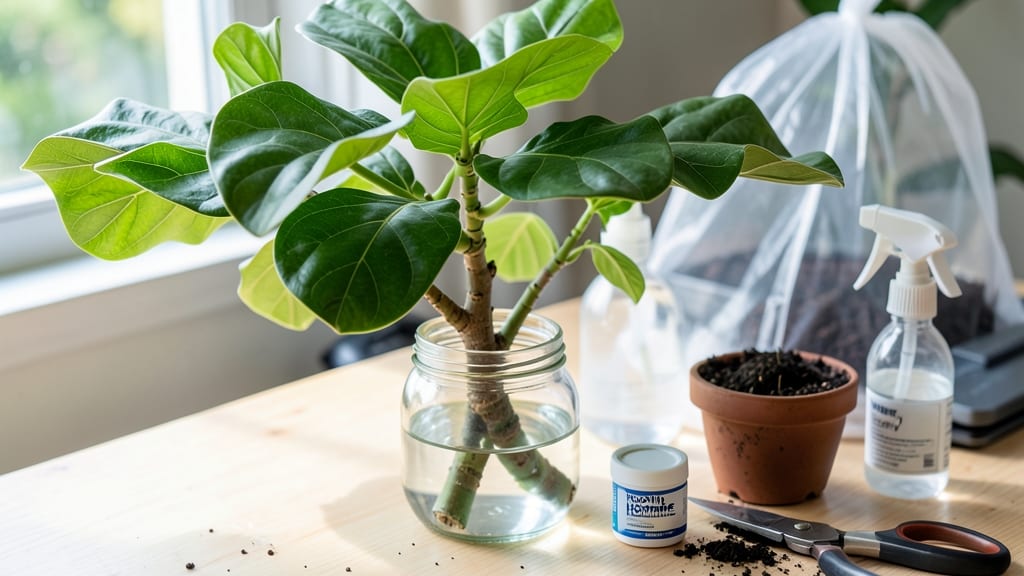
Propagating fiddle leaf figs from cuttings turns a single plant into a small forest. 🌱 I’ve rooted dozens of these striking plants—some thrived, others taught me hard lessons about patience and humidity. The key isn’t luck; it’s timing, clean cuts, and the right environment to coax those roots.
You’ll need sharp pruners, a healthy mother plant, and either water or well-draining soil mix. Water propagation lets you watch roots grow (fascinating!), while soil keeps cuttings stable from day one. Both work, but humidity and warmth make all the difference—think bathroom or a humidifier setup.
Within 4-6 weeks, you’ll see roots forming in water or new growth in soil. Keep leaves dust-free and avoid drafts; fiddle leaf figs hate stress. The first real leaves mean success—just don’t rush transplanting yet. This method works year-round, but spring and summer give the fastest results.
Even if your first cutting fails, the next one will nail it. Let’s get growing!
📚 In This Guide
- What you need
- Instructions
- Tips and common mistakes
- Wrapping up and next steps
What you need
- ● Fiddle leaf fig (Ficus lyrata) cuttings: 3–5 healthy stem cuttings (4–6 inches long)
- ● Each cutting should have 2–3 nodes (the bumps where leaves grow)
- ● Pruning shears or sharp scissors: Sterilized to avoid disease
- ○ Rooting hormone (optional but recommended): Gel or powder form
- ● Clean glass or jar: Wide-mouth (e.g., mason jar) to fit cuttings
- ● Filtered or distilled water: Room temperature, ~2 cups per jar
- ○ Small pebbles or charcoal tablets (optional): 1–2 per jar to prevent bacteria
- ● Well-draining potting mix: 1–2 cups (use a light, airy blend like perlite + peat)
- ● Small pots or propagation trays: 4–6 inch diameter with drainage holes
- ○ Plastic bag or humidity dome (optional): To retain moisture
- ● Spray bottle (for misting soil cuttings)
- ● Grow lights or bright indirect sunlight spot
- ● pH test strips (to monitor water/soil pH, ideal: 5.5–6.5)
Step-by-step instructions for propagating fiddle leaf fig cuttings
Here’s my go-to method for growing strong, healthy fiddle leaf fig cuttings—whether in water or soil.
🌱 Step 1: Select and Prepare the Perfect Stem
Choose a healthy stem with at least 4-5 leaves and a 6-inch length. Look for a node—where leaves meet the stem—that’s slightly swollen and greenish. This is where roots will sprout. Use clean, sharp pruning shears to make a clean cut just below the node at a 45-degree angle.
Let the cutting sit for 1-2 hours to callous over. This prevents rot when you place it in water or soil. If you’re propagating in water, trim the lower leaves so they don’t rot underwater. For soil propagation, leave a few leaves to help photosynthesis.
💧 Step 2: Root in Water (The Easiest Method)
Fill a clean glass with room-temperature water and place the cutting so the node is submerged by about 1 inch. Avoid using tap water immediately—chlorine can harm the cutting. Let it sit for 24 hours before adding more water if needed. Change the water every 3-5 days to prevent bacteria growth.
Place the glass in bright, indirect light—direct sun can stress the cutting. You’ll see tiny white roots emerge in 2-4 weeks. Once roots reach 2-3 inches long, it’s ready to transplant to soil. I like to watch the roots grow because it’s so satisfying!
🪴 Step 3: Plant in Soil (For Faster Establishment)
Fill a small pot with well-draining cactus or succulent mix (or regular potting soil mixed with perlite). Make a hole with your finger and dip the cut end in rooting hormone—this speeds up root growth. Place the cutting in the hole, firming the soil gently around it. Water lightly until moisture seeps out the bottom.
Keep the soil lightly moist but not soggy—fiddle leaf figs hate wet roots. Cover the pot with a clear plastic bag to create a humid environment, but remove it daily for 10 minutes to prevent mold. Roots should form in 4-6 weeks, and you’ll notice new growth on the stem.
☀️ Step 4: Care for New Growth
Once rooted, move your cutting to a spot with bright, indirect light. Avoid cold drafts or direct sun, which can scorch the leaves. Water when the top 1-2 inches of soil feel dry. Overwatering is the #1 killer of fiddle leaf figs—always check moisture before watering.
After 4-6 weeks, fertilize lightly with a diluted houseplant fertilizer to encourage stronger growth. You’ll know it’s thriving when new leaves appear and the stem feels sturdy. Now you’ve got a new fiddle leaf fig ready to grow!
Tips & tricks for perfect fiddle leaf propagation
Between us, these little details make all the difference between a cutting that thrives and one that fizzles out.
Node Selection: That swollen, greenish node is your golden ticket—it's where all the root action happens. I've propagated dozens of cuttings, and I've learned the hard way that choosing a healthy node with visible buds gives you the best chance for success. If your node looks shriveled or brown, skip that cutting—it won't root well. Also, make sure the stem below the node is clean and free of any blemishes that could lead to rot.
Callusing Matters: That 1-2 hour callusing period isn't just a suggestion—it's crucial. The cut end needs time to form a protective layer that prevents rot when you place it in water or soil. I once skipped this step with three cuttings, and all three rotted within days. Trust me on this: patience at this stage pays off big time later. While it's callusing, keep it in a warm, dry place away from direct sunlight.
Water Quality: Tap water can be a silent killer for your cuttings because of chlorine. If you must use tap water, let it sit out uncovered for 24 hours before using it—this allows the chlorine to evaporate. I've seen cuttings that were thriving in filtered or distilled water develop black spots when switched to untreated tap water. For the best results, use filtered water or rainwater if you can collect it. And remember to change that water every 3-5 days to keep bacteria at bay.
Light Balance: Indirect light is your friend, but direct sun is your enemy during propagation. I've watched cuttings get sunburned when placed too close to a sunny window, resulting in crispy, brown leaves. If you notice the leaves looking pale or see tiny white spots (that's sunburn!), move your cutting to a spot with softer light. A north-facing window or a few feet back from an east or west window usually works perfectly. Fluorescent grow lights can also work well if natural light is limited.
Pro Tips for Propagating Fiddle Leaf
- Between us, these little details make all the difference between a cutting that thrives and one that fizzles out.
- Node Selection: That swollen, greenish node is your golden ticket—it's where all the root action happens. I've propag...
- Callusing Matters: That 1-2 hour callusing period isn't just a suggestion—it's crucial. The cut end needs time to for...
Frequently asked questions
Got questions about propagating your fiddle leaf fig?
You’re not alone! Here are the most common queries—plus quick answers to help you grow those roots like a pro.
Can I propagate a fiddle leaf fig from a cutting even if it doesn’t have roots yet?
Fiddle leaf figs can root in water or soil even without pre-existing roots. Just take a 4–6 inch cutting with at least 2–3 nodes, remove the lower leaves, and place it in water or moist soil. Patience is key—roots may take 4–8 weeks to appear!
How long does it take for a fiddle leaf fig cutting to root in water?
Most cuttings show signs of root growth in 3–6 weeks, but full roots can take up to 8–12 weeks. Keep the water clean and warm (change it every 5–7 days), and place the cutting in bright, indirect light. Avoid direct sunlight—it can stress the plant!
Is it better to propagate fiddle leaf figs in water or soil?
Both methods work, but soil propagation often yields stronger, more resilient roots faster. Water propagation is great for monitoring progress, but soil mimics real growing conditions better. If using soil, keep it moist but not soggy and use a well-draining mix (like perlite + potting soil).
Why is my fiddle leaf fig cutting turning yellow or mushy?
Yellowing or mushy cuttings usually signal rot, often from overwatering or bacteria. If propagating in water, ensure only the nodes are submerged (never the leaves!). In soil, avoid compacting the mix around the cutting. Trim any mushy parts, let them dry slightly, and replant in fresh, dry soil.
Can I propagate a fiddle leaf fig from a leaf cutting?
Nope! Fiddle leaf figs require stem cuttings with nodes (the bumps where leaves grow) to root successfully. A single leaf won’t produce roots or a new plant—stick to cuttings with stems and nodes for the best results.
Wrapping up and next steps
You’ve got the skills to propagate your fiddle leaf fig like a pro—whether through water or soil! 🌱 The key is patience, consistency, and a little green thumb love. Watch those roots grow, and soon you’ll have thriving new plants to share or enjoy yourself.
Ready to take the next step? Experiment with different methods or try propagating other houseplants. Your journey to becoming a plant propagation expert is just beginning—happy growing! 🌿