
Plants
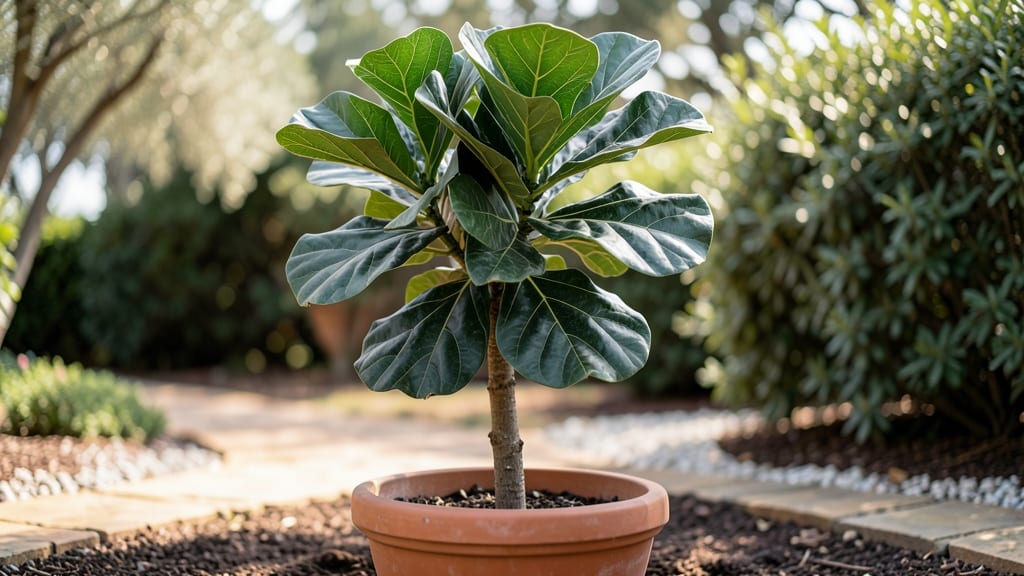
A fiddle leaf fig outdoor plant can thrive with the right setup—it just needs patience and a few smart adjustments. 🌿 I’ve moved mine from indoors to a shaded patio, and now it’s lush, healthy, and growing faster than ever.
The key is matching its tropical roots to your climate without overcomplicating things.
Start by choosing a spot with bright, indirect light—morning sun and afternoon shade work best. Harden off your plant gradually over 2-3 weeks to avoid shock, and use a well-draining potting mix with perlite to keep roots happy.
A container with drainage holes is a must, and a slightly larger pot gives roots room to spread.
Watering changes outdoors: let the top inch of soil dry out between drinks, and fertilize lightly every 6-8 weeks with a balanced liquid feed. Prune sparingly to encourage bushier growth, and watch for pests like spider mites—spray with water or neem oil if you spot them.
With these tweaks, your fiddle leaf fig will handle outdoor life beautifully—just bring it inside before frost hits. The payoff? A stunning, low-maintenance plant that brightens up any space year-round.
Root Causes Of Outdoor Struggles
Understanding why your fiddle leaf fig (or any tropical plant) struggles outdoors boils down to three core environmental mismatches: its native habitat vs. your local climate, sudden exposure shocks, and hidden stressors like pests or soil issues. Let’s break down the science—and what you can fix—with actionable insights.
---
Fiddle leaf figs (Ficus lyrata) hail from West African rainforests, where temperatures hover between 65–85°F (18–30°C) year-round—no frost, ever. When moved outdoors, three temperature-related issues typically arise:
- Cold Snaps & Frost Damage - Why it happens: Cells in fiddle leaf fig leaves contain water-filled vacuoles that expand when frozen.
Ice crystals rupture cell walls, causing brown, crispy edges (a sign of irreversible damage). - Actionable fix: - Monitor local frost dates (USDA Zone 10–11 only for winter outdoor stays). - Use frost cloth (not plastic—it traps moisture and promotes rot) or move pots to a covered porch when temps drop below 50°F (10°C). - Pro tip 🌡️: Use a minimum-maximum thermometer near the plant to track overnight dips.
- Heat Stress Above 90°F (32°C) - Why it happens: High heat + low humidity = stomatal closure (pores on leaves shut to conserve water), leading to yellowing, wilting, or leaf drop.
The plant’s cuticle (waxy leaf coating) also degrades faster in UV exposure, making leaves dull and leathery. - Actionable fix: - Afternoon shade is critical—use 30–50% shade cloth or place under dappled sunlight (e.g., under a tree). - Mist leaves 2–3x daily in extreme heat (but avoid soggy soil—see next section).
---
Fiddle leaf figs hate wet feet but also can’t handle drought stress—both trigger leaf issues. Here’s the science:
| Problem | Symptoms | Root Cause | Fix It Now | |----------------------|---------------------------------------|--------------------------------------------------------------------------------|--------------------------------------------------------------------------------| | Overwatering | Yellow leaves, mushy stems, root rot | Anaerobic soil (no oxygen) kills roots; fungi like Phytophthora thrive. | Let top 2–3 inches of soil dry before watering.
Use a well-draining mix (50% potting soil, 30% perlite, 20% orchid bark). | | Underwatering | Crispy edges, drooping leaves | Xylem cavitation (air bubbles block water transport) causes wilting. | Water deeply until it drains from the bottom.
Use self-watering pots if you’re unreliable. | | Inconsistent Watering | Spotted leaves, uneven growth | Osmotic stress—roots struggle to absorb nutrients when soil moisture fluctuates wildly. | Stick to a schedule (e.g., every 7–10 days in summer, less in winter) or use a moisture meter. |
- Pro tip 💡: Outdoor pots dry faster due to wind and sun. Check soil moisture daily in extreme heat.
---
Fiddle leaf figs thrive in stable, humid microclimates—outdoor conditions often lack this. Two key issues:
- Wind Burn - Why it happens: Wind increases transpiration (water loss) faster than roots can replace it.
Leaves develop brown, papery patches (like sunburn) on exposed sides. - Actionable fix: - Place pots near a wall or fence to block wind. - Rotate the pot weekly so all sides get even light (prevents lopsided growth).
- Direct Sun Exposure - Why it happens: UV rays degrade chlorophyll faster than the plant can produce it.
Leaves turn bleached white or silver (a sign of sun scald). - Actionable fix: - Acclimate gradually: Start with 2–3 hours of morning sun, then increase by 1 hour weekly. - Use UV-protective film on clear containers or whitewash the pot to reflect light.
--- Outdoor plants attract pests and diseases that indoor fiddle leaf figs rarely face. Here’s what to watch for:
- Spider Mites & Scale - Why it happens: Low humidity + dry air weaken the plant’s defenses.
Spider mites pierce cells to suck sap, causing yellow stippling; scale insects create sticky honeydew that attracts sooty mold. - Actionable fix: - Blast off mites with a strong spray of water (disrupts their silk webs). - Neem oil spray (1 tsp per liter of water) weekly for 2 weeks to kill eggs.
- Fungal Issues (Powdery Mildew, Root Rot) - Why it happens: Stagnant water + poor airflow create the perfect breeding ground.
Powdery mildew appears as white, dusty patches; root rot smells rank and mushy. - Actionable fix: - Improve drainage with gravel at the pot’s bottom. - Space pots 12+ inches apart for airflow. - Baking soda spray (1 tsp baking soda + 1 quart water + few drops of soap) prevents mildew.
--- Outdoor soil is often too alkaline, compacted, or nutrient-poor for fiddle leaf figs, which prefer slightly acidic, airy mixes.
- Compacted or Clay Soil - Why it happens: Poor drainage leads to root suffocation (roots turn black/brown).
Clay soil also holds too much moisture, promoting rot. - Actionable fix: - Repot annually with a light, chunky mix (add orchid bark or coco coir). - Raise pots on feet to improve drainage.
- Nutrient Deficiencies - Why it happens: Outdoor plants leach nutrients faster due to rain and wind. Yellow leaves between veins = iron/chlorosis; purple stems = phosphorus deficiency. - Actionable fix: - Fertilize lightly every 4–6 weeks in growing season (spring–fall) with a balanced liquid fertilizer (10-10-10 or 20-20-20). - Avoid over-fertilizing—it burns roots and causes salt buildup (white crust on soil).
--- Even if conditions seem perfect, sudden changes can stress your plant.
- Moving Too Fast - Why it happens: Fiddle leaf figs take 2–4 weeks to adjust to outdoor conditions.
Moving it from indoor AC to hot sun or vice versa causes leaf drop or wilting. - Actionable fix: - Hardening off: Gradually expose the plant to outdoor conditions over 7–10 days (start with 1 hour, then increase).
- Seasonal Swings - Why it happens: Rapid temperature/humidity shifts (e.g., moving from summer heat to autumn rain) confuse the plant’s circadian rhythms, leading to leaf curl or drop. - Actionable fix: - Bring it indoors before first frost or when temps drop below 55°F (13°C). - Use a humidity tray (pebbles + water) if indoor air is dry.
Revive Your Outdoor Fiddle Leaf Fig
Transforming your fiddle leaf fig from wilting to thriving is easier than you think! Below are practical, step-by-step solutions tailored to common outdoor challenges—whether it’s leaf drop, browning edges, or stunted growth. Each fix includes prevention tips to keep your plant lush and happy long-term.
---
Cause: Overwatering, underwatering, or sudden temperature shifts. Solution: 1. Check the soil 🔍—Stick your finger 1–2 inches deep. If damp, hold off on watering; if dry, it’s time to hydrate. 2. Adjust your watering routine 💧—Water only when the top 1–2 inches of soil are dry. Outdoor plants may need less frequent watering than indoor ones due to natural rainfall. 3. Repot if roots are soggy 🌱—If roots smell foul or feel mushy, trim the affected parts, repot in fresh, well-draining soil, and avoid watering for 3–5 days. 4. Protect from drafts ❄️—Move your plant away from AC vents, cold winds, or direct heat sources (like grills or patios in peak sun).
Prevention Tip: 💡 Use a moisture meter or the "knuckle test" to gauge soil dryness. Mulch around the base to retain moisture without over-saturating.
---
Cause: Low humidity, fluoride in tap water, or inconsistent moisture. Solution: 1. Switch to filtered or distilled water 💧—Let tap water sit out for 24 hours to evaporate chlorine, or use a water filter. 2. Boost humidity 🌧️—Place a tray of pebbles and water near the plant, or mist leaves lightly in the morning (avoid evening misting to prevent fungal issues). 3. Trim damaged leaves ✂️—Use clean scissors to snip off brown edges at a 45-degree angle to encourage new growth. 4. Adjust sunlight exposure ☀️—If leaves are crispy, it’s too much sun; if dull, it’s too little. Aim for bright, indirect light (morning sun is ideal).
Prevention Tip: ✨ Wipe leaves with a damp cloth weekly to remove dust, which can clog pores and stress the plant.
---
Cause: Nutrient deficiency, root-bound pots, or lack of light. Solution: 1. Fertilize lightly 🌿—Use a balanced liquid fertilizer (10-10-10 or 20-20-20) diluted to half-strength every 4–6 weeks during spring and summer. Skip fertilizing in fall/winter. 2. Repot if roots are circling 🏺—Choose a pot 1–2 inches larger with drainage holes. Gently loosen roots before replanting. 3. Give it a light boost 💡—If growth is slow, supplement with a grow light (12–14 hours/day) during short winter days. 4. Prune for shape ✂️—Trim leggy stems just above a leaf node to encourage bushier growth.
Prevention Tip: 📊 Feed your fiddle leaf fig only in active growing seasons (spring–summer) to avoid over-fertilizing, which can burn roots.
---
Cause: Sudden cold snaps, frost, or heatwaves. Solution: 1. Acclimate gradually 🌡️—If moving indoors/outdoors, do it over 7–10 days, exposing the plant to increasing temps each day. 2. Use frost cloth or a blanket ❄️—Cover the plant if temperatures drop below 50°F (10°C). Avoid plastic, which traps moisture and causes rot. 3. Water deeply before cold snaps 💦—Well-hydrated roots are more resilient. Reduce watering in winter, though. 4. Provide shade in summer 🌞—Use a light shade cloth (30–50%) if temps exceed 90°F (32°C) to prevent leaf scorch.
Prevention Tip: 🎯 Monitor your local frost dates and plan to bring potted fiddle leaf figs indoors before the first frost.
--- Final Pro Tip: 🌟 Rotate your plant quarter-turns weekly to ensure even sunlight exposure and prevent lopsided growth. Outdoor plants often lean toward light sources—keep them balanced!
Frequently asked questions
Can a fiddle leaf fig survive winter outdoors?
Only in USDA Zones 10-11 with no frost. For colder climates, bring it indoors before temperatures drop below 50°F (10°C). Use frost cloth (not plastic) if you must leave it out briefly—just avoid soggy conditions that promote rot.
How do I transition my fiddle leaf fig from indoors to outdoors?
Start with hardening off—place it outside for 1 hour daily over 7-10 days, gradually increasing exposure. Avoid direct afternoon sun at first, and bring it back inside at night. This helps prevent shock from sudden light/temperature changes.
What’s the best soil mix for outdoor fiddle leaf figs?
Use a well-draining blend of 50% potting soil, 30% perlite, and 20% orchid bark. Avoid garden soil—it compacts and holds too much moisture. Add a 2-inch layer of mulch around the base to retain moisture without suffocating roots.
Why do my fiddle leaf fig’s leaves turn brown at the edges outdoors?
This usually means too much sun or low humidity. Move it to morning sun + afternoon shade, and mist leaves 2-3x daily in hot weather. If edges are crispy, it’s sunburn; if dull, it’s underwatering. Trim damaged areas with clean scissors.
How often should I fertilize an outdoor fiddle leaf fig?
Feed every 6-8 weeks during spring and summer with a balanced liquid fertilizer (10-10-10 or 20-20-20) diluted to half-strength. Skip fertilizing in fall and winter—outdoor plants need less as growth slows. Always water before fertilizing to avoid root burn.