Leaf Blower
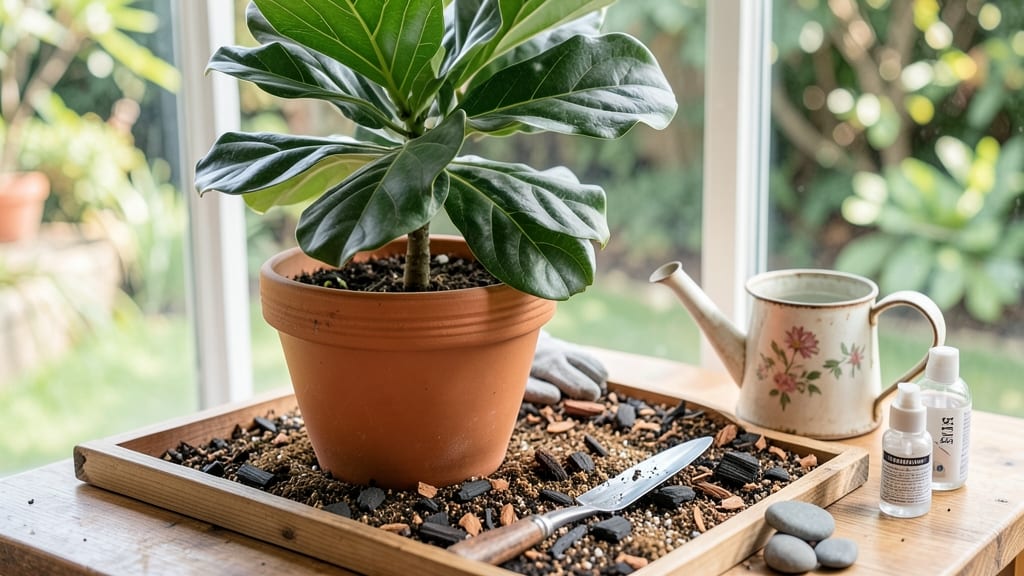
Repotting your fiddle leaf fig at the right time can transform it from a struggling 🌿 survivor into a thriving, leafy centerpiece.
Struggling to keep your fiddle leaf fig thriving? One of the most common mistakes plant parents make is ignoring repotting signals—leading to stunted growth, yellowing leaves, or even root rot.
Knowing the exact signs and timing to repot your fiddle leaf fig can mean the difference between a lush, happy plant and a struggling survivor.
Spring is the ideal season to repot, when your plant kicks into active growth mode. But how do you know if it’s truly time? Look for roots circling the pot, soil drying out faster than usual, or leaves that seem smaller than before.
These are clear cues that your fiddle leaf fig is ready for a fresh start.
Below, you’ll find a step-by-step guide to repotting—including the best pot size, soil mix, and post-repotting care—to ensure your fiddle leaf fig bounces back healthier than ever.
5 Clear signs your fiddle leaf fig needs repotting now
Your fiddle leaf fig might look stunning with its glossy leaves, but if it's been in the same pot for too long, it’s silently screaming for a change. Ignoring repotting signals can lead to root-bound stress, nutrient depletion, and even leaf drop.
The key is catching these signs early—before your plant starts showing visible distress. Here’s what to watch for to keep your fiddle leaf fig thriving.
First, check for roots circling the pot. When roots grow in a dense spiral around the soil, they strangle themselves and can’t absorb nutrients efficiently. This is a classic root-bound sign that demands immediate action.
You’ll often spot these roots peeking out from drainage holes or see them growing along the pot’s surface. If you notice this, your fiddle leaf fig is begging for a larger home.
Another red flag is soil drying out too quickly. A healthy fiddle leaf fig should hold moisture for about 7-10 days between waterings. If you’re watering every 3-4 days just to keep the soil damp, your plant’s roots have filled the pot, leaving no room for water retention.
This rapid drying is a clear signal that your fiddle leaf fig has outgrown its current container.
Slow or stunted growth is another warning sign. If your fiddle leaf fig isn’t producing new leaves or its stems are bare and leggy, it’s likely root-bound or starving for nutrients.
Healthy fiddle leaf figs should grow 6-12 inches per year, with new leaves emerging regularly. If growth has slowed to a crawl, it’s time to repot.
Yellowing leaves, especially on the lower stems, can also indicate a need for repotting. While yellowing can sometimes signal overwatering or underwatering, if it’s paired with slow growth or roots escaping the pot, root-bound conditions are likely the culprit.
Your fiddle leaf fig’s roots are competing for space, and the plant is struggling to access the nutrients it needs.
Here are the 5 clear signs your fiddle leaf fig needs repotting now, broken down for easy reference:
- Roots circling the pot: Visible roots growing in a spiral or escaping drainage holes.
- Soil dries in 3-4 days: Rapid moisture loss means roots have filled the container.
- Stunted growth: No new leaves or leggy stems despite proper care.
- Yellowing lower leaves: Combined with slow growth, signals nutrient starvation.
- Pot feels light when lifted: Roots have filled the space, making the pot heavier with soil.
Don’t overlook leaf drop as a final warning sign. If your fiddle leaf fig starts shedding leaves—especially older ones—it could be a stress response to root-bound conditions.
While leaf drop can also happen due to underwatering or drafts, pair it with other signs like roots escaping the pot, and repotting becomes urgent.
Pro tip: Gently tap the pot on the sides. If it feels light when lifted, the roots have filled the space, and your fiddle leaf fig is ready for a larger pot.
This is a quick, non-invasive way to check without disturbing the plant. If the pot feels heavy, the roots still have room to grow, and you can wait a little longer.
Finally, if your fiddle leaf fig’s leaves are smaller than usual or the plant looks top-heavy with few leaves, it’s likely struggling to support its own weight due to limited root space.
This imbalance is another clear sign that repotting is overdue. Addressing these issues promptly will help your fiddle leaf fig bounce back with vibrant new growth.
Catching these signs early ensures your fiddle leaf fig stays healthy and continues to be the showstopper of your indoor garden. Once you’ve identified the need for repotting, the next step is choosing the right pot size and soil mix—but that’s a topic for another guide! 🌿
Best repotting schedule: seasonal timing and pot size guidelines
Timing your fiddle leaf fig's repotting is crucial for its health, especially since these tropical plants thrive during specific seasons. The ideal repotting window is early spring (March-April) when your plant emerges from dormancy and begins active growth.
This timing aligns with nature's cycle, giving your fiddle leaf fig ample time to recover and establish new roots before summer's heat stress. Avoid repotting in winter, as your plant's growth slows dramatically, making recovery harder.
For young fiddle leaf figs (under 3 years old), you'll need to repot annually to accommodate rapid root expansion. Mature plants (3+ years) typically only need repotting every 2-3 years, as their growth rate slows.
The key is watching for root-bound signs rather than following a rigid schedule—roots circling the pot or emerging from drainage holes are clear indicators it's time to upgrade.
When selecting a pot size, follow the 2-inch rule: Increase your pot diameter by 2 inches for young plants and 3-4 inches for mature fiddle leaf figs.
For example, if your plant is in a 10-inch pot, upgrade to a 12-inch pot for young plants or a 14-inch pot for mature specimens.
Overpotting (choosing a pot that's too large) can lead to soil moisture retention issues and root rot, while underpotting will cause your plant to become root-bound quickly.
The pot material you choose significantly impacts your fiddle leaf fig's root health. Terracotta pots are excellent for mature plants as they wick away excess moisture, preventing root rot—a common issue with fiddle leaf figs. Ceramic pots with glaze offer more design options but may retain moisture longer, making them better for young plants in cooler climates. Plastic pots are lightweight and retain moisture well, ideal for summer repotting emergencies, but they don't regulate temperature as effectively as terracotta.
After repotting, place your fiddle leaf fig in its usual bright indirect light spot and maintain consistent watering—water thoroughly when the top inch of soil feels dry. Avoid fertilizing for 4-6 weeks post-repotting to allow roots to establish without nutrient stress.
With proper timing and care, your fiddle leaf fig will bounce back stronger than ever, rewarding you with vibrant new growth within weeks.