
Watering
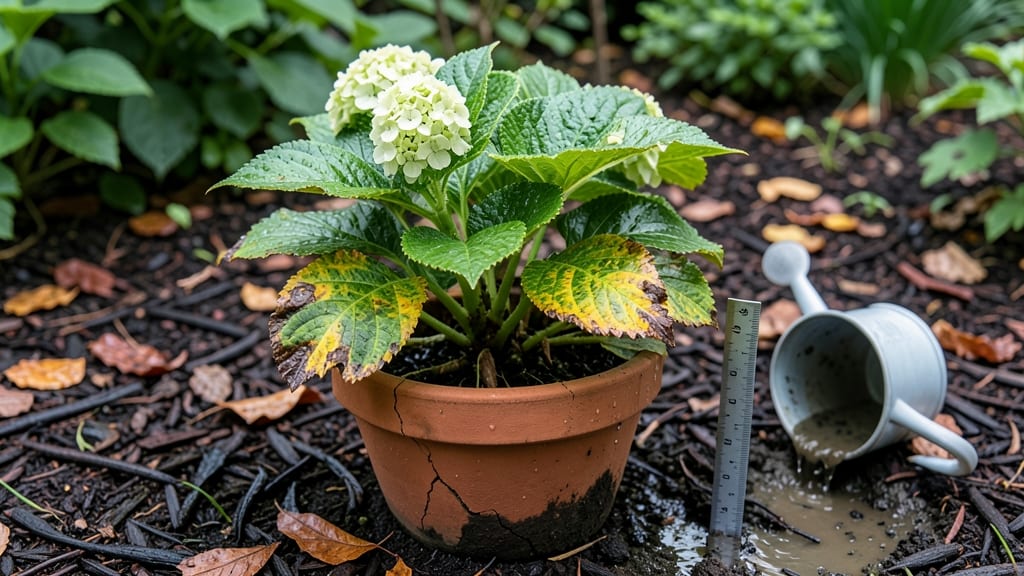
Your hydrangeas look like sad, droopy messes—too much water and these pictures of hydrangea leaf problems (yellowing, mushy stems, that sickly smell) are a dead giveaway. 🌿 That’s overwatering, and the good news? Fixing it is easier than you think.
I’ve nursed back more hydrangeas than I’d like to admit, and these 3 simple steps will have them perky again in no time. The problem starts when roots suffocate in soggy soil, starving for oxygen. Yellowing leaves? Classic overwatering. Mushy stems or black spots?
Fungal infections love wet conditions. Even wilting can mean too much water—hydrangeas hate soggy feet just like we do in rain boots all day. First, cut back on watering—let the top inch of soil dry out before adding more.
Then, improve drainage by mixing compost into heavy clay soil or adding a layer of gravel at the bottom of pots. Finally, treat fungal issues with a baking soda spray (1 teaspoon per quart of water) or a fungicide if needed.
Within 2-3 weeks, you’ll see fresh green leaves and sturdy stems. The key is consistency—hydrangeas prefer deep but infrequent watering, not daily sips. Trust the process, and your bushes will thank you with blooms that put your neighbors’ to shame.
Root Causes Of Overwatering Damage
Hydrangeas are stunning plants, but their lush foliage can quickly turn sad and droopy when they’re drowning in too much water. Understanding why this happens is the first step to saving your plants. Let’s break down the science behind the struggle—so you can fix it fast!
When soil stays soggy for too long, it creates an anaerobic environment—meaning oxygen is locked out. Roots need oxygen to breathe and function properly. Without it, they suffocate, leading to:
- Root rot: Fungal pathogens like Phytophthora thrive in waterlogged soil, attacking roots and cutting off nutrient uptake.
- Weakened cell walls: Oxygen deprivation triggers cell death, causing leaves to yellow (chlorosis) or brown.
- Poor nutrient absorption: Waterlogged soil flushes away essential nutrients, even if fertilizer is present.
Pro Tip: 💡 Test your soil’s drainage by digging a hole—if water pools after 30 minutes, your hydrangea is at risk.
Too much water doesn’t just drown roots—it washes away vital nutrients like nitrogen, phosphorus, and potassium. But that’s not all: excess moisture also:
- Builds up salts: Fertilizers or tap water minerals accumulate in saturated soil, creating a toxic sludge that burns roots.
- Alters pH balance: Hydrangeas prefer slightly acidic soil (pH 5.2–6.2). Overwatering can leach essential acids, throwing off their chemistry.
- Triggers iron deficiency: Waterlogged conditions make iron (Fe) unavailable, even if it’s in the soil—leading to pale, yellowing leaves (iron chlorosis).
Fix It: ✨ Use rainwater or distilled water to avoid salt buildup, and amend soil with chelated iron if chlorosis appears.
Stagnant water is a fungal buffet. Pathogens like Botrytis (gray mold) and Pythium (root rot) multiply in damp conditions, causing:
- Leaf spots: Dark, mushy patches with yellow halos—often a sign of Alternaria or Septoria.
- Wilting despite wet soil: Roots can’t absorb water due to blockages from fungal growth.
- Stunted growth: The plant diverts energy to fighting infections instead of blooming.
Prevent It: 🌡️ Space plants for airflow, avoid overhead watering, and apply copper fungicide if spots appear.
Now that you know the why, the next step is fixing it—without losing your hydrangea’s gorgeous blooms! Stay tuned for actionable solutions.
Revive Your Hydrangeas in 3 Steps
Too much water can turn your hydrangeas into a sad, soggy mess—but don’t worry! With the right fixes, you can bring them back to life and keep them thriving.
Below, we’ve broken down cause-specific solutions to tackle overwatering, from yellowing leaves to fungal issues, plus prevention tips to avoid future problems.
---
If your hydrangeas are drowning, pause watering right away and let the soil dry out. Overwatering suffocates roots, preventing them from absorbing oxygen and nutrients.
How to fix it: - Check soil moisture 👨🍳: Stick your finger 2–3 inches deep into the soil. If it’s damp, wait 2–3 more days before watering again. - Move potted hydrangeas 🏡: If they’re in containers, relocate them to a shadier spot (direct sun + excess water = recipe for disaster). - Improve drainage 🚿: Ensure pots have drainage holes and use a well-draining mix (50% potting soil, 30% perlite, 20% peat moss).
Pro Tip: 💡 If the soil smells sour or moldy, it’s a sign of chronic overwatering—flush the pot with water to rinse out excess salts.
---
Too much water creates the perfect breeding ground for fungal diseases (like powdery mildew or botrytis) and root rot. Here’s how to fight back:
#### 🔥 For Fungal Leaf Spots or Mildew: - Prune infected leaves ⏰: Snip off yellow, brown, or spotted leaves with sterilized scissors (rubbing alcohol works). - Apply fungicide 🛡️: Spray with a copper-based or neem oil fungicide (follow label instructions).
Repeat every 7–10 days until new growth appears. - Space plants for airflow 🌬️: Thin out crowded foliage to reduce humidity around leaves.
#### 🌡️ For Root Rot (Mushy, Black Roots): - Remove the plant 🔪: Gently dig up the hydrangea and rinse the roots with water to wash off soil. - Trim dead roots ⚰️: Cut off black, mushy roots with clean shears—only keep firm, white roots. - Repot in fresh soil 🏺: Use a lightweight, fast-draining mix (cactus/succulent soil works well) and avoid watering for 3–5 days to let roots recover.
Pro Tip: ✨ Add 1–2 inches of mulch (like pine bark) around the base to insulate roots and prevent soil from staying too wet.
---
Now that your hydrangeas are on the mend, prevent future overwatering with these smart habits:
| Problem | Solution | Prevention Tip | |---------------------------|------------------------------------------------------------------------------|-----------------------------------------------------------------------------------| | Compacted soil | Loosen soil with a fork or add compost to improve aeration. | Test soil moisture before watering—never on a schedule. | | Poor drainage | Elevate pots or add gravel/perlite to the bottom of containers. | Water deeply but infrequently—hydrangeas prefer dry spells between drinks. | | Heavy clay soil | Mix in sand or coconut coir to break up density. | Water in the morning so leaves dry quickly, reducing fungal risk. | | No drainage holes | Drill holes in pots or repot immediately. | Use a moisture meter to track soil dampness (aim for 50–60% moisture). |
Pro Tip: 🎯 Hydrangeas in full sun need more frequent but shallower watering, while shady plants can go longer between drinks.
--- Final Thought: 🌿 With these fixes, your hydrangeas should bounce back in 2–4 weeks—just give them time, better drainage, and smarter watering. Once they’re recovered, they’ll reward you with lush blooms all season long!
Frequently asked questions
What do yellowing hydrangea leaves look like when overwatered?
Overwatered hydrangea leaves turn a dull yellow-green or pale yellow, often starting at the bottom of the plant. The edges may stay green, and leaves feel soft or mushy when touched. Look for wilting despite damp soil—this is a classic sign of root suffocation.
How can I tell if my hydrangea has root rot from too much water?
Check the roots: healthy roots are firm and white, while rotten roots are black, mushy, or smell foul. If you see this, trim away the bad roots and repot in fresh, well-draining soil. Avoid watering for 3-5 days to let roots recover.
Can I save my hydrangea if the leaves are already brown and crispy?
It depends! If only the outer leaves are brown but new growth appears healthy, prune the dead leaves and adjust watering. If the entire plant is crispy and stems are mushy, root rot may have set in—trim back severely and repot with fresh soil. Recovery takes 2-4 weeks with proper care.
Why do my hydrangea leaves get black spots after watering?
Black spots with yellow halos usually mean fungal infection (like Alternaria or Septoria) from excess moisture. Prune affected leaves immediately, apply a copper fungicide, and water at the base (not overhead) to prevent future outbreaks.
How often should I water hydrangeas to avoid overwatering?
Water when the top 1-2 inches of soil feel dry—typically 2-3 times per week in summer, less in cooler months. Test with your finger: if soil is damp below 1 inch, wait another day. Potted hydrangeas need more frequent watering than in-ground plants.