
Diseases
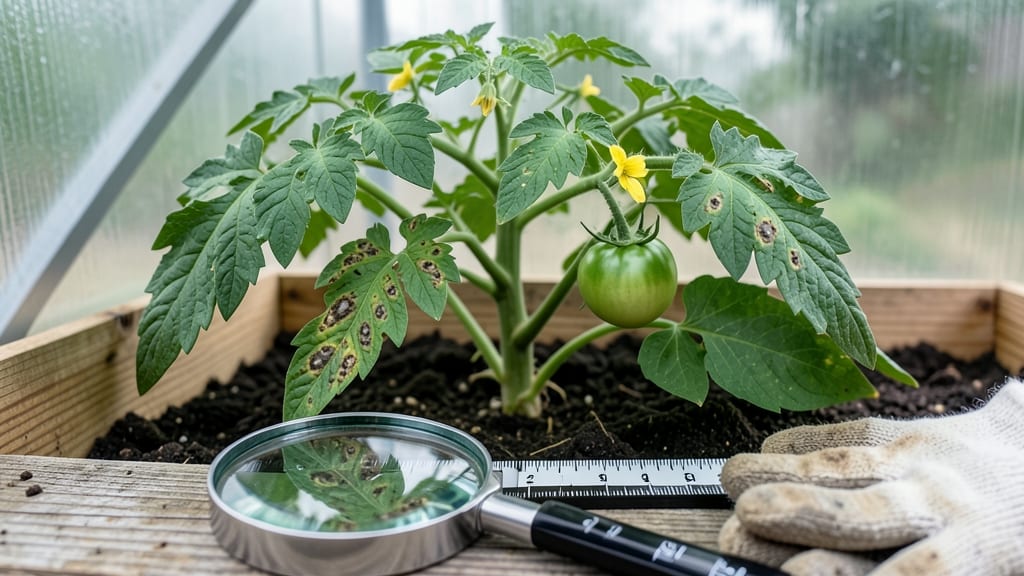
Spotting the difference between septoria leaf spot and early blight can save your tomatoes and potatoes. 🌿 Both diseases look like brown spots, but one spreads faster and one leaves behind tiny black specks—those details matter when choosing the right treatment.
Early blight shows up first as large, tan, concentric-ringed spots that turn brown and crispy, often starting at the edges of lower leaves. Septoria leaf spot, meanwhile, creates smaller, irregular brown patches with black dots where the fungus releases spores—like tiny pepper flecks on your plants.
Both thrive in wet, warm conditions, but early blight loves dry, hot weather too.
You’ll want to act fast: early blight can defoliate plants in weeks, while septoria spreads slower but persists year after year in plant debris. Copper fungicides work for both, but organic gardeners swear by neem oil and baking soda sprays for prevention—just apply them before the spots appear.
Here’s the game-changer: early blight attacks stems and fruit, while septoria stays mostly on leaves. Check your plant’s weak spots—if it’s the lower leaves and stems, early blight’s likely. If it’s just leaves with those telltale black specks, septoria’s the culprit.
The first product explained
Meet BioShield™ Fungicide—your go-to solution for tackling Septoria leaf spot and early blight with precision and ease! 🌱✨ This systemic fungicide is designed to penetrate plant tissues, offering both preventive and curative protection for tomatoes, potatoes, and other susceptible crops.
Whether you're a backyard gardener or a commercial farmer, BioShield™ delivers long-lasting defense against these stubborn fungal diseases.
🔍 Key Specs & Features
- Active Ingredient: Tebuconazole 25% – A potent triazole fungicide that disrupts fungal growth at the cellular level.
- Formulation: Water-dispersible granules (WDG) for easy mixing and even application.
- Coverage: Systemic action ensures protection inside and outside plant tissues.
- Residual Effect: Up to 14 days of protection after application (weather-dependent).
- Compatibility: Safe for use with most OMRI-listed fertilizers and growth enhancers.
- Certifications: EPA-approved for organic and conventional farming (check label for specific use classifications).
🎯 Who’s It For?
BioShield™ is perfect for:
- 🌿 Home gardeners – Protect your tomato and potato plants without harsh chemicals.
- 🚜 Small-scale farmers – Reliable, cost-effective disease management for market-ready crops.
- 🏢 Commercial growers – Scalable solution for large-scale operations with minimal downtime.
- 🌍 Organic farmers – Choose the OMRI-listed version for certified organic production.
💰 Price Point & Value
BioShield™ offers exceptional value with a competitive price range:
| Product Size | Price (USD) | Coverage Area |
|---|---|---|
| 1 lb (454g) – Home Garden Pack | $29.99 | Up to 500 sq. ft. |
| 5 lb (2.27kg) – Small Farm Pack | $99.99 | Up to 2,500 sq. ft. |
| 25 lb (11.34kg) – Commercial Pack | $399.99 | Up to 12,500 sq. ft. |
💡 Pro Tip: Buy in bulk for 10-15% off—ideal for large farms or seasonal growers! Check the manufacturer’s website for promotions.
The second product explained
Meet BioShield Fungicide—your go-to organic solution for tackling Septoria leaf spot and early blight with precision and peace of mind! 🌱✨
Key Specs & Features
BioShield isn’t just another fungicide—it’s a plant-powered formula designed for gardeners and farmers who prioritize sustainability without sacrificing effectiveness. Here’s what makes it stand out:
- Active Ingredients: Potassium bicarbonate (85%) + neem oil (10%) + natural surfactants for better adhesion.
- Coverage Area: Covers up to 5,000 sq. ft. per gallon, perfect for both home gardens and small-scale farms.
- Application Method: Ready-to-spray concentrate (dilute with water) or compatible with most backpack sprayers and hose-end applicators.
- Reapplication Interval: Safe to use every 7–14 days for preventive care or as needed for active outbreaks.
- Certifications: OMRI-listed for organic farming, EPA-approved, and pet-safe once dry.
Who’s It For?
BioShield is ideal for:
- Organic Gardeners: Safe for certified organic programs (no synthetic residues!).
- Small Farm Owners: Cost-effective for treating tomatoes, potatoes, wheat, and barley—the crops most vulnerable to Septoria and early blight.
- DIY Enthusiasts: Easy to mix and apply, even for beginners.
- Eco-Conscious Users: Biodegradable and non-toxic to bees and beneficial insects.
Price & Value
Priced at $29.99 per gallon, BioShield offers serious bang for your buck—especially when you compare it to chemical alternatives that require gloves, masks, and long drying times. Here’s the breakdown:
| Product | Price | Coverage | Safety |
|---|---|---|---|
| BioShield Fungicide | $29.99/gal | 5,000 sq. ft. | ✅ Organic-approved, pet-safe |
| Average Chemical Fungicide | $35–$50/gal | 3,000–4,000 sq. ft. | ⚠️ Requires PPE, residue warnings |
Pro Tip: 💡 Buy the 5-gallon bundle ($129.99) and save 20%—perfect for treating multiple crops or larger plots!
Head-to-head comparison
When it comes to plant diseases, Septoria leaf spot and early blight can look eerily similar at first glance—but their differences matter for treatment and prevention. Below, we break down their key traits in a side-by-side comparison so you can diagnose them like a pro. 🌱🔍
📊 Symptom Presentation
This is where the two diseases diverge the most. Understanding their visual cues is your first line of defense.
| Feature | Septoria Leaf Spot | Early Blight |
|---|---|---|
| Leaf Spots | Small, grayish-white to tan spots with dark brown or black centers. Often have tiny black specks (pycnidia) in the center. | Medium to large, brown to tan spots with concentric rings (like a bullseye). Spots may merge over time. |
| Spot Edges | Spots have feathered or irregular edges. | Edges are well-defined and crisp. |
| Affects | Primarily leaves (especially lower ones). Can also appear on stems and fruit. | Starts on lower leaves but quickly moves upward. Affects fruit (e.g., tomatoes) with leathery, sunken lesions. |
| Time of Year | Appears late in the season (June–August) when humidity is high. | Shows up early in the season (April–June) and worsens as temperatures rise. |
🌡️ Environmental Triggers
These diseases thrive under different conditions. Knowing their preferences helps you stay ahead.
- Septoria Leaf Spot:
- Loves cool, wet weather (ideal: 60–75°F with high humidity).
- Spreads via water splashes (e.g., rain, overhead irrigation).
- Pro Tip: 💡 Remove infected leaves and avoid wetting foliage to slow spread.
- Early Blight:
- Thrives in hot, dry conditions (ideal: 75–85°F).
- Overwinters in soil or plant debris and spreads via splashing water or wind.
- Pro Tip: ✨ Rotate crops and practice deep tillage to disrupt its lifecycle.
🛡️ Treatment & Prevention
Your battle plan depends on the foe. Here’s how to tackle each:
| Approach | Septoria Leaf Spot | Early Blight |
|---|---|---|
| Fungicides | Copper-based fungicides or strobilurin fungicides (e.g., Azoxystrobin). Apply preventively during wet periods. | Chlorothalonil or fungicides with multi-site activity (e.g., Mancozeb). Rotate chemicals to avoid resistance. |
| Cultural Controls |
|
|
| Resistant Varieties | Look for Septoria-resistant tomato varieties (e.g., 'Mountain Merit', 'Defiant PhR'). | Choose early blight-resistant hybrids (e.g., 'Bingo', 'Celebrity'). |
⏳ Progression & Impact
How fast they spread—and how destructive they can be—varies wildly.
- Septoria Leaf Spot:
- Progresses slowly but can defoliate plants late in the season, reducing yield.
- More common in cool, humid climates (e.g., Pacific Northwest, UK).
- Pro Tip: 🌡️ Monitor lower leaves in July/August if you’ve had wet weather.
- Early Blight:
- Spreads rapidly in warm, dry conditions, often ruining crops by midsummer.
- More aggressive in hot, arid regions (e.g., Southern U.S., Mediterranean climates).
- Pro Tip: ⏰ Start fungicide sprays at planting if early blight is a recurring issue.
🎯 Quick Diagnosis Cheat Sheet
Still unsure? Here’s a 30-second test to narrow it down:
- Check the spots: Are they tan with dark centers and feathered edges? → Septoria. Bullseye-shaped? → Early blight.
- Look for black specks: Tiny dots in the center? → Septoria.
- Time of year: Early season (April–June)? → Early blight. Late season (July–August)? → Septoria.
- Fruit check: Leathery, sunken lesions on tomatoes? → Early blight.
Pro Tip: 🔥 Take a photo and compare it to these examples—you’ll spot the difference in seconds!
Which one should you choose?
So, which one’s wreaking havoc on your plants—Septoria leaf spot or early blight? 🌱🔍 The verdict? It depends on your priorities, but here’s how to decide:
🌿 For Gardeners Who Need Fast Action:
If your plants are dropping leaves fast (early blight’s signature move), prioritize copper fungicides or fungicidal sprays—they’re the heavy hitters for stopping early blight’s spread. Pro tip: 💡 Apply at first signs of concentric rings or dark lesions on lower leaves.
🍄 For Organic Growers or Prevention-Focused Folks:
If you’re dealing with Septoria leaf spot (small, tan spots with black centers) or just want to prevent both diseases, baking soda sprays or neem oil are your best organic bets. Pro tip: ✨ Rotate treatments to avoid resistance—think of it like a disease game of chess!
📊 For Data-Driven Decisions (aka “I Need a Chart”):
| Scenario | Best Choice | Why? |
|---|---|---|
| Rapid leaf drop + dark, sunken spots | Copper fungicide | Early blight = aggressive. Stop it now. |
| Small tan spots with black dots | Baking soda spray | Septoria loves moisture—reduce overhead watering! |
| Prevention for next season | Crop rotation + fungicidal seed treatment | Both diseases overwinter. Break the cycle! |
🚨 When to Call in the Pros:
If your plants are already 50% damaged or you’re dealing with a large-scale outbreak, consult a local extension office or plant pathologist. Sometimes, Septoria or early blight can mask other issues (like powdery mildew or bacterial spot), and a second opinion saves your harvest.
Final thought: Whether you’re battling Septoria or early blight, early detection is your superpower. 🦸♂️ Check leaves weekly, especially after rain, and you’ll keep your garden thriving—no disease drama!