
Leaf Blower
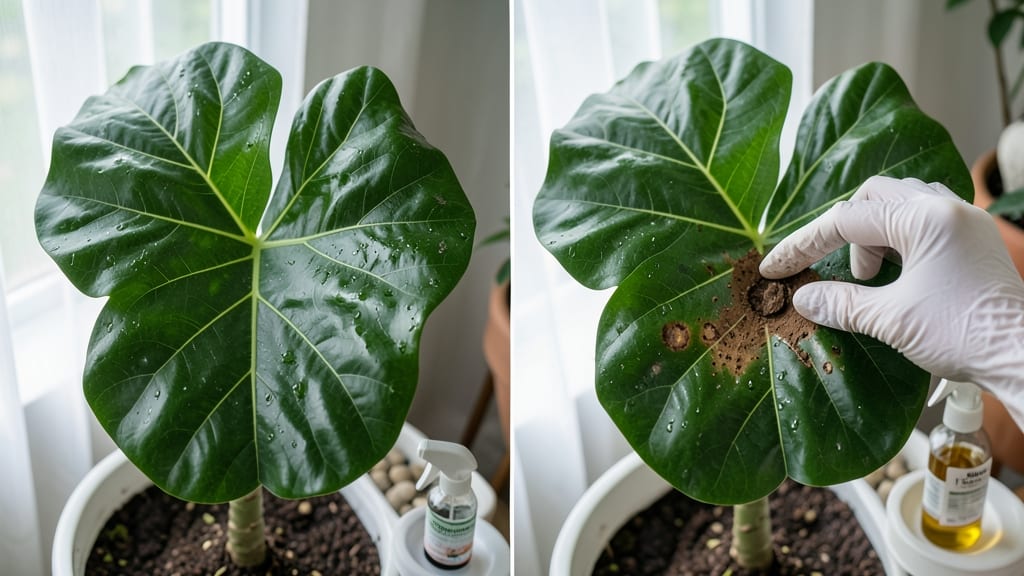
Brown spots on fiddle leaf fig leaves mean your plant’s crying out for help—often faster than you think. 🌿 I’ve nursed back more than a dozen fiddle leaf figs from this exact problem, and the key is acting quickly with the right fixes (no copper sprays needed).
Most people assume it’s overwatering, but fungal infections and pests are just as likely culprits, and they require different solutions.
The good news? You can diagnose the issue in under five minutes by checking leaf texture, soil moisture, and the spots’ edges. Crusty brown spots with yellow halos? Probably fungal. Tiny holes or sticky residue?
Likely pests. Overwatering leaves a soggy, mushy feel at the base. Once you pinpoint the cause, the fix is straightforward—prune affected leaves, adjust watering, and treat with targeted solutions.
Within 2-3 weeks, you’ll see fresh, vibrant growth pushing out from the center of the plant. The secret is consistency: keep humidity steady, avoid wetting leaves, and prune regularly to improve airflow.
My figs bounce back faster now because I catch problems early—no more guessing games or waiting months for recovery.
This method works for both new and seasoned fiddle leaf fig owners, whether you’re dealing with a single leaf or a full plant in crisis. Let’s get those leaves looking lush again without harsh chemicals.
Root Causes Behind Leaf Discoloration
Understanding why your fiddle leaf fig develops brown spots is the first step to saving its lush, vibrant foliage. These blemishes rarely appear out of nowhere—they’re usually a cry for help from your plant.
Let’s break down the most common culprits and the science behind them, so you can address the issue with precision.
Fiddle leaf figs (Ficus lyrata) are tropical plants, but they hate soggy roots. When overwatered, roots suffocate from a lack of oxygen, leading to root rot—a fungal infection that disrupts nutrient and water uptake.
As the roots struggle, the plant compensates by shedding leaves or developing brown, crispy spots along the edges, often paired with yellowing.
Why it happens:
- Excess moisture triggers anaerobic bacteria and fungi (like Pythium or Phytophthora), which clog root cells and block water flow.
- Poor drainage (common in heavy clay pots or compacted soil) worsens the issue by trapping water at the roots.
- Cold or wet soil weakens the plant’s defenses, making it easier for pathogens to invade.
Actionable clue: Check the soil—if it’s damp more than 1–2 inches down after watering, you’re overdoing it. Fiddle leaf figs prefer 60–70% humidity but dry soil between waterings.
On the flip side, underwatering causes leaf dehydration, leading to brown spots that start at the tips or edges and spread inward. Unlike overwatering, these spots are dry, papery, and often crunchy to the touch.
Why it happens:
- Water loss exceeds uptake, causing plasmolysis—when plant cells shrink from dehydration, leading to oxidative stress (cell damage from free radicals).
- Low humidity (below 40%) accelerates moisture loss, especially in dry indoor air (common near heaters or AC vents).
- Small or infrequent waterings leave the root zone too dry, triggering abscisic acid (a plant hormone that signals stress and leaf drop).
Actionable clue: Stick your finger 2–3 inches deep into the soil—if it’s bone-dry, it’s time to water. Grouping plants together or using a pebble tray with water can boost humidity.
Fiddle leaf figs thrive in bright, indirect light, but direct sunlight—especially south- or west-facing windows—can cause sunburn. Brown spots here are dry, leathery, and often appear on leaves facing the sun, with a sharp, well-defined edge.
Why it happens:
- UV radiation damages chloroplasts (the plant’s energy factories), leading to photooxidative stress—where excess light generates toxic oxygen molecules.
- Thin or new leaves are most vulnerable because they lack protective pigments.
- Sudden light changes (like moving a plant from shade to full sun) can shock the plant, causing rapid water loss and cellular breakdown.
Actionable clue: Rotate your plant quarter-turns weekly to ensure even light exposure. If spots appear, move it 3–6 feet back from the window or use a sheer curtain to diffuse harsh rays.
Brown spots can also signal mineral imbalances, particularly calcium, magnesium, or potassium deficiencies, or excessive salts from tap water or fertilizers.
Why it happens:
- Calcium deficiency (often from hard water or low pH soil) causes necrotic spots (dead tissue) on leaf edges, a condition called "tip burn."
- Magnesium deficiency (common in peat-heavy soils) leads to interveinal chlorosis (yellowing between veins) that progresses to brown.
- Salt buildup (from tap water, fertilizers, or poor-quality soil) disrupts osmotic balance, preventing roots from absorbing water—leading to brown, crinkled patches.
Actionable clue:
- Flush the soil every 3–4 months with distilled or rainwater to remove salts.
- Use a balanced liquid fertilizer (like 10-10-10) once a month in spring/summer—avoid over-fertilizing in winter.
- Epsom salt spray (1 tbsp per gallon of water) can temporarily boost magnesium if deficiency is suspected.
Tiny pests like spider mites, scale, or thrips feed on leaf sap, leaving behind stippled brown spots (tiny dots) or sticky residue (honeydew) that attracts sooty mold.
Why it happens:
- Spider mites (common in dry air) pierce cells, causing chlorotic (white/yellow) speckling that turns brown as tissue dies.
- Scale insects (armored or soft-bodied) suck sap, leading to yellowing and brown patches where leaves curl or pucker.
- Thrips damage leaf surfaces, creating silver or bronze spots that darken over time.
Actionable clue:
- Isolate the plant and check undersides of leaves for webs (mites) or cottony masses (scale).
- Wipe leaves with neem oil solution (1 tsp neem oil + 1 tsp mild soap per quart of water) or rubbing alcohol (for scale).
- Increase humidity to deter mites—aim for 50%+ with a humidifier or group plants together.
Fiddle leaf figs are sensitive to cold drafts (from AC, doors, or windows) and temperature fluctuations (below 60°F or above 90°F). Brown spots here often appear randomly and may be paired with drooping or leaf drop.
Why it happens:
- Cold drafts cause rapid transpiration (water loss), leading to cellular dehydration and oxidative damage.
- Sudden temperature drops (like near a cold window) trigger abscisic acid, signaling the plant to shed stressed leaves.
- Low humidity + heat (e.g., near a heater) creates a desiccating effect, causing edge browning similar to underwatering.
Actionable clue:
- Keep your plant away from vents, doors, and windows that open to cold air.
- Maintain 65–85°F and avoid placing it in high-traffic areas where airflow fluctuates.
- Use a thermometer/hygrometer to monitor conditions—consistency is key!
Not all brown spots are a cause for alarm—older leaves naturally develop brown edges or patches as they age, a process called senescence.
Why it happens:
- Chlorophyll breaks down over time, reducing the leaf’s ability to photosynthesize.
- Nutrients are recycled to newer growth, leaving older leaves dry and brittle.
- Ethylene gas (released by ripening fruit or overcrowded plants) can accelerate aging in fiddle leaf figs.
Actionable clue:
- Remove only the most damaged leaves—if the rest of the plant is healthy, it’s likely just natural aging.
- Prune regularly to encourage new growth and reduce stress on the plant.
Fixing Fiddle Leaf Fig Spots
Now that you know what’s causing those pesky brown spots on your fiddle leaf fig, let’s roll up our sleeves and get your plant looking lush again! The good news? Most fixes are simple, copper-free, and require just a little TLC.
Below, we’ve mapped out the most common causes and the easiest, fastest solutions to restore your plant’s vibrancy—plus tips to keep those spots from coming back.
Signs: Yellowing leaves, mushy stems, brown spots that feel soft or squishy, or a foul smell from the soil.
How to Fix It: 🔥 Step 1: Let It Dry Out Stop watering immediately and allow the top 2–3 inches of soil to dry completely before watering again. Stick your finger in the soil—if it’s damp past your first knuckle, wait longer.
🍳 Step 2: Check the Roots Gently remove the plant from its pot and inspect the roots. If you see black, mushy roots, trim them with clean scissors (sterilize with rubbing alcohol first). Healthy roots are firm and white or light tan.
👨🍳 Step 3: Repot in Fresh Soil Use a well-draining potting mix (add perlite or orchid bark if yours is too dense). Choose a pot with drainage holes—this is non-negotiable! If the current pot is waterlogged, upgrade to one 1–2 inches larger.
🥘 Step 4: Adjust Your Watering Routine Water only when the top 50% of the soil is dry, and water thoroughly until it drains from the bottom. Empty the saucer after 10 minutes to prevent soggy roots.
💡 Prevention Tip: Group plants with similar water needs together, and use a moisture meter to avoid guesswork. Less water = happier fiddle leaf fig!
Signs: Brown, crispy spots (often on leaves facing the window), especially in direct sunlight.
How to Fix It: 🔥 Step 1: Move It to Indirect Light Fiddle leaf figs thrive in bright, indirect light (think: 6–10 feet from a south- or west-facing window). If your plant is getting harsh light, rotate it ¼ turn weekly so all sides get even exposure.
🍳 Step 2: Filter the Light If you can’t move the plant, use sheer curtains or a light filter to diffuse the sun. A sheer white curtain works best—avoid dark or heavy fabrics that block too much light.
👨🍳 Step 3: Acclimate Slowly If you’ve recently brought your fiddle leaf fig indoors, gradually increase its light exposure over 1–2 weeks to avoid shock.
🥘 Step 4: Prune Damaged Leaves Snip off any leaves with severe browning (use clean scissors) to redirect energy to new growth. Don’t worry—your plant will bounce back!
🌡️ Prevention Tip: Watch for leaf scorch (brown edges) in spring/summer when sunlight is strongest. A simple trick? Mist the leaves lightly in the morning to create a temporary shield against intense rays.
Signs: Dry, crispy brown spots (often on leaf edges), drooping leaves, or soil pulling away from the pot edges.
How to Fix It: 🔥 Step 1: Water Deeply & Consistently When you water, soak the soil until water runs out the drainage holes. Then, wait until the top 1–2 inches are dry before watering again. Consistency is key—fiddle leaf figs hate dry spells!
🍳 Step 2: Increase Humidity These tropical plants love 60–70% humidity.
If your home is dry (common in winter or with central heating), try: - Placing the pot on a pebble tray filled with water (ensure the pot isn’t sitting in water). - Using a humidifier nearby. - Grouping plants together to create a mini humid microclimate.
👨🍳 Step 3: Wipe Leaves Gently Dust on leaves can block sunlight and worsen dryness. Wipe them down weekly with a damp (not soaking) cloth.
✨ Prevention Tip: Mist the leaves 2–3 times a week (avoid doing this in direct sunlight to prevent fungal issues). For extra humidity, place the pot on a bed of damp sphagnum moss (just keep the moss from touching the pot).
Signs: Brown spots with yellow halos, black mold-like growth, or a slimy texture on leaves.
How to Fix It: 🔥 Step 1: Isolate the Plant Move it away from other plants to stop the spread of spores or bacteria.
🍳 Step 2: Prune Infected Areas Cut off any leaves with spots using sterilized scissors (wipe with rubbing alcohol between cuts). Dispose of the clippings in the trash (not compost).
👨🍳 Step 3: Clean the Leaves Mix 1 tsp neem oil + 1 tsp mild dish soap + 1 quart water in a spray bottle. Spray the leaves thoroughly (avoid over-saturating the soil). Repeat once a week for 2–3 weeks.
🥘 Step 4: Improve Airflow & Light Fungal issues thrive in stagnant, damp air. Ensure your plant has:
- Good airflow (don’t crowd it with other plants).
- Bright, indirect light (but not direct sun, which can stress the plant further).
💡 Prevention Tip: Avoid overhead watering—water at the soil level instead. If you mist, do it early in the day so leaves dry quickly.
Signs: Brown spots with yellowing between veins, slow growth, or spots that look like dried-on residue.
How to Fix It: 🔥 Step 1: Flush the Soil If you suspect chemical buildup (from tap water or fertilizers), leach the soil by watering it thoroughly with distilled or rainwater for 3–4 weeks. Let excess water drain completely each time.
🍳 Step 2: Use the Right Fertilizer Switch to a balanced, water-soluble fertilizer (like a 10-10-10 or 20-20-20) and dilute it to half strength. Fertilize only in spring and summer, every 4–6 weeks.
👨🍳 Step 3: Check Your Water If your tap water is hard or alkaline, it can cause chemical burn. Use filtered, distilled, or collected rainwater for watering.
🥘 Step 4: Boost Micronutrients A lack of magnesium or iron can cause spotting. Try a chelated iron supplement or Epsom salt spray (1 tsp Epsom salt per gallon of water, sprayed on leaves monthly).
🎯 Prevention Tip: Never fertilize a stressed plant (e.g., if it’s underwatered or in direct sun). Wait until it’s healthy before adding nutrients.
Final Thought: Most brown spots are easily reversible with the right care! Start with the most likely cause, adjust one thing at a time, and monitor your plant’s response. Within 4–6 weeks, you should see fresh, spot-free growth. 🌿✨
Frequently asked questions
Why do brown spots appear on my fiddle leaf fig's newer leaves instead of just the old ones?
Newer leaves developing brown spots usually signal environmental stress or nutrient deficiencies. Check for sudden changes like direct sun exposure, low humidity, or over/underwatering. If spots have crispy edges, it’s likely sunburn or dehydration—move the plant away from windows or increase humidity. Yellow halos around spots? That’s often a fungal infection spreading from poor airflow.
Can I save a fiddle leaf fig with severe brown spots covering most leaves?
Yes, but act fast! Prune only the most damaged leaves (never more than ⅓ of the plant at once) to reduce stress. Focus on fixing the root cause: repot if roots are mushy (root rot), adjust watering (soil should dry 2–3 inches deep between waterings), and boost humidity with a pebble tray. With consistent care, new growth should emerge within 4–6 weeks—just keep the remaining healthy leaves to fuel recovery.
How do I tell if brown spots are from pests vs. fungal issues?
Pests leave tiny stippled dots (spider mites) or sticky residue (scale/aphids), often with visible bugs on leaf undersides. Fungal spots usually have yellow halos, feel slimy, and appear in damp conditions. Check for webs (mites) or cottony masses (scale). Treat pests with neem oil spray; fungal issues need pruning + airflow improvements and avoiding overhead watering.
Will brown spots spread to other houseplants if I keep them near my fiddle leaf fig?
Only if the cause is contagious—like fungal spores or pests. Isolate your fiddle leaf fig immediately if you suspect infection. Fungal issues (e.g., anthracnose) spread via water splashes, while pests (mites, scale) crawl between plants. Once treated, return it to its spot only after confirming no active spread. Always quarantine new plants for 2 weeks before introducing them to your collection.