
Pests and Diseases
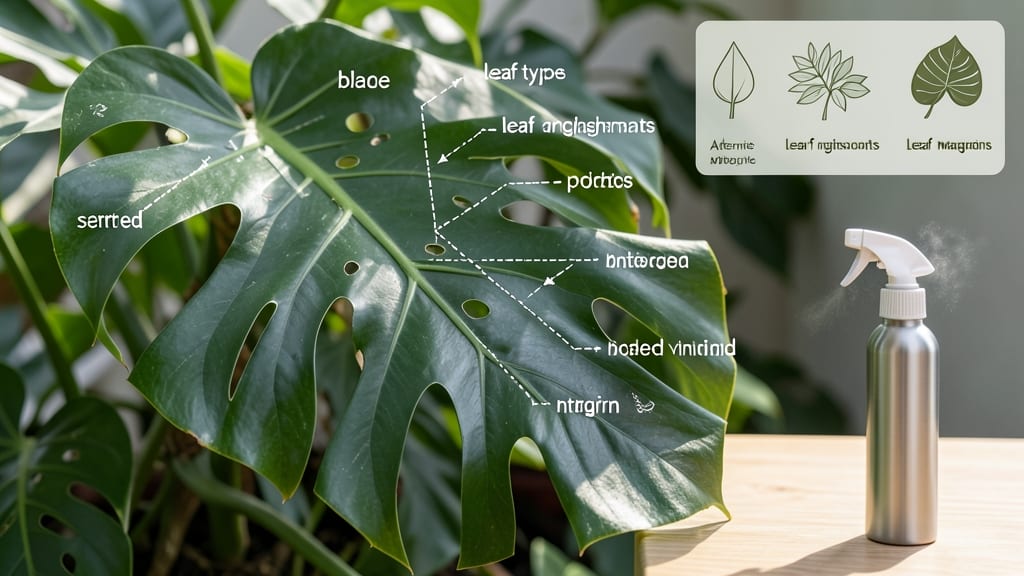
Foliar leaves are leaf-like structures that grow from stems or non-leaf tissues instead of buds, differing from true leaves in their origin and vascular structure. These structures mimic photosynthesis but often lack the full complexity of conventional leaves, found in plants like ivy or certain succulents.
Foliar leaves are fascinating because they're nature's workaround for plants that need leaf-like functions without the full anatomical package. 🌿 Unlike true leaves, which develop from buds and have complex vein networks, foliar leaves often grow directly from stems or even modified branches.
This adaptation lets plants like English ivy (Hedera helix) create dense canopies for shade while conserving energy—perfect for climbing surfaces or ground cover. The trade-off? They typically photosynthesize less efficiently than true leaves, which is why you'll find them more commonly in low-light or resource-limited environments.
What makes this even more interesting is how these structures vary across species. Some, like the leaves of sedum plants, are thick and fleshy to store water, while others, such as those on bougainvillea, are actually modified leaf parts called phylloclades.
These adaptations help plants thrive in specific conditions, whether it's arid climates or shady forests. Understanding foliar leaves can even help gardeners choose the right plants for their growing zones!
💡 In This Article
- Key Differences Between Foliar Leaves and True Leaves
- Common Plants Featuring Foliar Leaves and Their Uses
Key differences between foliar leaves and true leaves
Foliar leaves develop from non-leaf tissues like stems or branches, while true leaves emerge from specialized buds called axillary meristems.
This fundamental difference affects their entire structure: foliar leaves often lack the complex vein networks (like the reticulate venation found in true leaves) and instead develop simpler parallel or pinnate patterns.
For example, the "leaves" of cacti (actually modified stems called cladodes) have just a few vascular bundles compared to the hundreds in a typical oak leaf.
Photosynthetically, foliar leaves operate at a lower efficiency because their reduced vascular systems limit water and nutrient transport.
A true leaf like that of a maple tree can process up to 15% more sunlight due to its dense vein network, while a foliar leaf from ivy might achieve only 60-70% of that efficiency.
This trade-off explains why foliar leaves often appear in plants adapted to low-light conditions or water scarcity. The thick, waxy surfaces you see on succulent "leaves" (like those of Echeveria) are adaptations to minimize water loss—a necessity when their vascular systems can't support rapid transpiration.
Developmentally, foliar leaves follow a different growth pattern. True leaves form through a process called lamina expansion, where cells divide rapidly to create broad surfaces. Foliar leaves, however, often grow through apical meristems along stems, resulting in structures that may look leaf-like but lack the same genetic programming.
This is why you'll find foliar leaves persisting long after true leaves have fallen in some species—a survival strategy that prioritizes function over perfect form.
Consider the case of Asparagus officinalis (asparagus), where the "needle-like" structures are actually cladophylls—foliar leaves that have evolved into photosynthetic stems. These structures contain just 3-5 vascular bundles compared to the 100+ in a true leaf, yet they thrive in nutrient-poor soils where true leaves would struggle.
The adaptation highlights how foliar leaves represent a botanical compromise: sufficient photosynthesis with minimal resource investment.
Another key distinction lies in their lifespan. True leaves often follow a seasonal cycle (deciduous plants), while foliar leaves frequently persist year-round. The Hedera helix (English ivy) provides a perfect example: its foliar leaves remain attached even as true leaves fall in autumn, ensuring continuous photosynthesis.
This persistence is due to their simpler attachment points and reduced metabolic demands.
Understanding these differences helps explain why some plants can dominate challenging environments. Foliar leaves allow species like Opuntia cacti to survive in deserts where true leaves would desiccate instantly. The trade-off between efficiency and adaptability is what makes foliar leaves such a remarkable botanical innovation. 🌱