
Blooming
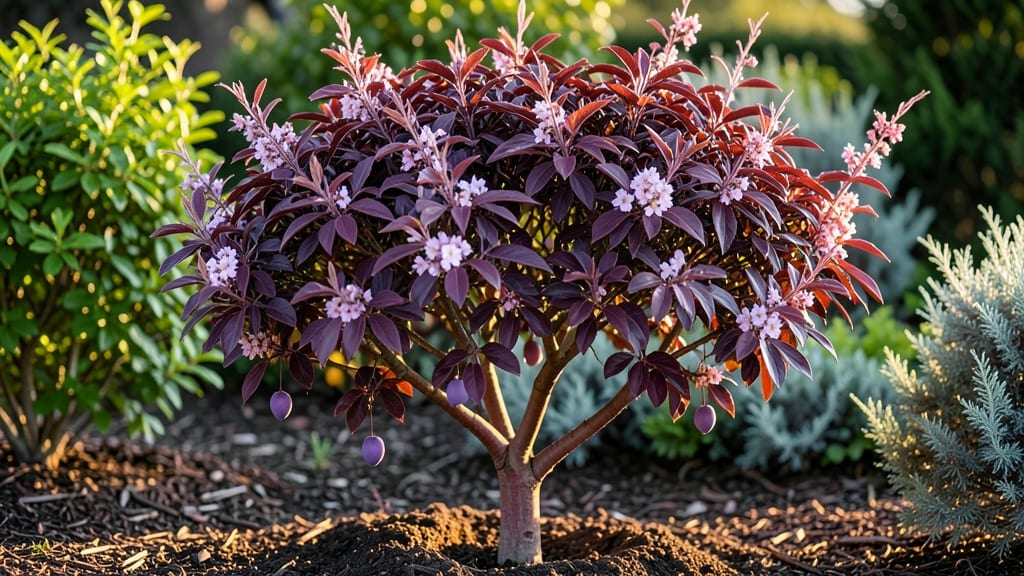
Your purple leaf plum bloom isn’t just spring’s showstopper—it’s a year-round spectacle when you prune with purpose. 🌸 I’ve watched mine go from sparse pink clusters to a riot of blossoms by simply timing cuts right, and the secret lies in understanding how this plant’s growth cycles work. The key?
Prune right after blooming to shape the tree while preserving next year’s buds. Purple leaf plums need full sun (6+ hours daily) and well-draining soil to fuel those vibrant flowers, but even with perfect conditions, neglecting pruning can leave you staring at bare branches by summer. The payoff?
A tree that blooms earlier, denser, and longer than its unpruned neighbors. Once the flowers fade, don’t cut back—let the seed pods form first. They’re not just ornamental; they signal when to make your summer thinning cuts to improve airflow.
By fall, your tree will be stocked with next year’s blossom buds, ready to burst into color again. This isn’t just about pretty flowers—it’s about transforming your purple leaf plum into a four-season star.
From winter’s bare branches to spring’s explosion of color, every season has its own drama when you prune with intention.
📚 In This Guide
- What you need
- Instructions
- Tips and common mistakes
- Wrapping up and next steps
What you need
- ● Purple leaf plum tree (Prunus cerasifera 'Atropurpurea' or similar cultivar) – 1 mature tree (5-10 years old) or 1-3 young saplings (3-5 ft tall)
- ● Well-draining soil – Mix of 60% native soil, 30% compost, and 10% perlite/sand (pH 6.0–7.0)
- ● Balanced fertilizer – 10-10-10 NPK ratio (1 lb per 100 sq ft) or slow-release granules
- ● Pruning tools: Bypass pruners (for small branches)
- ● Loppers (for thicker branches, ¾"–2")
- ● Pruning saw (for stubborn branches >2")
- ● Disinfectant – 70% isopropyl alcohol or 10% bleach solution (to sterilize tools)
- ● Mulch – 2–3 inches of organic mulch (wood chips or pine straw)
- ● Watering can or hose with adjustable nozzle
- ● Garden gloves (nitrile-coated for grip)
- ● Tree wrap or protective barrier (for young trees in cold climates)
- ● Slow-release fertilizer spikes (for minimal maintenance)
- ● Plant support stakes (if tree is newly planted or top-heavy)
- ● Pest control spray (neem oil or horticultural oil for aphids/scale)
Step-by-step guide to maximizing purple leaf plum bloom
Here's how to coax vibrant blooms year after year—it's all about timing and technique.
✂️ Step 1: Prune for Structure in Late Winter
When buds begin swelling (usually late February to early March), grab your pruners and remove any dead, crossing, or inward-growing branches first. These suck up energy that should fuel blooms. I always start with the 3-D rule: cut branches that are dead, diseased, or damaging others.
Next, shape the tree by thinning out crowded branches—aim for an open center where light can reach all branches. Purple leaf plums bloom best when they get full sun for 6+ hours daily. If your tree is in a shady spot, prune to remove any branches blocking light from reaching the center.
🌿 Step 2: Encourage Spring Blooms with Strategic Cuts
After the tree finishes blooming (usually 4-6 weeks after first flowers appear), do a second pruning to remove spent blooms and weak growth. This prevents the tree from putting energy into seed production and redirects it to next year's flowers. I like to cut just above a bud that faces outward—this keeps the tree's shape open and airy.
Watch for sucker growth at the base of the tree. These vigorous shoots steal nutrients from the main branches. Snip them off at the base with clean pruners. If you see any branches growing straight up (called "water sprouts"), remove them too—they never bloom well.
☀️ Step 3: Maintain Year-Round Health for Continuous Color
Purple leaf plums stay vibrant when they get regular care. Water deeply once a week during dry spells (until soil feels moist 6 inches down). Overwatering causes root rot, which stresses the tree and reduces blooms. I always check the soil with my finger—if it's dry at that depth, it's time to water.
Apply a balanced fertilizer (10-10-10) in early spring and again in mid-summer to keep the tree energized. Avoid high-nitrogen fertilizers—they promote leafy growth at the expense of flowers. Instead, look for one with equal parts nitrogen, phosphorus, and potassium to support both foliage and blooms.
⏰ Step 4: Prepare for Next Year's Blooms in Fall
As temperatures drop below 50°F in late fall, do a final pruning to remove any weak or damaged branches. This prevents pests and diseases from hiding in dead wood over winter. I also rake up fallen leaves around the base—they can harbor fungal spores that attack the tree in spring.
Mulch the base of the tree with 2-3 inches of organic mulch (like shredded bark) to protect roots from freezing temperatures. Keep the mulch 6 inches away from the trunk to prevent rot. In USDA zones 6-8, purple leaf plums are hardy enough to survive winter with minimal protection, but a little extra care ensures bigger, brighter blooms next spring.
Tips & tricks for perfect purple leaf plum bloom
Real talk: Pruning purple leaf plums isn't just about cutting branches—it's about creating a tree that will reward you with dazzling blooms all season long.
Timing is Everything: The late February to early March window for your first pruning is critical because that's when buds begin swelling. If you prune too early, you risk cutting off next year's flower buds. I've learned this the hard way—wait until you see those buds starting to plump up before you make any cuts. This timing ensures you're not accidentally removing potential blooms.
Light Access is Non-Negotiable: Purple leaf plums need full sun for 6+ hours daily to produce their signature vibrant blooms. After your first pruning, step back and look at your tree from all angles. If you notice branches blocking sunlight from reaching the center, those are the ones to remove. I use a simple trick: hold a flashlight at the tree's center during the day—any branches casting shadows need to go. This open center allows sunlight to penetrate all the way through, encouraging blooms on every branch.
The 4-6 Week Rule for Post-Bloom Pruning: After your tree finishes blooming, wait exactly 4-6 weeks before doing your second pruning. This timing is crucial because it gives the tree time to set its next year's flower buds. If you prune too soon, you might accidentally remove those new buds before they've had a chance to form. I mark my calendar right after the first blooms fade to remember this important deadline.
Mulch Like a Pro: When you apply that 2-3 inches of organic mulch in late fall, keep it 6 inches away from the trunk to prevent rot. I've seen so many well-meaning gardeners smother their tree's base with mulch right up against the trunk, which can actually harm the tree. The key is to create a donut shape around the tree—thick in the middle but leaving that crucial 6-inch gap at the edges. This protects the roots while keeping the trunk healthy and disease-free.
Pro Tips for Purple Leaf Plum Bloom
- Real talk: Pruning purple leaf plums isn't just about cutting branches—it's about creating a tree that will reward you with dazzling blooms all season long.
- Timing is Everything: The late February to early March window for your first pruning is critical because that's when buds begin swelling.
- Light Access is Non-Negotiable: Purple leaf plums need full sun for 6+ hours daily to produce their signature vibrant blooms.
Frequently asked questions
Got questions about your Purple Leaf Plum bloom? You’re not alone!
Here are answers to the most common queries—from timing to troubleshooting—to keep your tree thriving and stunning year-round.
When is the best time to prune my Purple Leaf Plum for optimal blooms?
Prune your Purple Leaf Plum right after flowering in early spring (March–April) to avoid cutting off next year’s blooms. Light shaping can also happen in late summer (August–September) to encourage new growth. Never prune in winter—it stresses the tree and risks disease.
Why aren’t my Purple Leaf Plum blooms as vibrant as they used to be?
Duller blooms often signal overcrowding, poor nutrition, or improper pruning. Thin out dense branches to improve airflow, fertilize with acidic, iron-rich soil (they love pH 6.0–7.0), and avoid heavy pruning in bloom season. Yellow leaves? Check for iron deficiency—use chelated iron supplements.
Can I grow a Purple Leaf Plum in a container? How big should the pot be?
Yes! Choose a large container (at least 24–36 inches wide) with drainage holes and use well-draining potting mix. Dwarf cultivars like ‘Okame’ adapt best. Repot every 2–3 years and prune aggressively to control size—root-bound trees bloom poorly. Pro tip: Place in full sun and water deeply but infrequently.
What pests or diseases should I watch for on my Purple Leaf Plum?
Common issues include:
- Scale insects (sticky residue on leaves) – Treat with horticultural oil.
- Powdery mildew (white fungal coating) – Prune for airflow and apply fungicide.
- Borers (holes in bark) – Use systemic insecticides or invite woodpeckers!
Does my Purple Leaf Plum need winter protection in cold climates?
Most varieties tolerate USDA Zones 5–9, but young trees or harsh winters (below 0°F) may need wrapping the trunk with burlap or mulching the root zone with straw. Bonus: The purple foliage adds winter interest—leave it be unless branches are damaged!
Wrapping up and next steps
The purple leaf plum bloom is more than just a seasonal spectacle—it’s a year-round investment in beauty and resilience. With the right pruning techniques, you’ll unlock vibrant blooms, lush foliage, and a low-maintenance tree that steals the show. 🌸
Ready to transform your garden? Grab your tools, follow the steps, and watch your plum tree thrive! Start small—prune once, admire daily—and soon, your yard will be the talk of the neighborhood.
- 🔍 Next step: Mark your calendar for the best pruning times (early spring or late winter).
- 📸 Bonus: Snap a photo of your tree’s first post-pruning bloom—share it with us!