
Neem Oil
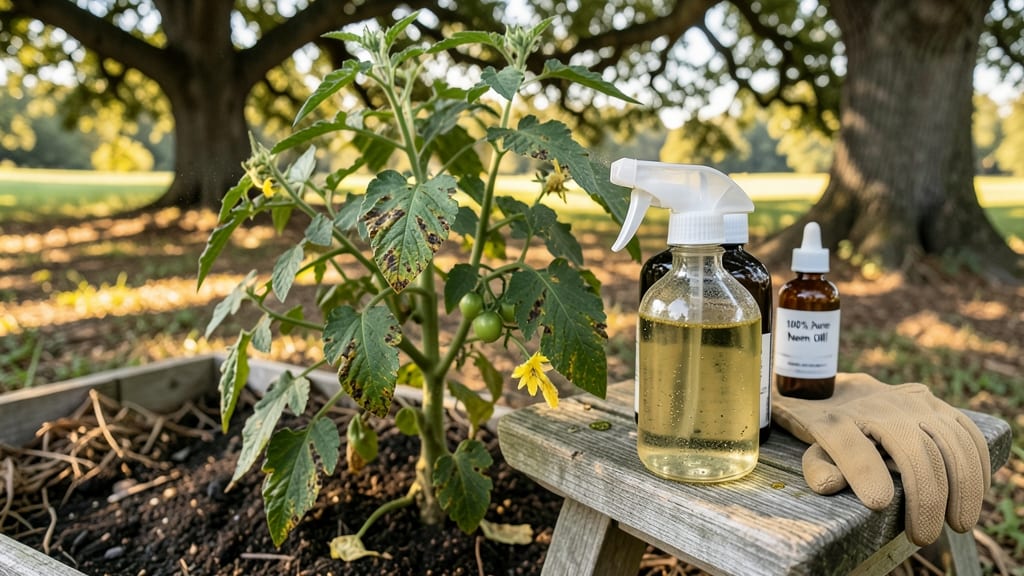
Neem oil for leaf spot is the organic gardener's secret weapon when those unsightly brown spots start turning your leaves into a sad, crunchy mess. 🌿 I've seen it transform struggling plants back to vibrant health in just one treatment—no harsh chemicals needed.
The key is acting fast before the fungus spreads to new foliage or drops leaves entirely.
Leaf spot loves damp leaves and crowded plants, so tomatoes, peppers, and roses are frequent targets. My first year growing tomatoes, I lost half my harvest to this exact problem before learning neem oil's power.
The good news? It works on both fungal and bacterial spots, and you can make the spray yourself in 10 minutes with ingredients you likely already have.
Expect to see improvement within 24 hours—spots stop spreading, and new growth emerges cleaner. The oil disrupts the fungus's life cycle while strengthening your plant's natural defenses. For best results, apply in the evening when temperatures drop below 85°F to prevent leaf burn.
Pair it with proper spacing and watering at the base (never overhead) for long-term protection. This combo has saved my gardens from multiple outbreaks, and it's safe for beneficial insects too. Let's get those plants looking healthy again!
The Hidden Triggers of Leaf Spots
Leaf spots don’t just appear out of nowhere—they’re the result of a perfect storm of environmental and biological factors. Understanding these causes is the first step to preventing them and using neem oil effectively. Let’s break down the key culprits behind those unsightly (and often damaging) spots on your plants.
Most leaf spots are caused by fungal pathogens, which thrive in moist, warm conditions.
These microscopic invaders include: - Alternaria – A common culprit that thrives in hot, humid climates, causing dark, concentric spots with a yellow halo. - Septoria – Known for small, circular spots with dark centers, often appearing on lower leaves first. - Cercospora – Produces irregular, tan-to-gray spots with dark borders, often spreading rapidly in wet weather.
Fungal spores are always present in the environment, but they only become problematic when conditions are right—like after prolonged leaf wetness or poor airflow.
Plants need water, but excess moisture—especially on leaves—creates the ideal breeding ground for fungal growth.
Here’s why it happens: - Stagnant water on foliage (from overhead watering) keeps spores damp, allowing them to germinate. - Poor drainage in soil leads to waterlogged roots, weakening the plant’s defenses and making it more susceptible to infections. - High humidity (above 70%) without proper airflow encourages fungal spores to multiply rapidly.
Pro Tip: 💡 Water at the base of plants in the morning to allow leaves to dry quickly—this reduces fungal activity by up to 60%.
Plants under stress are far more vulnerable to leaf spot infections.
Common stressors include: - Extreme temperatures (too hot or too cold) weaken cell walls, making them easier targets. - Nutrient deficiencies (especially nitrogen or potassium) reduce the plant’s ability to fight off pathogens. - Physical damage (from hail, insects, or rough handling) creates entry points for fungi.
Example: A tomato plant struggling in scorching heat with insufficient potassium is three times more likely to develop early blight (a type of leaf spot).
Some pests don’t just feed—they pave the way for fungal infections. Insects like:
- Aphids (which excrete honeydew, a sugary film that attracts sooty mold).
- Spider mites (which weaken leaves through feeding).
- Caterpillars (whose chewing can create wounds where fungi enter).
Once these pests compromise the leaf’s integrity, fungal spores latch on, turning small bites into full-blown spots.
Crowded plants with restricted airflow trap moisture and heat, creating a fungal paradise. This is especially true in:
- Greenhouses (where humidity can spike without ventilation).
- Shaded gardens (where leaves stay damp longer).
- Overgrown shrubs or thick canopies (where sunlight can’t reach all foliage).
Solution: 🌬️ Prune plants to improve airflow and space them 12–18 inches apart to reduce humidity buildup.
Just like humans, plants have natural defenses—but these can be compromised by:
- Improper pH levels (fungi like acidic soil, while many plants prefer neutral to slightly alkaline).
- Lack of beneficial microbes (healthy soil fungi like Trichoderma can outcompete pathogens).
- Overuse of synthetic fertilizers (which can disrupt the plant’s natural resistance).
Key Fact: Plants with strong cuticle layers (the waxy outer coating) resist infections better. Neem oil helps strengthen this barrier while smothering existing spores.
Neem oil works best when you address the root cause of leaf spots. Simply spraying won’t fix poor drainage or humidity issues—you need to: 1. Remove infected leaves (prevents spore spread).
- Adjust watering habits (deep, infrequent watering).
- Improve airflow (prune, space plants, use fans in greenhouses).
- Apply neem oil preventatively (before conditions worsen).
By tackling these triggers, you’ll see fewer spots, healthier plants, and longer-lasting protection from neem oil’s antifungal properties.
Quick Fixes for Fungal Leaf Spots
Leaf spots caused by fungal infections can turn your lush green plants into a patchwork of brown or black blemishes—but don’t panic! With the right approach, you can reverse the damage, stop the spread, and restore your plants to health.
Neem oil isn’t just a preventative; it’s a powerful treatment when used correctly. Below, we break down the best solutions based on the root cause of your leaf spot woes, plus prevention tips to keep your garden spot-free for good.
If you’ve already spotted the telltale signs—dark, greasy patches, yellow halos, or powdery mildew—neem oil can act fast to smother the fungus and halt its growth. Here’s how to do it right:
🔥 Step 1: Prune the Problem Areas
Before applying anything, remove infected leaves to prevent the fungus from spreading. Use clean, sharp pruners (or scissors) and dispose of the clippings in the trash—not the compost! Fungal spores can linger and reinfect your plants.
- ✂️ Cut 1 inch below the spot to ensure you’ve removed all infected tissue.
- 🌿 Avoid wetting healthy leaves while pruning to reduce stress.
🍳 Step 2: Mix Your Neem Oil Spray (The Right Way)
Store-bought neem oil concentrates are potent, but dilution is key to avoid burning your plants. Here’s a foolproof recipe:
| Ingredient | Amount |
|---|---|
| 100% cold-pressed neem oil | 1–2 teaspoons |
| 1 teaspoon mild liquid soap (or 1 tsp castile soap) | — |
| 1 quart (32 oz) water | — |
Why soap? It helps the oil stick to leaves and penetrates the fungal cell walls.
👨🍳 Step 3: Apply the Spray (Evenly & Thoroughly)
Timing and technique matter! Follow these pro tips:
- 🌅 Spray in the early morning or late evening to avoid sunburn (neem oil can be photosensitizing).
- 🌿 Cover both sides of leaves—fungi often hide on the undersides!
- 💦 Use a fine mist (like a spray bottle or pump sprayer) for even coverage.
- 🔄 Reapply every 7–10 days or after rain (which washes off the oil).
⏰ Step 4: Monitor & Repeat
Most fungal leaf spots show improvement within 3–5 days of consistent treatment. If new spots appear:
- 🔍 Check for environmental triggers (like overwatering or poor airflow).
- 🌡️ Increase spacing between plants if they’re crowded.
- ✨ Boost plant immunity with a foliar feed of seaweed extract or compost tea.
The best way to fight leaf spots? Stop them before they start. Here’s how to create a fungal-resistant garden:
💡 Pro Tip: Optimize Airflow & Light
Fungi thrive in wet, stagnant conditions. Keep your plants happy with:
- 🌬️ Space plants 3–6 inches apart (depending on the variety) for better air circulation.
- ☀️ Avoid overhead watering—use drip irrigation or water at the base.
- 🌧️ Water in the morning so leaves dry quickly (fungi love moisture!).
🌡️ Strengthen Plant Resilience
Healthy plants fight off infections naturally. Give yours a fighting chance with:
- 🍄 Mulch with straw or wood chips to keep soil moist (but not soggy) and reduce spore splash.
- 💪 Feed with balanced fertilizer (like 10-10-10) every 4–6 weeks during growing season.
- 🌱 Rotate crops annually to prevent soil-borne fungi from building up.
✨ Schedule Preventative Sprays
Even if your plants look perfect, a monthly neem oil spray can act as a shield. Mix it lighter for prevention (1 tsp neem oil + 1 tsp soap per gallon of water) and apply every 4 weeks or after heavy rain.
If leaf spots persist after 2–3 weeks of neem oil treatment, the fungus may be resistant or systemic (like anthracnose or bacterial leaf spot). In these cases:
- 🛒 Try a copper fungicide (like Bonide Copper Fungicide) as a secondary treatment.
- 🌱 Consider resistant plant varieties for next season (e.g., ‘Celebrity’ tomatoes for early blight).
- 🚨 Dispose of severely infected plants to prevent spread to others.
Remember: Neem oil is a natural powerhouse, but consistency is key. With these steps, your plants will bounce back—and stay spot-free for seasons to come! 🌿💚
Frequently asked questions
How quickly should I expect to see results from neem oil treatment?
You’ll typically notice improvement within 24–48 hours—spots should stop spreading, and new growth will appear cleaner. For complete recovery, apply neem oil every 7–10 days for 2–3 weeks. The oil works by disrupting fungal spores, but consistency is key to preventing reinfection.
Can I use neem oil on edible plants like tomatoes and peppers?
Yes! Neem oil is safe for edible plants when used correctly. Always apply it 2–3 weeks before harvest to ensure full breakdown. For tomatoes and peppers, focus on the undersides of leaves where fungal spores hide. Avoid spraying flowers to protect pollinators.
What’s the difference between neem oil and copper fungicide for leaf spot?
Neem oil is a preventative and mild curative that works best on early-stage fungal infections. Copper fungicides (like Bonide Copper) are stronger but can harm soil microbes and beneficial insects. Neem oil is safer for organic gardens and won’t leave residue on edible plants.
Will neem oil work on bacterial leaf spot?
Neem oil is most effective against fungal leaf spots, but it can help with bacterial spots by reducing secondary infections. For bacterial leaf spot, combine neem oil with copper fungicide and remove infected leaves immediately. Bacterial spots often require more aggressive treatment.
Can I mix neem oil with other garden sprays?
Yes, but with caution. Neem oil mixes well with baking soda (for powdery mildew) or compost tea (for plant immunity). Avoid mixing with synthetic pesticides or oils (like horticultural oil), as they can cause chemical reactions. Always test small areas first.