
Neem Oil
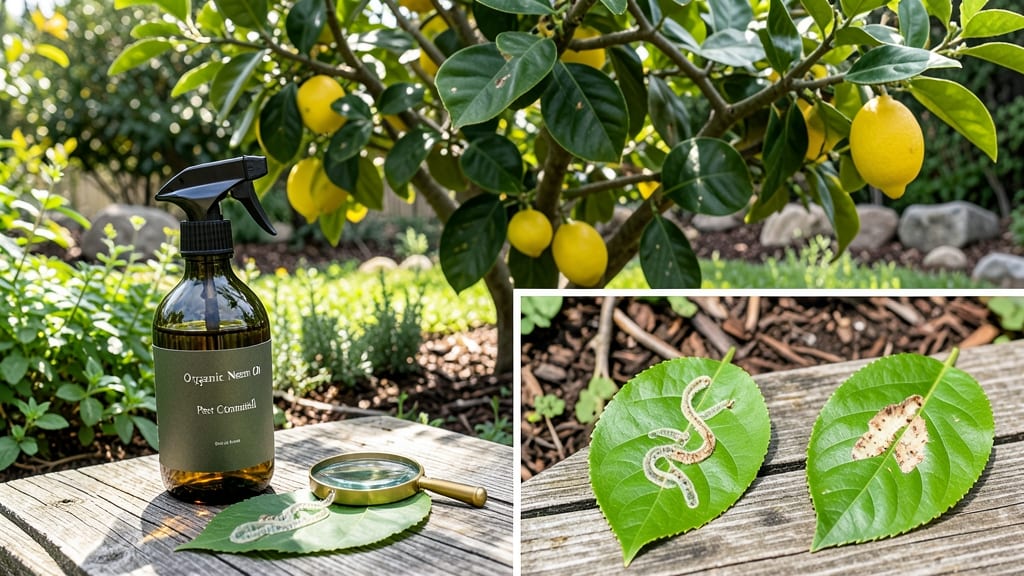
Neem oil spray for citrus leafminers works faster than you’d expect—48 hours to visibly slow the damage, and often 72 hours to clear them out completely. 🌿 I’ve used it on my Meyer lemon tree after seeing those telltale serpentine trails in the leaves, and within days, the new growth stayed clean.
The key is timing it right and applying it correctly, which I’ll walk you through step by step.
Leafminers are sneaky—they burrow inside leaves, making them look mottled and weak before the damage becomes obvious. Neem oil disrupts their life cycle by coating their bodies and smothering eggs, but it’s not a one-and-done fix.
You’ll need to reapply every 5-7 days until the infestation is gone, and it’s best used when temperatures stay above 55°F for maximum effectiveness. The oil also acts as a preventative, keeping new pests from moving in.
What you’ll end up with is healthy, bright green leaves that stay intact, no more frantic scraping or squishing those tiny white maggots. Your citrus trees will bounce back faster, and the fruit won’t develop the unsightly (and sometimes bitter) scars that leafminers leave behind.
Just be ready to repeat the process until you see two full weeks of clean foliage—that’s your sign the pests are gone for good.
For stubborn cases where the infestation keeps coming back, combine neem oil with soapy water sprays or introduce beneficial wasps like Trichogramma, which are natural predators.
If your tree looks like it’s fighting for its life—leaves dropping in sheets or new mines appearing daily—it might be time to call in a local arborist for a second opinion. Prevention is always easier than cleanup, so keep an eye out for those early signs of trouble.
The Hidden Triggers Behind Leafminer Outbreaks
Citrus leafminers—those tiny, serpentine pests—don’t just appear out of nowhere. Their infestations are often the result of a perfect storm of environmental, agricultural, and biological factors. Understanding these triggers is the first step to preventing future outbreaks and protecting your citrus trees.
Let’s break down the key reasons these pests target your grove, orchard, or backyard citrus.
Leafminers thrive in specific weather conditions, making climate a major player in their lifecycle. Here’s how temperature and humidity create the ideal breeding ground:
- Warm Temperatures (75–95°F): Leafminers are most active when daytime temperatures hover between 75°F and 95°F. Warmer climates accelerate their development, allowing them to complete multiple generations in a single season. 💡 Pro Tip: If you’re in a hot, humid region, monitor your trees daily during peak summer months.
- High Humidity: Moisture levels above 60% create a damp environment that softens citrus leaves, making them easier for larvae to burrow into. Rainfall also washes away natural predators, leaving leafminers unchecked.
- Drought Stress: While excess moisture helps leafminers, prolonged drought weakens trees, making them more susceptible to infestations. Stressed plants produce thinner leaves, which larvae find irresistible.
🌡️ Actionable Fix: Use mulch to regulate soil moisture, avoid overwatering, and consider shade cloth in extreme heat to disrupt their lifecycle.
A weak tree is an open invitation for leafminers. When citrus plants are malnourished, diseased, or improperly cared for, they become prime targets. Here’s how poor health sets the stage:
- Nutrient Deficiencies: Lack of nitrogen, phosphorus, or potassium weakens leaves, making them easier for larvae to penetrate. Yellowing leaves (chlorosis) or stunted growth are red flags.
- Fungal or Bacterial Infections: Diseases like citrus greening (HLB) or anthracnose damage foliage, creating entry points for leafminers. Infected trees often have thinner, brittle leaves that larvae exploit.
- Overpruning or Physical Damage: Aggressive pruning or hail/storm damage exposes fresh growth, which leafminers love to infest. Always prune in dry seasons to minimize stress.
💡 Pro Tip: Conduct a soil test annually and fertilize with balanced citrus-specific nutrients (e.g., 6-6-6 or 8-3-9) to fortify tree defenses.
Leafminers don’t always win—nature has its own pest control system. When their predators vanish, populations explode. Here’s who’s missing (and how to bring them back):
| Natural Predator | How They Help | Why They Disappear |
|---|---|---|
| Parasitic Wasps (e.g., Brachymeria spp.) | Lay eggs inside leafminer larvae, killing them from within. | Pesticide use (even neem oil overuse) or habitat loss. |
| Ladybugs (Hippodamia spp.) | Devour leafminer eggs and young larvae. | Lack of alternative prey (e.g., aphids) or chemical sprays. |
| Birds (e.g., Warblers, Chickadees) | Feed on adult leafminers and disturbed larvae. | Loss of nearby shrubs/trees for nesting or food. |
| Ground Beetles | Prey on leafminer pupae in the soil. | Tilled soil or broad-spectrum insecticides. |
✨ Actionable Fix: Avoid harsh synthetic pesticides and plant native flowering plants (e.g., alyssum, dill) to attract predators. Introduce beneficial nematodes to support ground-dwelling insects.
Ironically, the very sprays meant to protect citrus trees can invite leafminer infestations. Here’s how:
- Killing Beneficial Insects: Many pesticides wipe out predatory wasps, ladybugs, and lacewings, removing the natural checks on leafminer populations.
- Resistance Development: Frequent use of pyrethroids or organophosphates can make leafminers resistant, forcing them to seek out untreated trees.
- Secondary Infestations: Chemicals stress trees, making them more vulnerable to secondary pests like leafminers, which thrive on weakened foliage.
🔥 Pro Tip: Rotate organic sprays (like neem oil, horticultural oil, or kaolin clay) and use them only when necessary to preserve beneficial insects.
Growing citrus in large, uniform blocks or near other host plants creates a leafminer buffet. Here’s why:
- Lack of Biodiversity: Monocultures offer no barriers for pests to spread quickly from tree to tree.
- Proximity to Wild Hosts: Leafminers can infest nearby rue plants, boxwood, or even weeds like purslane, then migrate to citrus.
- Poor Airflow: Dense plantings trap humidity and increase leafminer survival rates by slowing natural drying.
🎯 Actionable Fix: Interplant citrus with non-host plants (e.g., marigolds, basil) and space trees 10–15 feet apart for better airflow.
Natural Remedies for Citrus Pests
Citrus leafminers may seem like a persistent problem, but with the right approach, you can eliminate them in just 48 hours—and keep them away for good. The key is combining neem oil’s power with targeted, practical fixes.
Below, we break down cause-specific solutions, from immediate fixes to long-term prevention, so your citrus trees stay healthy and pest-free.
If you’ve spotted tunnels, wilting leaves, or tiny white larvae, act quickly to prevent spread.
🍳 Spray Neem Oil Correctly (The Game-Changer)
Neem oil disrupts leafminer life cycles by smothering eggs, larvae, and adults—but only if applied right. - Mix it properly: Combine 1 tbsp neem oil + 1 tsp mild soap (or horticultural oil) per quart of water.
Shake well before use. - Spray thoroughly: Focus on undersides of leaves (where larvae hide) and new growth.
Use a fine mist for even coverage. - Timing matters: Apply early morning or late evening to avoid burning leaves in direct sunlight. - Reapply every 3–5 days for 2 weeks to break the leafminer cycle.
> 💡 Pro Tip: Add a drop of dish soap (like Castile) to help the solution stick to waxy citrus leaves.
👨🍳 Boost with Companion Sprays (For Stubborn Cases)
If neem alone isn’t enough, layer in these eco-friendly allies: - Kaolin clay spray: Creates a physical barrier that confuses and repels leafminers.
Mix 2 tbsp clay + 1 gallon water + a drop of soap. - Garlic or chili pepper spray: Blend 1 chopped garlic bulb + 1 tbsp cayenne + 1 quart water, strain, and spray.
The sulfur compounds deter pests. - Beneficial nematodes: For soil-dwelling larvae, apply heterorhabditis bacteriophora (sold online) to the root zone after watering.
Once the infestation is under control, strengthen your citrus tree’s defenses to stop leafminers from returning.
🔪 Prune & Clean Like a Pro Leafminers love crowded, dirty trees.
Keep yours open and hygienic: - Remove infested leaves immediately and dispose of them in sealed bags (not compost). - Thin out dense foliage to improve airflow—leafminers thrive in humid, shaded areas. - Prune in late winter/early spring to reduce hiding spots before the next pest wave.
🌱 Soil & Tree Health: Make Your Citrus Unappealing
Healthy trees resist pests naturally. Follow these steps: - Water deeply but less often: Leafminers love stressed, overwatered trees.
Aim for 1–2 inches of water per week (adjust for climate). - Feed with citrus-specific fertilizer: A balanced NPK (10-10-10) or organic option (like fish emulsion) boosts leaf toughness. - Mulch with wood chips or straw: Keeps soil moist but not soggy, discouraging leafminer-friendly fungi.
🐞 Introduce Natural Predators (The Ultimate Eco-Hack)
Let Mother Nature do the work with these leafminer hunters:
- Parasitic wasps (Diglyphus isaea or Aphytis melinus): Release them in early spring—they lay eggs inside leafminer larvae, killing them from within.
- Ladybugs & lacewings: Buy or attract them with dill or fennel plants nearby.
They devour leafminer eggs. - Birds: Hang a bird feeder or bat house—both eat leafminers and other pests.
> 🎯 Prevention Hack: Yellow sticky traps (placed near trees) catch adult leafminers before they lay eggs.
If your tree is severely damaged (50%+ leaf loss) or pests keep returning, consider:
- Systemic neonicotinoid sprays (last resort—use only organic options like azadirachtin).
- Consult a local extension office for regional pest control programs.
- Replace heavily infested trees if they’re beyond saving (sometimes sacrificing one tree saves the whole grove).
Remember: The neem oil + prevention combo works best when you act fast and stay consistent. With these steps, your citrus trees will bounce back in under 48 hours—and stay leafminer-free for seasons to come! 🍋✨
Frequently asked questions
How quickly will I see results after applying neem oil for citrus leafminers?
You should notice a visible slowdown in damage within 48 hours as neem oil disrupts the leafminers' life cycle. For complete elimination, expect 7-10 days of consistent applications. The key is reapplying every 5-7 days until you see two full weeks of clean foliage—that's your confirmation the pests are gone.
Can I use neem oil on citrus fruit that's already on the tree?
Yes, but with caution. Neem oil is generally safe for edible fruit when used as directed, but avoid spraying directly on ripe or nearly ripe fruit to prevent any potential bitter taste. Focus applications on leaves and new growth, keeping the spray at least 3-4 inches away from fruit. Always harvest and wash fruit thoroughly before eating.
What's the best time of day to apply neem oil spray?
Apply neem oil spray early morning or late evening to avoid direct sunlight, which can cause leaf burn. The cooler temperatures also help the solution adhere better to leaves. If you must spray during the day, choose a cloudy day and avoid peak sun hours (10 AM - 4 PM).
Will neem oil kill beneficial insects along with leafminers?
Neem oil can affect beneficial insects if overused, but when applied correctly, it's selective enough to target leafminers while sparing many predators. To minimize harm, avoid spraying when bees are active and focus on undersides of leaves where leafminers hide. For extra protection, introduce parasitic wasps or ladybugs after treatment to restore natural pest control.
What should I do if leafminers keep coming back after neem oil treatment?
Persistent infestations often mean the root cause isn't addressed. First, check for hidden host plants (like rue or boxwood) nearby. Then combine neem oil with yellow sticky traps and beneficial nematodes for soil-dwelling larvae. For severe cases, consider kaolin clay spray as a physical barrier. If the problem persists, consult a local extension office for regional pest control programs.