Pests and Diseases
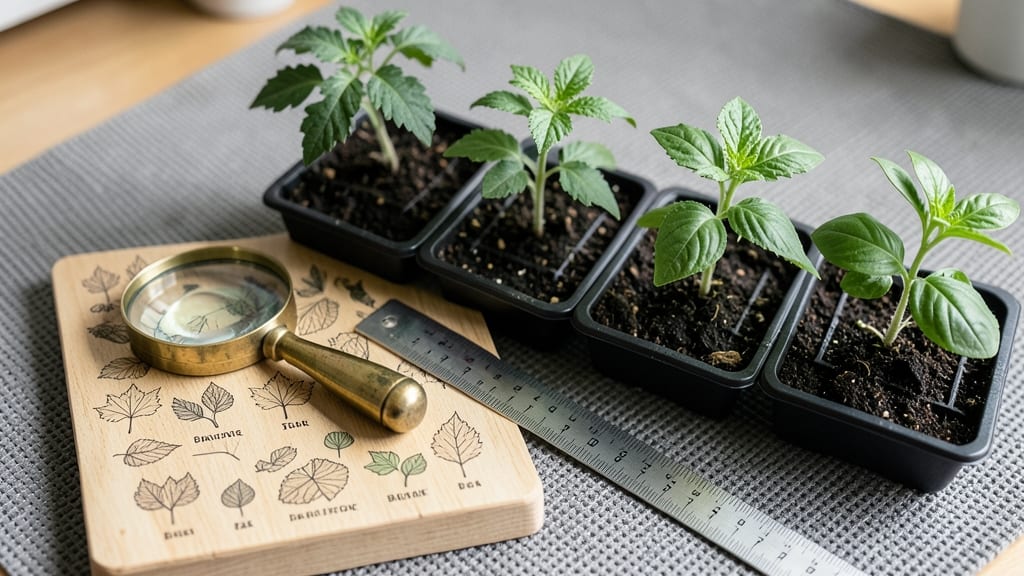
Mastering leaf shape seedling identification saves you from transplanting the wrong plants into your garden—no more bolting basil or leggy tomatoes. 🌱 I’ve spent years sorting through seedling trays, and the key is noticing three things: leaf shape, margin texture, and how they attach to the stem.
A single glance at a tomato seedling’s jagged edges or a pepper’s smooth, waxy leaves tells you exactly what you’re dealing with.
The trick is comparing what you see to a few basic patterns: lobed leaves (like tomatoes), serrated edges (peppers), or smooth ovals (basil). I keep a laminated cheat sheet with sketches of common seedlings near my workbench—it’s saved me from swapping out plants midseason.
Even experienced gardeners mix up seedlings, but once you learn these visual clues, you’ll spot them instantly.
Accurate identification means healthier transplants and a garden that thrives from day one. You’ll know exactly which seedlings need more light, which ones are ready to harden off, and which ones to pull before they take over. No more guessing games—just confident gardening.
This method works for tomatoes, peppers, herbs, and flowers, whether you’re starting from seed or buying flats. Grab a magnifying glass and a notebook, and you’ll be matching leaves to plants like a pro in no time.
Genetics Behind Leaf Shapes
Understanding why seedlings develop specific leaf shapes starts with their genetic blueprint. Plants inherit traits—including leaf morphology—from their parents, and these traits are encoded in DNA. Here’s why genetics play a dominant role in seedling identification:
---
Every seed carries a genetic recipe from its parent plants. If you’re growing seedlings from seeds (rather than cuttings or grafts), their leaf shapes will closely resemble those of the maternal and paternal lines.
For example: - Monocots (like grasses) typically have long, narrow leaves with parallel veins, while dicots (like beans or tomatoes) often produce broad, lobed, or serrated leaves. - Hybrid seedlings may exhibit a mix of traits—e.g., a tomato seedling might inherit jagged edges from one parent and smooth margins from another.
Actionable Tip: 🔍 If you’re unsure about a seedling’s species, compare its leaves to known reference images of the parent plant’s mature foliage. Many botanical databases (like the [USDA Plants Database](https://plants.usda.gov/)) include leaf shape keys for identification.
---
While genetics set the baseline, epigenetic factors—chemical modifications to DNA that don’t alter the sequence—can tweak leaf development. Stress during germination (e.g., temperature fluctuations, poor soil moisture, or light exposure) may trigger temporary changes in leaf shape.
For instance: - Cold stress can cause darker, thicker leaves in some species (a survival adaptation). - Excessive heat might lead to smaller, curled leaves due to protein misfolding in chloroplasts.
Pro Tip: ✨ If seedlings are exposed to abnormal conditions early on, their leaves may not fully reflect their genetic potential. Wait until they develop true leaves (not cotyledons) for accurate identification.
---
Some plants follow predictable developmental stages where leaf shape evolves as the seedling matures.
For example: - First true leaves (often called "seed leaves") may look simple and rounded, but later leaves could develop lobes, spines, or compound structures. - Legumes (like peas) start with trifoliate leaves, while maple seedlings may begin with lobed or serrated edges that become more defined with age.
Key Takeaway: 📊 Always check multiple leaves at different growth stages—early leaves can be misleading! Use a seedling growth chart (like those from [Montana State University’s Extension](https://www.montana.edu/)) to track expected changes.
--- Why This Matters: Genetics and early environmental pressures are the dual forces shaping a seedling’s leaf identity. By recognizing these patterns, you can narrow down species faster and intervene if abnormalities suggest disease or stress. Next, we’ll explore how environmental factors can further alter leaf development—sometimes mimicking genetic traits!
Fixing Leaf Shape Issues in Seedlings
Understanding why your seedlings have unusual leaf shapes is the first step—but knowing how to correct and prevent these issues ensures healthy growth. Below are practical, step-by-step solutions tailored to common causes, along with prevention tips to keep your seedlings thriving.
---
Problem: Cramped seedlings compete for nutrients, leading to stunted, misshapen leaves. Solution: - 🔥 Step 1: Gently remove seedlings with weak or deformed leaves, keeping only the strongest ones. - 🍳 Step 2: Space remaining seedlings 2–3 inches apart (or as recommended for your species). - 👨🍳 Step 3: Use a small trowel or your fingers to avoid damaging roots. Water lightly afterward.
💡 Prevention Tip: - Sow seeds in modular trays (like peat pots) to reduce transplant shock later. - Thin early—don’t wait until leaves start yellowing or curling.
---
Problem: Extreme heat, cold drafts, or insufficient light cause irregular leaf shapes. Solution: - ✨ Step 1: Move seedlings to a consistent 65–75°F (18–24°C) environment. Avoid windowsills with temperature swings. - 🔥 Step 2: Provide 12–16 hours of light daily using a grow light if natural light is weak. - 🌡️ Step 3: Use a heating mat (for cool climates) or shade cloth (for hot spells).
💡 Prevention Tip: - Monitor humidity—low levels can cause leaf edges to crisp. Use a humidity dome or mist lightly. - Rotate trays every few days to ensure even light exposure.
---
Problem: Spots, discoloration, or wilting leaves signal pathogens like powdery mildew or damping-off. Solution: - 🔪 Step 1: Remove infected seedlings immediately to prevent spread. - 🥘 Step 2: Apply a fungicide (neem oil, copper spray, or baking soda solution: 1 tsp baking soda + 1 quart water + few drops of soap). - 🌿 Step 3: Improve airflow by spacing plants wider and avoiding overhead watering.
💡 Prevention Tip: - Sterilize tools with rubbing alcohol between uses. - Water at the base (not leaves) to keep foliage dry.
---
Problem: Yellowing, purple stems, or small leaves indicate nitrogen, phosphorus, or micronutrient shortages. Solution: - 📊 Step 1: Test soil pH (ideal: 5.8–6.5 for most seedlings). Adjust with lime (to raise pH) or sulfur (to lower it). - 💪 Step 2: Use a balanced fertilizer (e.g., 10-10-10) at half-strength to avoid burning roots. - 🥗 Step 3: Add compost or worm castings for organic nutrients.
💡 Prevention Tip: - Avoid over-fertilizing—seedlings need gentle nourishment, not a heavy dose. - Rotate crops if reusing containers to prevent nutrient depletion.
--- Problem: Chewed leaves, holes, or webbing mean aphids, spider mites, or caterpillars are feeding. Solution: - 🔥 Step 1: Blast pests off with a strong spray of water. - 🍳 Step 2: Apply insecticidal soap or neem oil spray (follow label instructions). - 👨🍳 Step 3: Introduce beneficial insects (ladybugs for aphids) or yellow sticky traps for flies.
💡 Prevention Tip: - Inspect new plants before bringing them indoors. - Use row covers for outdoor seedlings to block pests.
--- Problem: Some species (like oak or maple seedlings) naturally have lobed or irregular leaves—no fix needed! Solution: - 🌿 Step 1: Research your plant’s native leaf shape to confirm if it’s normal. - 📊 Step 2: If growing for identification, compare with a visual guide (like our article’s key!). - 🎯 Step 3: If you want uniform seedlings, choose hybrid varieties bred for consistent traits.
💡 Prevention Tip: - Buy certified seeds from reputable suppliers if uniformity matters. - Document growth stages with photos to track natural development.
--- Final Note: Most leaf shape issues are correctable with quick adjustments—don’t let small problems derail your garden! Start with the most likely cause, act fast, and your seedlings will bounce back stronger. 🌱✨
Frequently asked questions
What's the difference between cotyledons and true leaves?
Cotyledons are the first leaves that appear from a seed—they're simple and often heart-shaped. True leaves develop later and show the plant's actual species traits, like lobed edges or serrated margins. For example, tomato seedlings' true leaves will have jagged edges, while their cotyledons look smooth.
How do I tell the difference between pepper and tomato seedlings?
Peppers have smooth, waxy leaves with slightly serrated edges, while tomato seedlings show deep, jagged lobes. Look at the leaf margins: peppers are more uniform, while tomatoes resemble maple leaves. Also check the stem—pepper stems are hairier than tomato stems.
Can I use a magnifying glass for seedling identification?
A 10x magnifier helps examine leaf details like vein patterns and margin textures. Focus on the leaf edges: smooth (basil), serrated (peppers), or lobed (tomatoes) are key identifiers. Just avoid pressing too hard—delicate seedlings bruise easily.
What if my seedling leaves look deformed?
Deformed leaves often mean stress—check light, temperature, or crowding. Move seedlings to 65-75°F conditions and space them 2-3 inches apart. If leaves are yellowing, test soil pH (ideal: 5.8-6.5) and consider a mild fertilizer.
How do I identify herb seedlings like basil or parsley?
Basil seedlings have smooth, oval leaves with a slightly wrinkled texture, while parsley starts with finely divided, fern-like leaves. For mint, look for square stems and rounded leaves. Always check the leaf arrangement—herbs often have opposite or whorled patterns.