
How To
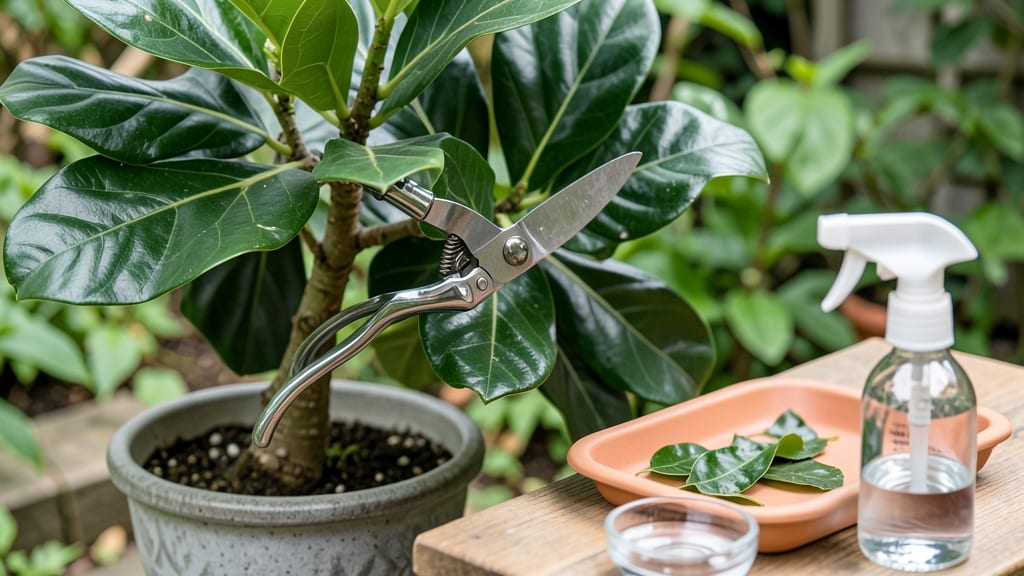
Pruning fiddle leaf figs transforms leggy stems into lush, bushy plants—but most people do it wrong. ✂️ I’ve turned my once-sparse fig into a full, vibrant bush by focusing on the right cuts at the right time, and the results speak for themselves: more leaves, stronger growth, and fewer bare stems.
The secret isn’t aggressive trimming—it’s strategic cuts just above leaf nodes (those little bumps where leaves grow) to encourage branching.
You’ll need sharp pruners, rubbing alcohol for sterilizing, and a little patience, but the payoff is worth it: a fiddle leaf fig that looks like it belongs in a greenhouse, not just your living room.
📚 In This Guide
- What you need
- Instructions
- Tips and common mistakes
- Wrapping up and next steps
What you need
- ● Sharp, clean pruning shears – A bypass pruner (6-8 inch blades) is ideal for clean cuts. Sterilize with rubbing alcohol before and after use!
- ● Disinfectant – 70% isopropyl alcohol or a houseplant-safe disinfectant spray to prevent bacterial/fungal spread.
- ● Garden gloves – Nitrile or latex-free to protect your hands from sap and thorns.
- ● Small container or tray – To collect pruned leaves for composting or propagation.
- ● Rooting hormone – Speeds up propagation if you’re growing new plants from cuttings.
- ● Hydrogen peroxide (3%) – Diluted (1:10 with water) to clean cuts and promote healing.
- ● Plant tie or twist tie – To secure cuttings in water or soil for propagation.
- ● Spray bottle with water – Keeps leaves hydrated during and after pruning.
- ● Wait until your fig is healthy and actively growing (spring/summer is best!).
- ● Ensure your plant has no signs of disease (yellow leaves, mold, or wilting).
- ● Have a well-lit area ready for cuttings if propagating.
Step-by-Step guide to pruning fiddle leaf figs
Here's my foolproof method for encouraging fuller, healthier growth without stressing your plant.
✂️ Step 1: Choose the Right Time to Prune
Prune your fiddle leaf fig in early spring when new growth begins—this is when the plant naturally produces new leaves and can recover quickly. Avoid pruning during winter dormancy or when the plant is flowering, as this stresses it unnecessarily. You'll know it's the right time when you see new leaf buds forming along the stems.
Never prune in response to yellowing leaves or pests—those issues need separate solutions. Pruning at the wrong time can stunt growth or even kill your plant, so timing is everything. If you must prune outside of spring, wait until the plant has at least 3-4 healthy leaves on new growth.
🌿 Step 2: Identify and Prepare for Pruning
Examine your fiddle leaf fig for areas that need attention. Look for long, leggy stems with few leaves, dead or yellowing leaves, and stems growing inward (these compete for light and weaken the plant). Use clean, sharp pruning shears or scissors to make precise cuts—dull tools crush stems and invite disease.
Wipe your tools with rubbing alcohol before and after pruning to prevent spreading bacteria. I also like to wear gloves, as fiddle leaf fig sap can irritate skin. Gather a small bowl to collect cuttings if you plan to propagate—you'll want to use these immediately.
✂️ Step 3: Make Strategic Cuts for Bushier Growth
Start by cutting back overly long stems just above a leaf node (the bump where leaves grow). This encourages new branches to form from that node, creating a bushier plant. For stems with only a few leaves, cut back to a node closer to the base—this redirects energy to stronger growth.
Remove any dead, yellow, or damaged leaves by cutting the stem just above the next healthy leaf or node. Avoid "heading back" (cutting into old wood) unless the stem is completely bare—fiddle leaf figs struggle to regrow from heavily pruned old wood. You'll see immediate improvement in the plant's shape within a few weeks.
💧 Step 4: Care for Your Fig After Pruning
Water your fiddle leaf fig lightly but thoroughly after pruning to help it recover. Avoid overwatering, as pruned plants are more susceptible to root rot. Place the plant in bright, indirect light for the first week—this reduces stress while new growth establishes. You'll notice new leaf buds forming within 2-4 weeks if conditions are right.
Hold off on fertilizing for 4-6 weeks after pruning, as the plant needs time to redirect energy to healing. Once new growth appears, resume your regular care routine. If you took cuttings, root them in water or moist potting mix under bright, indirect light—they'll develop roots in 2-3 weeks.
☀️ Step 5: Maintain Your Pruned Fiddle Leaf Fig
Continue providing bright, indirect light (east or west-facing windows are ideal) and moderate humidity (40-50% is perfect). Mist the leaves occasionally or place the pot on a tray of pebbles with water to maintain humidity. You'll see your plant fill out beautifully as new branches grow from the pruned nodes.
Prune lightly again in early fall if needed, but avoid heavy pruning—this gives the plant time to harden off before winter. With regular, strategic pruning, your fiddle leaf fig will stay lush, full, and healthy for years. Real talk: the first prune might feel intimidating, but your plant will thank you with vigorous new growth!
Tips & tricks for pruning fiddle leaf figs
Here's what nobody tells you about pruning that'll make your fiddle leaf fig thrive.
Timing is Everything: Early spring is the absolute best time to prune because your fiddle leaf fig is entering its active growth phase. If you absolutely must prune outside of spring, wait until you see at least 3-4 healthy leaves on new growth—this ensures your plant has enough energy to recover. I learned this the hard way after pruning too early and watching my plant struggle to bounce back.
Precision Cuts Create Bushier Growth: When you're making those strategic cuts in Step 3, always cut just above a leaf node. This tiny detail makes all the difference—it's where new branches will sprout, creating that lush, full look. I use a magnifying glass sometimes to make sure I'm cutting in exactly the right spot, especially on smaller stems where the nodes are harder to see.
Propagate While You Prune: If you're collecting cuttings to propagate, here's the secret: use a bowl of water with a few drops of rooting hormone to keep your cuttings fresh while you work. Place them in indirect light immediately after cutting—they'll start developing roots in just 2-3 weeks. I've propagated over 20 new plants this way from a single pruning session!
Post-Pruning Care Makes the Difference: After pruning, the first week is critical. Keep your plant in bright, indirect light and water lightly but thoroughly. Overwatering now can lead to root rot, which is the last thing you want after all that work. I also like to mist the leaves daily during this recovery period to help maintain humidity levels that the plant needs to bounce back.
Pro Tips for Prune Fiddle Leaf Fig
- Here's what nobody tells you about pruning that'll make your fiddle leaf fig thrive.
- Timing is Everything: Early spring is the absolute best time to prune because your fiddle leaf fig is entering its active growth phase.
- Precision Cuts Create Bushier Growth: When you're making those strategic cuts in Step 3, always cut just above a leaf node.
Frequently asked questions
Got questions about pruning your fiddle leaf fig? You’re not alone! Here are answers to the most common concerns—so you can trim with confidence and keep your plant thriving.
When is the best time to prune a fiddle leaf fig?
The ideal time is late winter or early spring, just before new growth begins. Avoid pruning during fall or winter when the plant is dormant, as it may struggle to recover. If you spot dead or damaged leaves anytime, trim them immediately to prevent pests or disease.
Can I prune my fiddle leaf fig too much?
Yes! Over-pruning (cutting more than 1/3 of the plant’s foliage) can stress your fiddle leaf fig, leading to slow recovery or even leaf drop. Stick to strategic cuts—focus on shaping, removing dead growth, or encouraging bushiness. If you accidentally overdo it, don’t panic: your plant will bounce back with proper care!
Will pruning make my fiddle leaf fig grow bushier?
Pruning just above a leaf node (where leaves grow) encourages new branches to sprout from that spot. For a fuller look, trim back leggy stems or overcrowded branches. Just remember: patience is key—new growth may take 4-8 weeks to appear.
What should I do if my fiddle leaf fig doesn’t grow after pruning?
If your plant seems stagnant post-prune, check these fixes:
- Light: Ensure it’s getting bright, indirect light (east or north-facing windows are ideal).
- Water: Let the top 1-2 inches of soil dry between waterings—overwatering stresses roots.
- Humidity: Mist leaves or use a pebble tray if your home is dry.
- Patience: Some varieties (like ‘Variegata’) grow slower—give it time!
Can I propagate my fiddle leaf fig cuttings after pruning?
You bet! Snip healthy 4-6 inch stems (with at least 2-3 leaves) and place them in water or moist perlite. Keep them in bright, indirect light and change the water weekly. Roots should appear in 2-4 weeks. Once rooted, transplant to soil—just avoid overwatering at first!
Wrapping up and next steps
Pruning your fiddle leaf fig doesn’t have to be intimidating—it’s all about strategic cuts and a little patience! With the right tools, timing, and technique, you’ll encourage lush, bushier growth and keep your plant thriving. 🌿
Now that you’re armed with the know-how, grab those shears and get trimming! Start small, observe your plant’s response, and soon you’ll have a stunning, well-shaped fiddle leaf fig that’s the envy of every room. Happy pruning! 🌟