
Leaf Blower
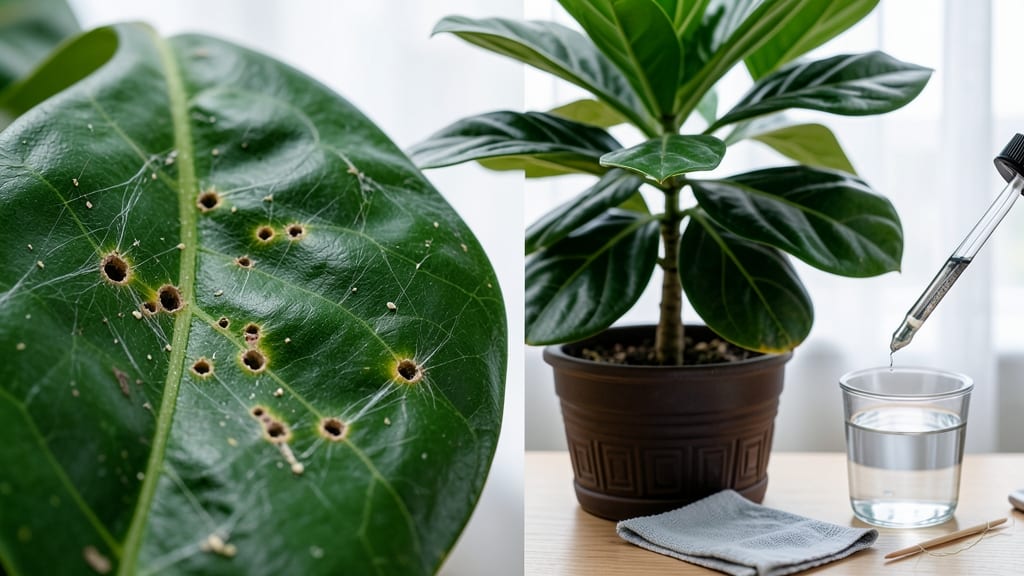
Your fiddle leaf fig’s leaves are looking like Swiss cheese, and you’re ready to save it. 🌿 Those holes in fiddle leaf figs aren’t just cosmetic—they’re a sign of pests, damage, or stress, and the good news is you can fix them without harsh chemicals.
I’ve nursed back more than a few figs with these simple, plant-safe fixes that actually work.
The most common culprits are spider mites and thrips, tiny pests that chew tiny holes and leave behind webbing or specks of frass (that’s pest poop, and yes, it’s gross). Mechanical damage from pets or rough handling can also create those telltale punctures.
The key is acting fast—once the damage spreads, the plant’s health takes a nosedive, and those stunning leaves start drooping like they’ve lost their confidence.
With a few targeted sprays (copper soap is my go-to), regular wipe-downs, and adjusting light levels, you’ll see new growth pushing out stronger than ever. Within weeks, your fig will be back to its bold, glossy self, and those holes will just be a bad memory.
The best part? These methods keep your home safe for kids and pets while giving your plant the revival it deserves.
Whether you’re dealing with a single leaf or a full-on infestation, this approach works for every stage. Let’s get your fiddle leaf fig looking lush again—no holes, no stress, just happy, healthy leaves that’ll make your space pop.
Understanding the Root Causes
Fiddle leaf figs are prized for their stunning foliage, but those unexpected holes can turn a lush plant into a source of frustration. Let’s break down the science behind why these unsightly perforations appear—and what’s really going on beneath the leaves.
---
The most common culprits are sap-sucking insects and leaf-eating pests, each leaving distinct signs of destruction.
#### 🐜 Spider Mites: Silent Leaf Skeletons Spider mites are microscopic arachnids that thrive in dry, dusty conditions.
They pierce plant cells with their mouthparts to extract sap, causing: - Stippling (tiny white or yellow dots) that eventually expand into larger holes as the leaf weakens. - Fine webbing on the undersides of leaves (a dead giveaway). - Brown, crispy patches as the leaf tissue collapses from dehydration.
Why it happens: Spider mites prefer stressed plants—low humidity, poor airflow, or overcrowding make them vulnerable. Their saliva contains toxins that disrupt chlorophyll production, leading to cell death and hole formation.
#### 🐛 Leaf Miners: Underground Tunnelers These larvae of fly species (like Phytomyza spp.) burrow between the upper and lower leaf layers, creating serpentine trails that eventually punch through as the leaf dries.
You’ll spot: - Blister-like trails filled with frass (insect waste). - Transparent, window-pane-like holes where the larvae exit. - Premature leaf drop as the infestation worsens.
Why it happens: Leaf miners are attracted to healthy, rapidly growing leaves—they lay eggs on the undersides, and the larvae hatch to feed. Overwatering or high nitrogen fertilizer can make fiddle leaf figs extra appealing to them.
#### 🦟 Mealybugs & Scale: Sticky Saboteurs While these pests don’t directly chew holes, their honeydew secretions create a sugar-rich film that: - Attracts sooty mold fungi, which block sunlight and weaken leaves. - Ferment on the leaf surface, leading to acid burns that erode tissue into holes.
Why it happens: Mealybugs and scale thrive in warm, humid environments and poor air circulation. Their sticky residue traps dust and debris, creating a perfect storm for leaf decay.
---
Fiddle leaf figs are drought-tolerant—when roots sit in soggy soil, they suffocate, triggering a cascade of problems that manifest as leaf damage.
#### 🌱 Root Rot & Nutrient Starvation - Waterlogged roots can’t absorb oxygen, leading to anaerobic conditions that produce toxic byproducts (like ethanol). - The plant shuts down nutrient transport, causing leaf edges to brown and crisp before holes form. - Fungal infections (like Phytophthora) enter through damaged roots, spreading to leaves and creating irregular, ragged holes.
Why it happens: Fiddle leaf figs hate "wet feet." Overwatering or poor drainage forces roots to gasping for air, leading to systemic stress. The plant prioritizes survival over leaf health, causing premature senescence (aging) and tissue breakdown.
#### 🌡️ Temperature & Humidity Mismatch - Cold drafts (from AC or windows) + overwatering = cold stress, which disrupts cell membranes, leading to waterlogged, spongy leaves that tear easily. - Sudden humidity drops (common in winter) cause leaf edges to dry out and crack, creating entry points for bacteria and fungi that chew through tissue.
Why it happens: Fiddle leaf figs originate in tropical rainforests—they need consistent warmth (65–80°F) and 40–60% humidity. Fluctuations throw their physiology into chaos, making leaves brittle and prone to damage.
---
Not all holes come from living creatures—sometimes, human mistakes (or outdoor pollutants) are to blame.
#### 💧 Hard Water & Fluoride Damage - Excess fluoride (common in tap water) accumulates in leaf tissue, causing: - Brown, leathery patches that crust over and crack. - Holes near leaf margins as cells die from toxicity. - High mineral buildup (from hard water) clogs stomata (pores), preventing gas exchange and leading to necrotic spots.
Why it happens: Fiddle leaf figs are sensitive to dissolved salts. Over time, fluoride and calcium disrupt cellular processes, leading to premature cell death. Rainwater or filtered water is the safest bet.
#### 🍂 Pesticide & Fertilizer Overload - Systemic pesticides (like neonicotinoids) can accumulate in leaves, causing chlorosis (yellowing) and tissue death. - Salt buildup from fertilizers (especially synthetic ones) burns root tips, leading to poor nutrient uptake and leaf holes.
Why it happens: Plants absorb more than we realize—chemicals meant for pests or growth can become toxins when overapplied. Organic, slow-release fertilizers and spot-treatment pesticides are safer choices.
--- 💡 Pro Tip: Always test soil moisture with your finger—if the top 1–2 inches are dry, it’s time to water. Bottom-watering (placing the pot in a tray of water) helps prevent overwatering while ensuring roots get hydration.
Quick Fixes for Fiddle Leaf Fig Damage
Now that you know the why behind those pesky holes in your fiddle leaf fig, let’s roll up our sleeves and tackle the how.
Whether your plant is battling pests, environmental stress, or fungal infections, these step-by-step solutions will help nurse it back to health—and keep it thriving long-term. 🌿✨
---
If tiny critters like spider mites, mealybugs, or scale insects are the culprits, act fast before they spread.
#### 🔥 Step 1: Isolate & Inspect - Move your fiddle leaf fig away from other plants to prevent cross-contamination. - Use a magnifying glass (or a phone with a macro lens) to identify the pest—this determines your treatment plan.
#### 🍳 Step 2: Wipe Down Leaves (Gentle but Effective) - Mix 1 part rubbing alcohol (70% or higher) with 3 parts water in a spray bottle. - Dip a soft cloth or cotton swab in the solution and wipe each leaf (front and back) to dissolve and remove pests. - Pro tip: 💡 For stubborn pests, repeat every 3–5 days until they’re gone.
#### 👨🍳 Step 3: Neem Oil Treatment (The Copper Cure Alternative) - Combine 1 tsp neem oil + 1 tsp mild soap (like Castile) + 1 quart of water. - Spray all leaf surfaces (including stems and soil) evenly, focusing on undersides where pests hide. - Cover the soil with plastic wrap to prevent root absorption—neem oil is safe but can be harsh in high concentrations. - Repeat every 7–10 days for 3–4 weeks to break the pest life cycle.
#### 🌡️ Step 4: Encourage Beneficial Insects - Release ladybugs or lacewings (available at garden centers) to naturally prey on pests. - Place yellow sticky traps near the plant to catch flying insects like whiteflies.
#### ✨ Prevention Tips: - Inspect new plants before bringing them home—quarantine for 2 weeks. - Mist leaves regularly (but not excessively) to discourage spider mites. - Dust leaves monthly with a damp cloth to remove pest hiding spots.
---
If holes are from overwatering, underwatering, or temperature swings, your fiddle leaf fig is basically screaming for better conditions.
#### 🔥 Step 1: Check the Soil (Is It Too Wet or Too Dry?) - Stick your finger 1–2 inches into the soil—if it’s soggy, your plant is drowning.
If it’s bone-dry, it’s thirsty. - Fix: Adjust your watering schedule—water only when the top 2–3 inches are dry.
#### 🍳 Step 2: Improve Drainage (No More Root Rot!) - If your pot lacks drainage holes, repot immediately into a terracotta or ceramic container with holes. - Mix orchid bark or perlite (20–30%) into your potting mix to boost aeration. - Pro tip: 💡 Bottom-watering (placing the pot in a tray of water for 10–15 mins) helps prevent overwatering.
#### 👨🍳 Step 3: Optimize Light & Temperature - Too much sun? Move to bright, indirect light (east or north-facing windows). - Too little light? Supplement with a grow light 12 inches away for 12–14 hours/day. - Keep temps between 65–80°F (18–27°C)—avoid drafts, AC vents, or heaters.
#### 🌡️ Step 4: Prune Damaged Leaves (Promote New Growth) - Use sterilized scissors to snip off severely damaged leaves at the base. - Don’t worry—your plant will grow new, healthier leaves once conditions improve!
#### ✨ Prevention Tips: - Use a moisture meter to track soil hydration accurately. - Group plants together to create a humid microclimate (but avoid soggy soil). - Rotate the pot every few weeks so all sides get even light.
---
If holes are from leaf spot or bacterial blight, your fiddle leaf fig needs aggressive but gentle care.
#### 🔥 Step 1: Remove Infected Leaves Immediately - Cut off holes with ½-inch of healthy tissue using disinfected pruners. - Dispose of infected leaves in the trash (not compost)—don’t let spores spread.
#### 🍳 Step 2: Apply a Fungicide (Copper-Based Works Best) - Use a copper fungicide (like Bonide Copper Fungicide) or a baking soda spray: - Mix 1 tsp baking soda + 1 quart water + a drop of dish soap. - Spray all leaves (avoid oversaturating soil). - Repeat every 7–10 days until new growth appears.
#### 👨🍳 Step 3: Improve Air Circulation - Space plants apart to reduce humidity buildup. - Use a small fan on low speed near the plant to keep air moving (but not directly blowing on leaves).
#### 🌡️ Step 4: Adjust Watering Habits - Water at the base only (avoid wetting leaves) to prevent fungal spores from spreading. - Let the top 3 inches of soil dry out between waterings.
#### ✨ Prevention Tips: - Sterilize pruners with rubbing alcohol before and after trimming. - Avoid overhead watering—use a watering can with a narrow spout. - Repot in fresh, sterile soil if the infection is severe.
---
No matter the issue, these universal fixes will help your fiddle leaf fig bounce back:
1. Fertilize Lightly – Use a balanced liquid fertilizer (10-10-10) diluted to ½ strength every 4–6 weeks in spring/summer. 2. Wipe Leaves Weekly – Dust and pests love dirty leaves—keep them clean with a damp microfiber cloth.
3. Boost Humidity – Place the pot on a pebble tray with water or use a humidifier nearby. 4. Be Patient – New growth may take 4–8 weeks—don’t over-prune or stress the plant further.
--- Remember: 🎯 Prevention is the best cure! Once your fiddle leaf fig is back in shape, stick to a consistent care routine to keep those holes from making a comeback. Your plant will be lush, happy, and hole-free in no time!
Frequently asked questions
Are holes in fiddle leaf fig leaves always caused by pests?
No—while pests like spider mites or leaf miners are common culprits, holes can also result from environmental stress, mechanical damage (like pets or rough handling), or even water quality issues. Always check for signs like webbing, frass (pest droppings), or brown edges before assuming pests are the problem.
How do I tell if holes are from spider mites vs. leaf miners?
Spider mites create tiny stippled holes with fine webbing on leaf undersides, while leaf miners leave serpentine trails that turn into clear, window-pane-like holes. Check the undersides of leaves—if you see blister-like trails filled with frass, it’s leaf miners; if you spot silky webbing, it’s likely spider mites.
Can I save a fiddle leaf fig with severe holes?
Yes! Prune off heavily damaged leaves and focus on treating the root cause (pests, stress, or disease). With proper care—like neem oil sprays, adjusting watering habits, and improving airflow4–8 weeks. Just avoid over-pruning!
Is it safe to use neem oil on fiddle leaf figs?
Yes, neem oil is plant-safe when used correctly. Mix 1 tsp neem oil + 1 tsp mild soap + 1 quart water and spray leaves (avoid soil). Repeat every 7–10 days for 3–4 weeks. Always test a small leaf area first to check for sensitivity.
Why do holes appear even after treating pests?
Holes may persist if the plant is already stressed from poor care (e.g., overwatering, low humidity, or nutrient deficiencies). Focus on fixing environmental conditions while treating pests—new growth will naturally fill in the gaps. Patience is key!