
Leaf Blower
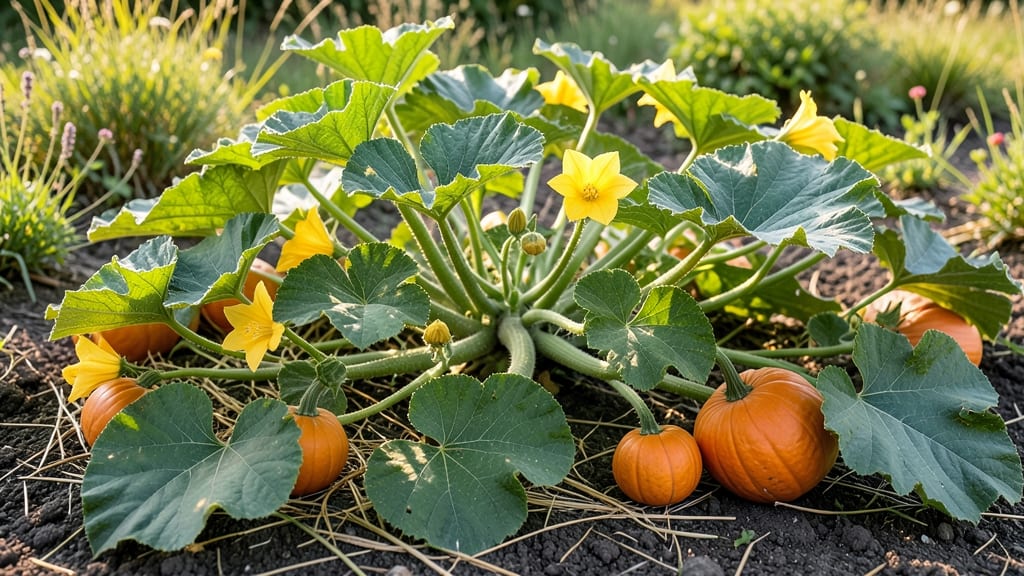
Mastering pumpkin leaf identification saved me from wasting time on the wrong plants—and my first garden mistake with confusing vines taught me that lesson the hard way. 🌱 The key lies in those lobed edges, deep veins, and hairy stems that set pumpkins apart from their squash cousins, plus how to spot when something’s gone wrong before it’s too late.
Healthy pumpkin leaves are broad, palmately lobed with 5-7 rounded indentations, and have a rough, hairy texture that’s almost velvety to the touch. Compare them to zucchini leaves—pumpkin leaves are larger, with veins that fork dramatically near the center.
But here’s the kicker: even the right leaves can hide problems like powdery mildew (white fuzz) or squash vine borer damage (chewed stems), so I’ll show you how to catch those early.
You’ll learn to match leaves to varieties—whether it’s a smooth, dark green Jack-o’-lantern or a rough, ribbed Kabocha—and recognize when pests or disease turn those perfect leaves into a mess.
A quick photo comparison with a mobile app or reference chart can confirm what your eyes might miss, and I’ll walk you through the fixes that actually work.
This isn’t just about spotting leaves—it’s about giving your pumpkins the best shot at thriving. Whether you’re troubleshooting a struggling vine or just curious about what you’re growing, these clues will help you act fast and keep your harvest on track.
Understanding Leaf Changes
Pumpkin leaves may undergo unexpected transformations that can confuse even the most seasoned gardener. Whether you're trying to identify a healthy pumpkin plant or diagnose an issue, understanding the why behind these changes is key.
Below, we break down the most common causes—from environmental factors to pests—and explain the science behind them.
Pumpkin plants are resilient, but they’re not immune to environmental stressors. When conditions stray from their ideal range, leaves react in predictable ways—often as a survival mechanism. Here’s what’s really going on:
- Water Deficiency (Drought Stress)
Pumpkins thrive with consistent moisture, and when soil dries out, leaves curl or develop crispy edges. This is a transpiration response: the plant reduces water loss by minimizing leaf surface area exposed to air. Studies show that even mild dehydration can trigger this within 24–48 hours.
Actionable fix: Water deeply at the base (not overhead) in the early morning to prevent fungal risks. Mulch with straw to retain soil moisture.
- Excessive Moisture (Fungal Pressure)
Overwatering or poor drainage leads to soggy leaves, yellowing (chlorosis), and black spots—classic signs of Phytophthora or Pythium fungi. These pathogens thrive in waterlogged roots, blocking nutrient uptake. The plant’s leaves turn yellow because chlorophyll breaks down without proper iron/magnesium transport.
Actionable fix: Improve drainage with raised beds or sand amendments. Space plants 3–4 feet apart for airflow.
- Temperature Extremes (Heat/Cold Shock)
Pumpkins prefer 70–85°F (21–29°C) daytime temps. Below 50°F (10°C) or above 95°F (35°C), leaves may develop scorch marks (brown edges) or bleaching (white/yellow patches). This happens because enzymes like rubisco (critical for photosynthesis) denature outside optimal temps, halting energy production.
Actionable fix: Use shade cloth (30–50%) in peak summer or row covers for early-season protection.
Pumpkin leaves don’t just wilt—they speak through color and texture. Nutrient deficiencies are often misdiagnosed, but they follow distinct patterns:
| Symptom | Likely Deficiency | Why It Happens | Fix It |
|---|---|---|---|
| Yellowing between veins (chlorosis) | Iron (Fe) or Magnesium (Mg) | Poor soil pH (alkaline >7.0) locks out Fe; Mg is mobile, so older leaves show first. | Apply chelated iron or Epsom salt (1 tbsp/gallon water). Test soil pH and amend with sulfur if needed. |
| Purple/red stems and undersides | Phosphorus (P) | P is critical for ATP (energy) production. Under stress, the plant redirects anthocyanins (pigments) to leaves. | Add bone meal or compost. Avoid over-fertilizing with nitrogen. |
| Small, thick leaves with dark green veins | Nitrogen (N) | N is the building block of chlorophyll. Without it, leaves can’t expand, leading to stunted growth. | Use a balanced fertilizer (10-10-10) or composted manure. |
Pro tip: 💡 Yellowing always starts between veins for Fe/Mg, but nitrogen deficiency turns leaves uniformly pale green.
Pumpkin leaves aren’t just changing color—they’re under siege. Pests and pathogens don’t just damage leaves; they hijack the plant’s biology:
- Squash Vine Borers (Melittia spp.)
These caterpillars burrow into stems, cutting off water/nutrients. Leaves above the infestation wilt and turn brown because the plant can’t transport resources. Smell the stem: A sawdust-like frass (caterpillar poop) confirms the culprit.
Actionable fix: Wrap stems with aluminum foil (borers can’t penetrate it) or apply Bt (Bacillus thuringiensis) spray.
- Powdery Mildew (Podosphaera xanthii)
This fungal disease coats leaves with a white, powdery film, blocking sunlight. The plant responds by producing abscisic acid, a stress hormone that accelerates leaf drop. Infected leaves may also develop yellow spots (necrosis) from lack of photosynthesis.
Actionable fix: Spray with a baking soda solution (1 tsp baking soda + 1 quart water + a drop of dish soap) weekly. Prune for airflow.
- Aphids and Spider Mites
These sap-suckers inject toxins that cause stippling (tiny white/yellow dots) and curled leaves. The plant’s defense mechanism—producing extra sugars—attracts more pests, creating a vicious cycle. Severe cases lead to leaf puckering as cells die.
Actionable fix: Blast off pests with water (early morning) or introduce ladybugs. Neem oil disrupts their life cycle.
Not all leaf changes are biological—sometimes, it’s mechanical. Wind, hail, or even gardening tools can trigger responses that mimic diseases:
- Ragged Edges or Holes
Physical tearing exposes leaf tissue to pathogens. The plant may seal off damaged areas with callus tissue (brown, corky patches), but this weakens the leaf’s ability to photosynthesize.
Actionable fix: Use row covers in windy areas or hand-pollinate damaged flowers to ensure fruit set.
- Sun Scorch (White/Brown Patches)
Direct midday sun on young leaves causes photoxidative damage, where excess light breaks down chlorophyll. This is common in transplant shock or after pruning.
Actionable fix: Gradually acclimate seedlings to sunlight (harden off) over 7–10 days.
Quick Fixes for Leaf Confusion
Got tangled in the vines of pumpkin leaf identification? Don’t stress—these practical, step-by-step solutions will help you spot the right leaves (and avoid the wrong ones!) like a pro.
Below, we’ve mapped common confusion points to easy fixes, plus prevention tips to keep your garden (or your leaf-blower bag) clean.
---
Pumpkin leaves (Cucurbita spp.) often get mixed up with squash, gourd, or even wild vines—especially if you’re new to gardening. Here’s how to tell them apart fast:
#### 🍂 H3: Fix: Compare Leaf Shapes Side by Side Problem: "My pumpkin leaves look like butternut squash leaves—how do I tell?" Solution: Use the "Lobster Claw" Test—pumpkin leaves typically have 5–7 deep, jagged lobes (like a lobster’s claws), while squash leaves are broader with smoother edges.
Pro tip: Hold leaves up to light—pumpkin veins are usually palmately arranged (spreading from one central point), while squash veins may look more net-like.
| Feature | Pumpkin Leaves | Squash Leaves | Wild Vine (e.g., Morning Glory) | |-------------------|----------------------------------|----------------------------------|--------------------------------------| | Lobe Shape | 5–7 deep, jagged lobes | 3–5 rounded lobes | Smooth, heart-shaped or arrowhead | | Edge Texture | Serrated (like a saw) | Slightly wavy or smooth | Entire (no teeth) | | Vein Pattern | Palmate (finger-like) | Reticulate (net-like) | Parallel or slightly arched |
💡 Prevention Tip: Snap a photo of healthy leaves early in the season and compare it to your plant as it grows. Apps like PictureThis can help ID unknown leaves in seconds!
---
Problem: "I’ve got big leaves, but are they pumpkin or just weeds?" Solution: Pumpkin leaves always grow on hairy, ridged stems (feel them—if they’re fuzzy, it’s likely a Cucurbita plant). Flowers are another dead giveaway: - Male pumpkin flowers grow on long, slender stems with no fruit nearby. - Female flowers have a tiny pumpkin or squash forming at the base (look for the "bump").
🔥 Quick Trick: If the leaf is attached to a yellow-orange flower with a swollen ovary, it’s 100% pumpkin (or squash).
--- Problem: "My leaves look wrong—are they diseased or just a different plant?" Solution: If leaves are yellowing, spotted, or curled, it’s not an ID issue—it’s a health issue. Here’s how to diagnose:
| Symptom | Likely Cause | Fix It Fast | |---------------------------|--------------------------------|---------------------------------------------------------------------------------| | Yellow patches | Powdery mildew | Spray with baking soda mix (1 tsp baking soda + 1 quart water + a drop of dish soap).
Repeat weekly. | | Holes or chewed edges | Squash bugs or cucumber beetles | Handpick bugs (drop in soapy water) or use neem oil spray. | | Black spots | Alternaria leaf spot | Remove infected leaves; apply copper fungicide every 7–10 days. | | Wilting or brown veins | Bacterial wilt | Destroy the plant immediately—this is contagious! |
🌡️ Prevention Tip: Rotate crops—don’t plant pumpkins in the same spot yearly. Mulch with straw to reduce soil-borne diseases.
--- Problem: "I’m done with harvest—how do I avoid leaf mix-ups next year?" Solution: 1. Label everything—use bright plant markers (or tie ribbons) to ID varieties. 2. Save seeds from your best pumpkins to grow true-to-type plants next season.
3. Compost diseased leaves (but not if bacterial wilt is suspected—bag and trash those!). 4. Take "leaf selfies" at each growth stage and store them in a gardening app (like Gardenate).
✨ Bonus Hack: If you’re leaf-blowing garden debris, sort leaves into two piles: - "Keep" (healthy pumpkin/squash leaves for compost). - "Toss" (diseased or unknown leaves).
--- Problem: "I’m still not sure—what’s the easiest way to confirm?" Solution: - Google Lens: Snap a photo of the leaf and search it—Google will often ID the plant. - iNaturalist App: Upload a photo to the citizen science community for expert verification. - University Extension Offices: Many offer free plant ID services via email or phone.
🎯 Pro Tip: If you’re selling pumpkins or seeds, always submit a sample to a local agricultural extension for official confirmation.
--- ✅ Start with named seeds (e.g., "Jack Be Little" pumpkin) to avoid hybrids. ✅ Plant in rows—group pumpkins together to reduce cross-pollination with squash. ✅ Train vines upward (use trellises) to spot leaves easier and improve airflow. ✅ Keep a garden journal with leaf sketches and growth dates. ✅ Test soil pH (pumpkins thrive in 6.0–6.8 pH—wrong pH = weird leaf growth).
--- Final Thought: Pumpkin leaf ID doesn’t have to be a guessing game. Combine shape, stem, and flower checks, and you’ll never mistake a pumpkin leaf again—unless you’re trying to fool someone (in which case, good luck!). 😉
Frequently asked questions
How do I tell pumpkin leaves apart from squash leaves?
Pumpkin leaves typically have 5-7 deep, jagged lobes (like lobster claws) with serrated edges, while squash leaves are broader with 3-5 smoother lobes. Hold them up to light—pumpkin veins spread palmately from one central point, while squash veins form more net-like patterns.
What do healthy pumpkin leaves look like?
Healthy pumpkin leaves are dark green, rough to the touch (almost velvety), and grow on hairy, ridged stems. They should be 12-18 inches wide with prominent veins. Look for yellow-orange flowers with swollen ovaries (female flowers) to confirm your plant.
Why are my pumpkin leaves turning yellow?
Yellowing between veins usually signals iron or magnesium deficiency (common in alkaline soil), while uniform pale green suggests nitrogen deficiency. Purple stems indicate phosphorus shortage. Test your soil pH—pumpkins prefer 6.0-6.8—and amend with chelated iron or compost.
Can I use apps to identify pumpkin leaves?
Yes! Try PictureThis, PlantNet, or Google Lens—just snap a clear photo of the leaf (include stems/flowers if possible). For expert verification, upload to iNaturalist or contact your local agricultural extension office. Most apps give instant results with visual comparisons.
What should I do if my pumpkin leaves have holes?
Holes in leaves are usually from cucumber beetles or squash bugs. Handpick pests (drop in soapy water) or spray with neem oil. For severe infestations, cover young plants with floating row covers until flowering. Remove heavily damaged leaves to prevent spread.