
Pests and Diseases
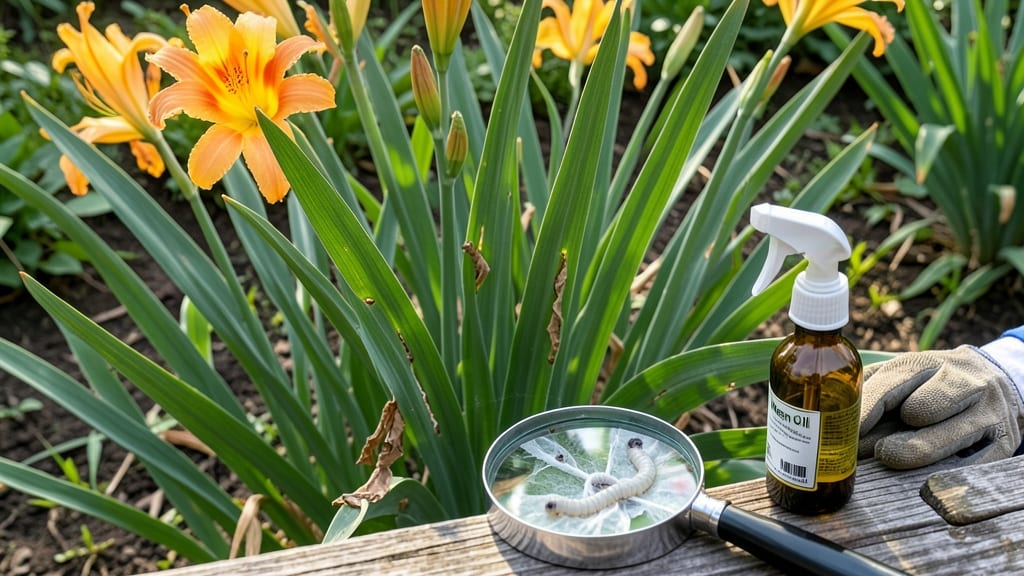
Daylily leaf miner turns vibrant foliage into a skeleton act. 🌿 Those telltale serpentine mines and black frass are the first signs your daylilies are under siege—and ignoring them means losing next season's blooms.
I've battled these tiny pests for years, and I'll show you how to reclaim your plants without harsh chemicals.
The culprit is a small fly whose larvae tunnel through leaves, creating unsightly damage that weakens the plant. By the time you notice the mines, the larvae are already pupating in the soil, ready to restart the cycle.
The good news? Early action means you can stop this before it becomes a full-blown infestation.
You'll learn how to identify the mines, when to act, and which organic treatments work best—from neem oil sprays to row covers that block the flies entirely. Within weeks, your daylilies will bounce back with fresh, healthy foliage and those signature blooms you love.
This works for both container daylilies and in-ground plants, and the methods scale from a single clump to an entire garden border. Let's get those mines under control before they spread further.
The Hidden Culprits Behind Damage
Daylilies are prized for their hardy nature and vibrant blooms, but one sneaky pest can turn their lush leaves into a skeletonized mess: the Liriomyza fly larvae, commonly known as leaf miners.
These tiny, worm-like invaders don’t just nibble—they burrow inside the leaf tissue, creating winding tunnels that stunt growth and weaken plants. But why do they target daylilies in the first place? Let’s break down the science and the triggers behind their destructive behavior.
The primary reason leaf miners infest daylilies boils down to survival instincts. Adult Liriomyza flies (often called serpentine leaf miners) lay their eggs on the undersides of tender, young leaves. Once hatched, the larvae don’t waste time—they immediately chew into the leaf to create a protected feeding chamber. Why?
- Soft Tissue = Easy Meal: Daylily leaves are thin and succulent, making them ideal for larvae to burrow through. Thicker leaves (like those on hostas) deter them, but daylilies offer minimal resistance.
- Hidden Safety: Inside the leaf, larvae avoid predators (like birds or parasitic wasps) and harsh environmental conditions. The leaf’s own structure shields them while they feed for 10–14 days before pupating.
- Nutrient-Rich Diet: Daylily leaves contain high levels of soluble sugars and nitrogen, which fuel rapid larval growth. A single leaf can support multiple miners before becoming too damaged to sustain them.
💡 Pro Tip: Larvae prefer new growth because it’s softer and less defended. If you notice serpentine trails on emerging leaves, act fast—they’ll spread to older foliage if left unchecked.
Leaf miners are opportunistic. When daylilies are weakened, they become easier targets. Stress factors like overwatering, poor drainage, or nutrient deficiencies make plants more vulnerable. Here’s how it plays out:
| Stress Factor | Why It Attracts Miners |
|---|---|
| Compacted Soil | Roots struggle to absorb water/nutrients, leading to stunted, thin leaves—perfect for larvae to penetrate easily. |
| Excess Nitrogen | While nitrogen fuels growth, too much produces soft, sappy leaves that miners love. It also boosts plant sap appeal to adult flies during egg-laying season. |
| Drought Stress | Wilting leaves lose turgor pressure, making them easier to chew through. Miners detect stressed plants via volatile organic compounds (VOCs) released during drought. |
| Shade or Overcrowding | Plants growing in low light develop long, weak stems with tender leaves. Miners thrive in dense foliage because it mimics their natural habitat (weedy, shaded areas). |
🔥 Key Insight: Healthy daylilies with thick, waxy leaves (a sign of balanced care) are far less appealing to miners. Focus on well-draining soil, moderate fertilization, and proper spacing to reduce risk.
Leaf miners are temperature-sensitive. Their life cycle accelerates in warm, humid environments—ideal conditions for daylily growth in many climates. Here’s how climate factors into their attack:
- Spring/Summer Peaks: Adult flies emerge when soil temps hit 60–80°F (15–27°C). May–July is prime egg-laying season in most regions.
- Humidity Boosts Survival: Larvae desiccate quickly in dry air. High humidity (60%+) keeps them hydrated and active inside leaves.
- Rainy Periods Trigger Outbreaks: Light rain softens leaves, making them easier to penetrate. Heavy rain can wash away natural predators (like ladybugs), leaving miners unchecked.
🌡️ Climate Connection: Regions with hot, humid summers (e.g., Southeast U.S., tropical zones) see worse infestations because miners complete multiple generations per year. In cooler climates, they may only appear in one annual wave.
In a balanced ecosystem, leaf miners face dozens of natural enemies. But when these predators vanish, miners explode in numbers. Common disruptors include:
- Pesticide Overuse: Broad-spectrum chemicals (like neonicotinoids) kill beneficial insects first—ladybugs, lacewings, and parasitic wasps that prey on miner larvae.
- Monoculture Gardening: Planting only daylilies (or other susceptible hosts like roses or peonies) creates a buffet for miners with no predator diversity.
- Urban/Suburban Isolation: Gardens surrounded by lawns or pavement lack wildflowers that attract predator insects (e.g., hoverflies, ground beetles).
✨ Ecological Fix: Introduce pollinator-friendly plants (like dill, yarrow, or marigolds) to boost predator populations. Even a small patch of clover or alyssum can turn your garden into a miner’s worst nightmare.
Quick Fixes for Wormy Daylily Leaves
When those telltale serpentine trails or blistered leaves appear, don’t panic—there are organic, effective ways to reclaim your daylilies. The key is acting fast and combining prevention, removal, and natural deterrents.
Below, we’ll break down solutions by cause (early signs, severe infestation, or prevention) with step-by-step fixes that work without harsh chemicals.
If you spot tiny white larvae, silvery trails, or just a few damaged leaves, you’re in the golden window for easy control.
🍳 Step 1: Handpick Larvae (Yes, Really!)
- Why it works: Larvae are slow-moving and easy to spot on the undersides of leaves.
- How to do it:
- Wear gloves (some gardeners use damp paper towels to trap them).
- Inspect leaves early morning when larvae are sluggish.
- Drop them into soapy water (1 tsp dish soap per gallon) to kill them instantly.
- Pro tip 💡: Check new growth first—larvae love tender leaves!
👨🍳 Step 2: Prune and Destroy Infested Foliage
- Why it works: Removing infected leaves starves the larvae and stops the cycle.
- How to do it:
- Cut off only the damaged leaves (not the whole plant).
- Bag and trash them—do not compost (larvae can survive).
- Disinfect pruners with 70% rubbing alcohol between cuts.
- Pro tip ✨: If possible, prune in the shade to avoid attracting more pests.
🥘 Step 3: Apply Organic Sprays (Knock Them Out Fast)
Use neem oil or insecticidal soap—both smother larvae and disrupt their life cycle.
| Solution | How to Use | Best Time to Apply |
|---|---|---|
| Neem Oil | Mix 1 tbsp neem oil + 1 tsp mild soap + 1 quart water. Spray evenly on top and bottom of leaves. | Evening (avoids burning leaves in sun) |
| Insecticidal Soap | Spray undiluted (follow label) on larvae and leaf surfaces. Reapply after rain. | Early morning or late evening |
- Pro tip 🌡️: Reapply every 5–7 days until new growth is clear (larvae hatch in waves).
If half the plant is riddled with mines or larvae, you’ll need a multi-pronged attack.
⏰ Step 1: Quarantine the Plant (Contain the Chaos)
- Why it works: Prevents larvae from spreading to other daylilies or perennials.
- How to do it:
- Move the plant away from others (at least 3 feet).
- Cover the bed with row fabric (fine mesh) to block adult flies from laying more eggs.
- Pro tip 🎯: Check nearby plants—leaf miners love daylilies, lilies, and hostas.
🍳 Step 2: Soil Drench (Kill Larvae in the Ground)
Larvae pupate in the soil—soak the roots to break their life cycle.
- Recipe:
- 1 tbsp neem oil + 1 tsp horticultural oil + 1 gallon water.
- Pour slowly at the base of the plant (avoid runoff).
- Repeat weekly for 3 weeks.
- Pro tip 💡: Add 1 tbsp diatomaceous earth (DE) to the soil surface—it dehydrates larvae on contact.
🥘 Step 3: Beneficial Nematodes (Underground Allies)
- Why it works: Microscopic Steinernema feltiae nematodes seek out and kill larvae in the soil.
- How to apply:
- Buy organic nematodes (like Nemex or Grow More).
- Apply at dusk (they die in sunlight).
- Water the soil lightly first, then sprinkle nematodes and water again to activate them.
- Pro tip ✨: Best in cool (60–80°F) weather—avoid heatwaves.
The best defense is a strong offense. Here’s how to keep leaf miners away for good:
🌱 Plant Smart: Choose Resistant Varieties
Some daylilies are less appealing to leaf miners:
- ‘Stella de Oro’ (compact, less attractive to flies)
- ‘Happy Returns’ (thicker leaves deter larvae)
- ‘Pardon Me’ (tolerates some damage better)
🍃 Maintain Healthy Plants (Pests Hate Strong Hosts!)
- Water deeply but less often (wet foliage attracts flies).
- Fertilize with compost or balanced organic fertilizer (stressed plants get infested faster).
- Remove dead leaves and debris (larvae overwinter here!).
🕷️ Encourage Natural Predators
- Ladybugs, lacewings, and parasitic wasps eat leaf miner larvae.
- How to attract them:
- Plant dill, fennel, or yarrow nearby (they love these flowers).
- Avoid broad-spectrum pesticides (they kill beneficial bugs too).
📅 Timing Is Everything: Early Season Barriers
- Spring cleanup: Remove all old leaves before new growth starts.
- Yellow sticky traps: Place near plants in late spring/early summer to catch adult flies.
- Kaolin clay (Surround WP): Spray on leaves to create a physical barrier flies avoid.
Final Reminder: Consistency is key! Check plants weekly, especially after rain (flies lay eggs in damp conditions). With these steps, your daylilies will bounce back lush and miner-free in no time. 🌿💪
Frequently asked questions
What do daylily leaf miner tunnels look like?
The tunnels appear as irregular, winding lines inside the leaves, often filled with tiny black frass (larval waste). Early signs include small, yellowish blotches that later develop into serpentine patterns. Check the undersides of leaves first—larvae hide there during the day.
Can I save my daylilies if they're already heavily infested?
Yes, but act fast! Remove all severely damaged leaves and apply neem oil or insecticidal soap immediately. For advanced cases, combine soil drenches with beneficial nematodes to target pupating larvae. Quarantine the plant to prevent spread while it recovers.
How often should I check my daylilies for leaf miners?
Inspect plants weekly during growing season (spring through summer). Focus on new growth and leaf undersides, especially after rain when flies are most active. Early detection gives you the best chance to stop the cycle before it spreads.
Will leaf miners kill my daylily plants?
While they won't kill mature daylilies outright, severe infestations can weaken plants and reduce blooming. Heavy damage over multiple seasons may lead to stunted growth or increased susceptibility to other pests/diseases. Act quickly to protect both foliage and flowers.
Can I use chemical pesticides for leaf miners?
Chemical options like pyrethrin-based sprays can work, but they kill beneficial insects too. For organic gardens, stick to neem oil, insecticidal soap, or kaolin clay. If you choose chemicals, apply only as a last resort and follow label instructions precisely.