
Pests
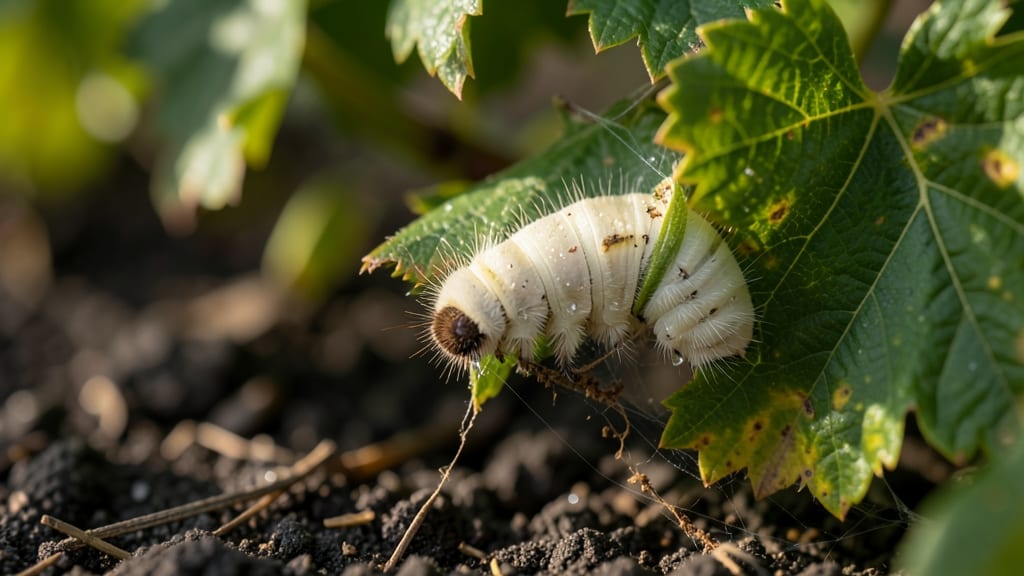
The dangerous grape leaffolder moth can turn your vines into lace curtains by midsummer if left unchecked. 🌿 I’ve watched these sneaky pests transform lush canopies into skeleton leaves in just weeks—until I learned their life cycle and how to disrupt it before damage spirals out of control.
The real danger isn’t just the damage—they’re masters of disguise. Tiny green caterpillars hide inside folded leaves, munching unseen until you spot the first browned patches. Their three generations per season mean one missed treatment can turn a manageable problem into a full-blown crisis.
But here’s the good news: organic controls work when you act at the right stage.
By next season, you’ll spot their telltale signs early—rolled leaves, silk webbing, and those telltale brown frass piles—and stop them before they start. The key is timing: hit the first generation in spring with neem oil or Bacillus thuringiensis, then repeat after each emergence.
Your vines will thank you with full, healthy foliage all season long.
This works for backyard growers, commercial vineyards, and even container grapes. The same principles apply whether you’re dealing with a single trellis or multiple rows. Let’s get those vines protected before the moths even think about showing up.
Root Causes Of Grape Leaffolder Outbreaks
Understanding why grape leaffolder moths (Desmia funeralis) become a threat in vineyards requires examining their biology, environmental triggers, and human agricultural practices. These pests don’t emerge randomly—they respond to specific conditions that create ideal breeding and survival environments.
Below, we break down the key factors that turn a harmless caterpillar into a destructive force in your grapevines.
Grape leaffolder moths thrive where their primary food source—grapevine leaves—is plentiful and easily accessible. Dense vineyard plantings or unmanaged grape foliage provide shelter, food, and breeding grounds. Here’s why this happens:
- Lack of Pruning or Thinning: Overgrown vines with thick canopies trap heat and moisture, creating microclimates that moths favor.
Poor air circulation also makes it harder for natural predators (like birds or parasitic wasps) to patrol the area. - Weedy Understory: Weeds like wild grapevines (Vitis spp.) or blackberry brambles act as alternative hosts, allowing moth populations to persist even outside commercial vineyards.
Migrating adults may lay eggs on these "backup" plants before targeting your crop. - Young or Stressed Vines: Newly planted grapevines or those recovering from disease (e.g., powdery mildew) produce tender, nutrient-rich leaves—a caterpillar’s dream.
Stressed plants also emit volatile organic compounds (VOCs) that can attract ovipositing females.
Actionable Fix: Regularly prune vines to open the canopy (aim for 30–50% sunlight penetration) and remove weed hosts within a 50-foot radius of your vineyard. Use mulch (straw or wood chips) to suppress weeds naturally.
Temperature and moisture play a critical role in the moth’s life cycle. Grape leaffolders are cold-sensitive but heat-tolerant, meaning they explode in populations when conditions align perfectly:
- Warm Winters: If winter temperatures stay above 20°F (-6°C), some larvae survive as diapausing pupae, leading to earlier spring emergences and multiple generations per year. - Spring Rains + Warmth: Moisture softens grape leaves, making them easier for caterpillars to fold and feed.
A 5–7 day stretch of 70–85°F (21–29°C) with humidity triggers synchronized egg-hatching and larval growth. - Drought Stress: Paradoxically, water-stressed vines can also attract moths because their leaves become thinner and more digestible. Irrigation mismanagement (e.g., flooding or drought) creates a double-edged sword.
Actionable Fix: Monitor degree-day models (target 300–500 growing degree days above 50°F/10°C) to predict peak emergence. Use drip irrigation to avoid leaf wetness, and apply mulch to retain soil moisture without overwatering.
Grape leaffolder moths are not inherently invasive—they’re kept in check by a delicate ecosystem. When humans interfere, the balance tips:
- Broad-Spectrum Insecticides: Chemicals like pyrethroids or organophosphates kill beneficial insects (e.g., lacewings, ladybugs, parasitic wasps) that prey on leaffolder larvae. Even one application can reduce predator populations by 60–90% for months. - Monoculture Farming: Large, single-crop vineyards lack biodiversity, eliminating alternative food sources for predator species.
For example, wildflower strips near vineyards support hoverflies, which feed on aphids but also hunt leaffolder eggs. - Habitat Fragmentation: Urban sprawl or agricultural land consolidation reduces wildlife corridors, limiting the movement of birds (like robins) that eat adult moths.
Actionable Fix:
- Avoid synthetic pesticides during egg-laying (May–June) and larval stages (June–July). Instead, use kaolin clay or neem oil as barriers.
- Plant pollinator-friendly borders (e.g., alyssum, dill, or clover) to attract predator insects.
- Install nesting boxes for insect-eating birds (e.g., wrens or bluebirds).
Grape leaffolder moths are strong fliers and can travel miles on wind currents, especially during adult emergence (late spring). This makes them a regional threat rather than a localized one:
- Prevailing Winds: In California’s Central Valley, westerly winds carry adults from coastal wild grape habitats into inland vineyards.
Similarly, southerly winds in the Midwest spread moths from southern states. - Urban Heat Islands: Cities with higher temperatures (e.g., Sacramento, Fresno) act as moth "hubs", where populations build up before dispersing to cooler rural areas. - Post-Harvest Debris: Leftover grapevine prunings or unharvested fruit (e.g., raisins) provide overwintering sites for pupae, ensuring the next generation’s survival.
Actionable Fix:
- Monitor wind patterns via local agricultural extensions (e.g., UC IPM or CDFA traps).
- Remove all vine debris after harvest to eliminate pupation sites.
- Coordinate with neighboring growers to time organic sprays (e.g., Bacillus thuringiensis or pheromone traps) to disrupt migration.
Some agricultural techniques unintentionally create ideal conditions for leaffolder moths:
- Late Pruning: Delaying pruning until after bud break leaves tender new growth exposed to first-generation larvae. - Over-Fertilization: Excess nitrogen produces soft, succulent leaves that caterpillars prefer.
A soil test can reveal imbalances. - Plastic Mulch Use: Black plastic mulch warms soil, accelerating larval development. If combined with irrigation, it creates a moth paradise. - Organic Matter Buildup: Compost piles or leaf litter near vineyards can harbor alternative host plants (e.g., Virginia creeper).
Actionable Fix:
- Prune before bud swell (late winter) to harden leaves before moth emergence.
- Use balanced fertilizers (e.g., 10-10-10) and compost tea for slow-release nutrients.
- Replace plastic mulch with biodegradable covers (e.g., straw or paper).
How to Control This Pest
If grape leaffolder moths 🐛 are wreaking havoc on your vines, don’t panic—there are effective, organic ways to manage them. The key is acting early and combining multiple strategies for long-term success. Below, we’ll break down cause-specific solutions and prevention tips to keep your grapes safe.
Cause: Unnoticed infestations grow rapidly. Fix:
- Scout regularly 🔍—Check the undersides of leaves and new shoots every 5–7 days, especially in spring and summer.
- Use pheromone traps 🎣—Place them in vineyards to monitor adult moth activity before they lay eggs.
- Look for signs: Folded leaves, silk webbing, or tiny larvae (white with black heads) are red flags.
Cause: Chemical pesticides harm beneficial insects and soil. Fix:
- Neem oil spray 🌿—Apply a 1–2% solution when larvae are small (early morning or evening to avoid harming bees).
- Bacillus thuringiensis (Bt) 🦠—A bacterial spray that targets caterpillars without affecting other pests.
- Kaolin clay 🏗️—Creates a protective film on leaves, deterring egg-laying and feeding.
Pro Tip: Rotate sprays every 7–10 days to prevent resistance. Always test on a small area first!
Cause: Manual control works best for small, localized outbreaks. Fix:
- Handpick larvae 👨🍳—Drop them into soapy water (especially effective in early stages).
- Prune infested leaves ✂️—Remove and destroy heavily damaged foliage before moths pupate.
- Yellow sticky traps 🎨—Attract adult moths; place traps near vine edges.
Cause: Poor vineyard hygiene invites reinfestation. Fix:
- Clean up debris 🧹—Remove fallen leaves and fruit after harvest to eliminate overwintering pupae.
- Encourage natural predators 🐞—Ladybugs, lacewings, and parasitic wasps prey on leaffolder moths. Plant companion flowers like dill or fennel to attract them.
- Mulch strategically 🌾—Use organic mulch to disrupt pupation sites and retain moisture.
Pro Tip: Avoid over-fertilizing with nitrogen—it makes vines more attractive to pests!
| Season | Focus Area | Action Steps |
|---|---|---|
| Spring | Eggs & Early Larvae | Neem oil, Bt spray, pheromone traps |
| Summer | Larval Growth | Handpicking, kaolin clay, pruning |
| Fall | Pupae & Overwintering | Cleanup, mulching, habitat for predators |
| Winter | Prevention | Monitor traps, plan spring sprays |
If infestations persist despite your efforts, consult an organic pest control expert—they can assess vineyard-specific risks and recommend targeted solutions.
By combining monitoring, organic sprays, physical removal, and preventive care, you can keep grape leaffolder moths in check without harming your vines—or the environment. 🍇💚
Frequently asked questions
Are grape leaffolder moths dangerous to humans?
No, these moths don't pose any direct threat to humans. They only feed on grapevine leaves and don't bite, sting, or transmit diseases. The real danger comes from their ability to defoliate vines, which can reduce fruit quality and yield if left uncontrolled.
How quickly can grape leaffolder moths destroy a vineyard?
These pests work fast! A single generation can skeletonize leaves in just 2-3 weeks if unchecked. With three generations per season, an untreated vineyard can lose 80% of its foliage by midsummer, severely stressing the plants and reducing fruit production.
Can I use store-bought pesticides to control them?
While some chemical pesticides work, they often harm beneficial insects and can leave residues. For organic growers, Bacillus thuringiensis (Bt) or neem oil are safer alternatives. Always check product labels for grapevine compatibility and reapply every 7-10 days during active infestations.
What's the best time of year to treat for grape leaffolder moths?
The critical window is late spring to early summer when first-generation larvae emerge. Start treatments when you first spot folded leaves (usually May-June in most regions). A second application is needed after 6-8 weeks to catch the next generation.
Will bird feeders help control grape leaffolder moths?
Yes! Birds like robins and wrens love to eat adult moths and larvae. Install feeders near vineyards and supplement with nesting boxes to attract more predators. Combine this with other controls for best results - birds alone may not prevent severe damage during peak outbreaks.