
Leaf Blower
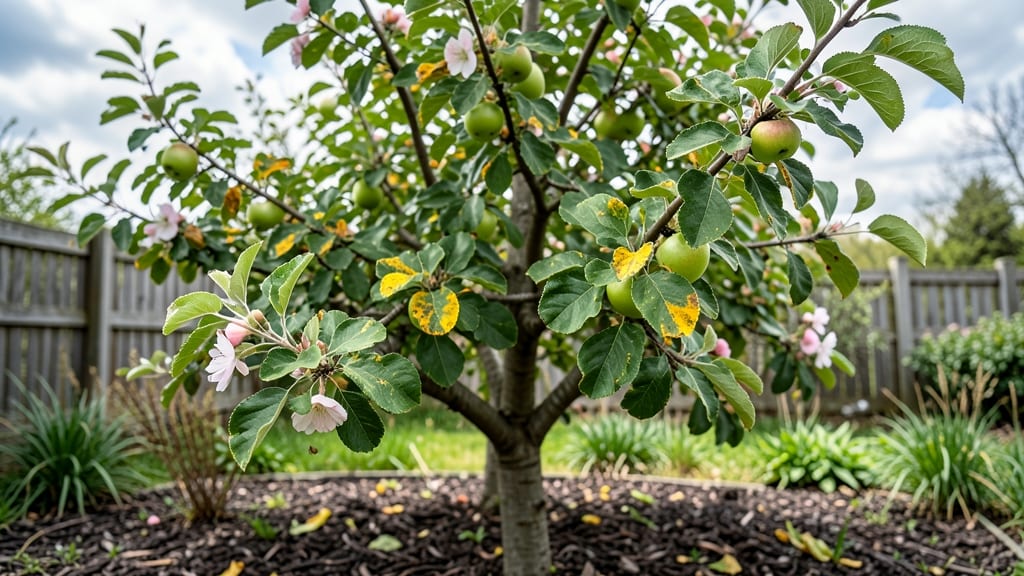
That orange powder on your apple leaves isn’t pollen—it’s apple leaf rust, and it’s stealing your tree’s energy. 🌿 I’ve watched this fungus turn vibrant foliage into a sad, curled mess, but I’ve also learned how to fight back with simple, effective treatments that work even for beginners.
The problem starts when spores from nearby juniper bushes land on your apple leaves, triggering those telltale orange pustules. Left unchecked, your tree will produce fewer apples and weaker growth each year. The good news?
Copper sprays, pruning, and a few other tricks can stop it in its tracks before it spreads. With the right approach, you’ll see new growth free of those ugly spots within just a few weeks.
Your tree will bounce back stronger, and you’ll avoid the heartbreak of watching it decline year after year. This works for backyard orchards, container-grown apples, and even small fruit trees. Let’s get your tree healthy again—before the rust takes over.
Root Causes Of Fungal Foliage Foes
Apple leaf rust isn’t just a random nuisance—it’s the result of a perfect storm of environmental and biological factors. Understanding these causes is key to preventing outbreaks and protecting your orchard. Below, we break down the science behind why rust spores take hold and multiply on apple leaves.
Apple leaf rust (Gymnosporangium juniperi-virginianae) thrives because it’s a biotrophic parasite, meaning it relies on living plant tissue to survive. Here’s how it happens:
- Alternate Hosts: The fungus alternates between two hosts—apple trees (Malus domestica) and juniper shrubs (Juniperus spp.). In spring, rust spores (urediniospores) from junipers infect apple leaves, forming bright orange pustules.
- Windborne Spread: Spores are lightweight and travel easily on breezes, infecting nearby trees within hours. A single infected juniper can contaminate an entire orchard in weeks.
- Wet Conditions: High humidity (above 75%) and leaf wetness for 6+ hours create ideal conditions for spore germination. Rain splashes spores onto leaves, accelerating infection.
💡 Pro Tip: If you see rust on junipers in your area, remove or treat them before apple trees bloom to break the cycle.
Temperature and moisture are the biggest triggers for rust flare-ups. The fungus’s lifecycle is tightly linked to specific weather patterns:
| Stage | Optimal Conditions | Risk Level |
|---|---|---|
| Spores Release | 50–70°F (10–21°C) + high humidity | ⚠️ Moderate (spring/fall) |
| Pustule Formation | 60–80°F (15–27°C) + leaf wetness | 🔥 High (summer) |
| Overwintering | Cold, damp winters (spores survive on juniper needles) | ⚠️ Moderate (next year’s risk) |
🌡️ Key Insight: Rust spreads fastest in spring (April–June) when apples are flowering and late summer (August–September) during humid heatwaves.
Healthy apple trees resist rust better, but stress opens the door for fungal attacks. Common stressors include:
- Nutrient Deficiencies: Low nitrogen (_N_) or zinc (Zn) weakens leaves, making them prime targets. Test soil pH—rust thrives in acidic soil (pH < 6.0).
- Physical Damage: Hail, pests (like apple scab mites), or poor pruning create entry points for spores.
- Overcrowding: Poor airflow from dense planting traps moisture, prolonging leaf wetness and spore survival.
- Water Stress: Drought or overwatering disrupts the tree’s defenses, leaving it vulnerable.
💪 Action Step: Fertilize with balanced NPK (10-10-10) in early spring and mulch to improve soil health.
Fungal spores are tenacious. If not managed, they linger year-round, ready to reinfect. Common oversights:
- Infected Debris: Fallen leaves, mummified fruit, or pruned branches left on the ground harbor spores for years.
- Reused Tools: Pruners or loppers contaminated with rust can spread spores to healthy trees.
- Wild Juniper Proximity: Untreated junipers within 1 mile of your orchard act as a spore reservoir.
✨ Cleanup Checklist:
- Rake and remove all leaf litter from under trees (compost only if heat-treated).
- Sterilize tools with 70% isopropyl alcohol between uses.
- Consider juniper removal if rust is recurrent (consult local regulations first).
Quick Fixes for Rusty Apple Leaves
If your apple tree’s leaves are turning yellow, orange, or rust-colored, it’s time to act fast. The good news? With the right approach, you can stop the spread, revive your tree, and prevent future outbreaks.
Below, we’ve mapped out practical solutions based on the most common causes—so you can tackle the problem head-on without guesswork.
Cause: Poor circulation from dense branches or excessive moisture (like morning dew) creates the perfect breeding ground for rust spores.
Fix It:
- 🔪 Trim back thick branches to let sunlight and air reach the center of the tree. Focus on crossing or rubbing branches first—they trap humidity.
- 🌧️ Space out watering to avoid soggy leaves. Water early in the morning so foliage dries by evening.
- 🌬️ Use a leaf blower (gently!) to dry leaves after rain or irrigation. Aim for 5–10 minutes on rust-prone areas.
Prevention Tip: 💡 Mulch properly—keep mulch 3–4 inches deep and 6 inches away from the trunk to prevent soil-borne moisture from splashing onto leaves.
Cause: Rust spores (like Gymnosporangium juniperi-virginianae) have already infected your tree, and leaves are curling or falling prematurely.
Fix It:
- 🛡️ Apply copper fungicide (like copper sulfate or copper hydroxide) at the first sign of rust. Follow label rates—typically 1–2 tablespoons per gallon of water.
- 🌿 Spray thoroughly, covering both sides of leaves and the undersides (where spores love to hide). Reapply every 7–14 days during wet seasons or after rain.
- 🍎 Time it right: Apply copper spray in early spring (before buds swell) and again after harvest to protect next year’s growth.
Pro Tip: ✨ Mix with neem oil (1 tsp per gallon) for extra antifungal power—just test on a small branch first to avoid leaf burn.
Cause: Stressed trees (from drought, poor soil, or nutrient deficiency) are more susceptible to rust infections.
Fix It:
- 💧 Water deeply but infrequently—apple trees hate soggy roots but wilting stresses them out. Aim for 1–1.5 inches of water per week (including rain).
- 🌱 Feed with compost or balanced fertilizer (10-10-10) in early spring. Avoid high-nitrogen fertilizers—they encourage leafy growth over fruit, making rust worse.
- 🍎 Mulch with wood chips or straw to retain moisture and regulate soil temperature. Avoid plastic mulch—it traps heat and encourages fungal growth.
Prevention Tip: 🌡️ Monitor soil pH—apple trees thrive in slightly acidic soil (6.0–6.5). Test your soil and amend with lime (to raise pH) or sulfur (to lower it) if needed.
Cause: Sap-sucking pests (like aphids or mites) weaken leaves, making them easier targets for rust fungi.
Fix It:
- 🕷️ Blast off pests with a strong stream of water or insecticidal soap (mix 2.5 tbsp soap per gallon of water).
- 🐝 Use horticultural oil (like dormant oil) in late winter to smother overwintering pests before they hatch.
- 🌿 Introduce beneficial insects—ladybugs or lacewings devour aphids naturally. Release them in the early morning or evening when they’re least active.
Prevention Tip: 🎯 Remove fallen leaves from under the tree—pests and spores hibernate there over winter!
If more than 30% of leaves are rusted, it’s best to prune them out to stop the spread.
- 🔪 Snip off infected leaves with sterilized pruners (wipe with rubbing alcohol between cuts).
- 🗑️ Bag and discard rusty leaves in the trash (not compost)—they’re still contagious!
- 🌳 Don’t over-prune—remove only rust-covered branches, not healthy growth.
Warning: ⚠️ Never compost rust-infected leaves—spores can survive and reinfect your tree!
To keep rust at bay year after year:
- 🌳 Plant resistant varieties like Liberty, Akane, or Enterprise—they’re bred to fight rust.
- 🌿 Rotate copper sprays with baking soda spray (1 tbsp baking soda + 1 tsp oil + 1 gallon water) every other application to avoid resistance.
- 🌳 Space trees 20–25 feet apart for better airflow—less rust, more fruit!
Remember: 🍏 Early action is key—the sooner you treat rust, the healthier your apple tree (and your harvest) will be. Grab your copper spray, pruners, and leaf blower, and get to work! Your tree will thank you with lush, disease-free foliage and juicy apples come fall.
Frequently asked questions
What do apple leaf rust pustules look like?
Apple leaf rust shows up as bright orange-yellow pustules on the undersides of leaves, often surrounded by yellow halos. In summer, these pustules may turn dark and crusty. The top of infected leaves often curls or distorts, making them look unhealthy.
Can I still harvest apples from a rust-infected tree?
Yes, but the quality may suffer. While rust primarily affects leaves, severe infections can reduce fruit size and flavor. If you see heavy leaf drop or fruit deformities, focus on treating the tree next season to improve next year’s harvest.
How often should I apply copper spray for rust?
Apply copper fungicide every 7–14 days during wet seasons or after rain. Start in early spring (before buds swell) and repeat after harvest. Always follow label instructions to avoid leaf burn.
Will removing nearby juniper bushes stop apple leaf rust?
Yes, but it’s a last-resort solution. Juniper bushes host rust spores that infect apple trees. If rust is severe, consider removing junipers within 1 mile of your orchard. Check local regulations first—some areas protect native juniper species.
Can I use homemade remedies like baking soda for rust?
Yes! Mix 1 tablespoon baking soda + 1 teaspoon oil + 1 gallon water for a mild antifungal spray. Rotate with copper sprays to prevent resistance. Test on a small leaf first to avoid irritation.