
Pests and Diseases
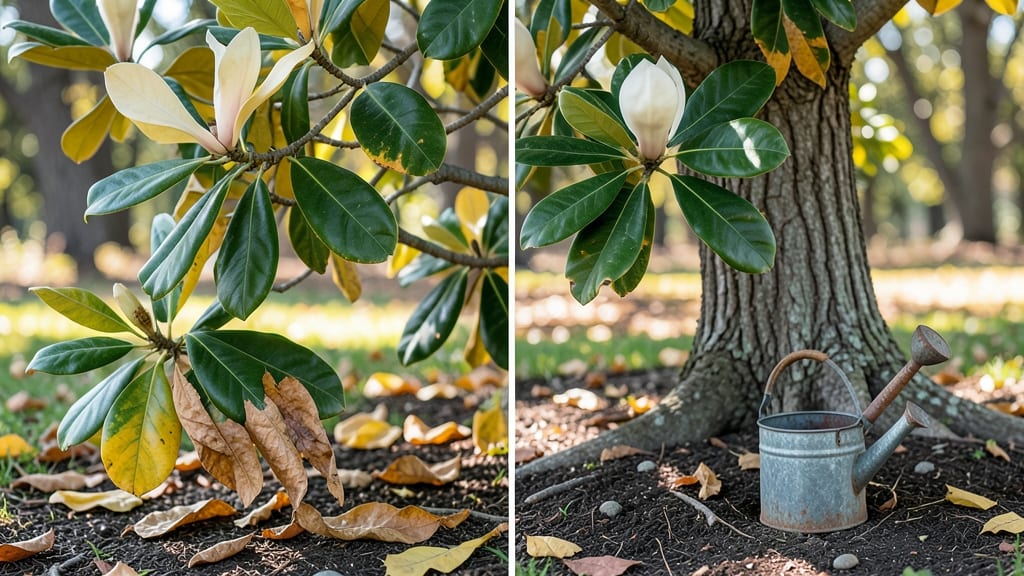
When your magnolia’s leaves start falling like autumn rain—magnolia leaf drop—fungal spots are often the culprit—and copper spray is the knight in shining armor. 🌿 I’ve watched this happen to my 20-year-old Southern magnolia, and the difference after treatment is shocking: no more brown spots, no more premature leaf drop, just glossy green foliage by summer’s end.
The key isn’t just spraying, though—it’s timing, technique, and tackling the root causes first.
Most gardeners miss the basics: overwatering or poor drainage create the perfect fungal buffet, while scale insects hitch a ride on weak branches, spreading disease. My first mistake? Skipping the pruning step—those dead branches hold spores like a sponge.
Start with clean, sharp pruners, remove all spotted leaves, and rake up debris. Then comes the copper spray, but only after you’ve given your tree a fighting chance with proper airflow and water management.
What you’ll see after treatment is new growth without a single blemish, and leaves that stay attached until late fall—exactly what you want.
The copper spray works by disrupting fungal spores on contact, but it’s not a magic bullet: apply it twice a year (early spring and late fall) for long-term protection. For extra insurance, I add a layer of mulch around the base to keep soil-borne fungi at bay.
This method works for all magnolia varieties, from the towering Southern magnolia to the compact little gem. The only time to call in a pro? If your tree is more than 50% defoliated or shows signs of bark cankers.
Otherwise, grab your sprayer and let’s get those leaves back where they belong—on the tree.
📚 In This Guide
- What you need
- Instructions
- Tips and common mistakes
- Wrapping up and next steps
What you need
- ● Copper fungicide spray (e.g., Copper Sulfate, Copper Hydroxide, or a ready-to-use copper fungicide like Bonide Copper Fungicide or Neem Oil with Copper). Quantity: 1–2 gallons (enough to cover your magnolia tree thoroughly).
- ● Specification: Look for a label that includes copper as an active ingredient (1–4% copper) and is approved for ornamental trees.
- ● Spraying equipment: A hose-end sprayer (for large trees) or a handheld pump sprayer (for smaller trees).
- ● Quantity: 1 unit (ensure it’s clean and free of residue from other chemicals).
- ● Protective gear: Gloves (nitrile or rubber, waterproof).
- ● Long-sleeved shirt and pants (to avoid skin contact with copper).
- ● Safety goggles (to protect eyes from spray mist).
- ● Pruning tools (if removing severely infected leaves/branches): Pruning shears (for small branches).
- ● Loppers (for medium branches).
- ● Disinfectant (e.g., rubbing alcohol or bleach solution) to clean tools between cuts.
- ● Ladder or step stool (if your magnolia is taller than 6 feet).
- ● A fan or gentle breeze (to help the spray dry faster and improve coverage).
- ● Neem oil (can be mixed with copper for added antifungal properties).
- ● Baking soda solution (1 tbsp baking soda + 1 quart water) as a pre-treatment rinse for leaves.
- ● Label or marker to tag your magnolia tree (to avoid mistaking it for another plant during treatment).
How to treat magnolia leaf drop with copper spray
When fungal spots appear on magnolia leaves, copper spray is your best defense—here's how to apply it effectively.
🌿 Step 1: Identify the Problem and Timing
Look for dark, irregular spots on leaves with yellow halos—classic signs of fungal leaf spot diseases like anthracnose or leaf blight. The best time to treat is early spring, just before new growth begins, or late fall after leaf drop. This prevents spores from overwintering on your tree. I always check leaves in April and October—that's when I catch issues before they spread.
Don't wait until you see widespread leaf drop. By then, the fungus has already weakened the tree. Healthy magnolias have dark green, glossy leaves—anything dull or spotted needs immediate attention. If you're unsure, gently rub a leaf between your fingers. Fungal spores leave a powdery residue that healthy leaves won't have.
💧 Step 2: Prepare the Copper Spray Solution
Use a ready-to-use copper fungicide (like copper sulfate or copper hydroxide) mixed according to label instructions. Most require 1 tablespoon per gallon of water, but always verify. I prefer copper hydroxide because it's less corrosive than copper sulfate and safer for nearby plants. Mix in a clean sprayer—never reuse containers that held pesticides or herbicides.
Shake the mixture well before each use. Copper particles settle quickly, and an uneven spray won't protect your tree effectively. Test the spray on a small area of the tree first—some magnolias, especially rare varieties, can be sensitive to copper. Wait 24 hours to monitor for any adverse reactions before full application.
✂️ Step 3: Apply the Spray Properly
Spray early in the morning when temperatures are below 85°F and there's no rain forecast for 24 hours. Wind can carry copper particles to unwanted areas, so choose a calm day. Focus on the upper and lower leaf surfaces, stems, and any visible fungal spots. You'll need to cover the entire canopy—don't skip the inner branches where spores hide.
Use a fine mist setting on your sprayer to ensure even coverage. Lightly wet the leaves until water droplets form but don't drip. I like to work in sections, starting from the top and moving downward. This prevents missing spots while the sprayer is empty. After application, avoid pruning or disturbing the tree for 48 hours—copper needs time to bond with the leaf surfaces.
☀️ Step 4: Follow Up and Monitor
Reapply the copper spray every 7-14 days during active growth periods (spring and summer) or as directed on the product label. Consistency is key—fungal spores reproduce quickly, and missed applications can lead to severe leaf drop. Keep an eye out for new spots or yellowing leaves, which signal the fungus is still active.
Improve air circulation around your magnolia by pruning out crossing branches and thinning dense areas. Better airflow reduces humidity, which fungal spores thrive in. Water at the base of the tree rather than overhead to keep leaves dry. If leaf drop persists after two applications, consider testing the soil for nutrient deficiencies—magnolias often drop leaves when stressed by poor soil health.
⏰ Step 5: Prevent Future Outbreaks
Clean up fallen leaves in late fall and dispose of them in the trash—never compost them. Fungal spores overwinter in leaf litter and reinfect the tree next season. I rake leaves into a thick layer and bag them immediately after they drop. Also, avoid overhead irrigation during afternoon hours when leaves stay wet overnight.
Apply a 2-3 inch layer of mulch around the base of the tree, but keep it 6 inches away from the trunk. Proper mulching improves soil drainage and reduces splash from irrigation. For extra protection, consider a dormant oil spray in late winter before buds swell—this smothers overwintering insects and fungal spores.
Tips & tricks for treating magnolia leaf drop with copper spray
Common pitfalls—and how to sidestep every one when treating fungal leaf spot on magnolias.
Timing is Everything: The 24-hour waiting period after your first application in Step 2 isn't just arbitrary—it gives the copper time to fully adhere to leaf surfaces. I've seen homeowners skip this and end up with uneven coverage. Mark your calendar for the exact time you applied, and resist the urge to reapply early. If you're treating in April, schedule your follow-up for May 1st (assuming a 7-day reapplication cycle) to maintain consistency.
Equipment Matters: Don't underestimate the importance of a quality sprayer for Step 3. I recommend a pump sprayer with a fine mist nozzle—these provide even coverage and reduce waste. Avoid garden hoses with spray attachments; they often create large droplets that miss inner branches. If you're working with a large magnolia, consider renting a backpack sprayer for better reach and control. The goal is complete canopy coverage, not just the visible outer leaves.
Environmental Conditions: The 85°F temperature limit in Step 3 exists for good reason—copper fungicides work best when applied in cooler conditions. If your forecast shows temperatures climbing above 85°F after application, move your treatment to the evening hours when temps drop. Also, avoid spraying when dew is present—wet leaves can dilute the copper concentration. I've learned this the hard way after seeing reduced effectiveness during humid afternoons.
Preventative Maintenance: The 2-3 inch mulch layer mentioned in Step 5 isn't just decorative—it's a critical part of your long-term strategy. Too many gardeners stop at the copper spray, but fungal spores thrive in moist, organic debris. I make it a habit to refresh my mulch every spring, mixing in a layer of pine needles which naturally repel some fungal spores. This simple step creates a healthier root zone and reduces the overall fungal load in your magnolia's environment.
Pro Tips for Magnolia Leaf Drop
- Common pitfalls—and how to sidestep every one when treating fungal leaf spot on magnolias.
- Timing is Everything: The 24-hour waiting period after your first application in Step 2 isn't just arbitrary—it gives the copper time to fully adhere to leaf surfaces.
- Equipment Matters: Don't underestimate the importance of a quality sprayer for Step 3.
Frequently asked questions
Why is my magnolia dropping leaves even after treating with copper spray?
Leaf drop can still occur due to stress from fungal infections (like anthracnose) or environmental factors like drought, poor soil, or extreme temperatures. Copper spray helps prevent spread but doesn’t reverse damage. Prune affected branches and improve growing conditions (watering, mulching) to support recovery.
How long does it take for copper spray to show results on magnolia leaf spots?
Results vary, but you may notice slowed spread within 1–2 weeks. Full recovery depends on the plant’s health and infection severity. Apply copper spray before buds open in early spring and again after rain or heavy leaf drop to maintain protection.
Is it too late to treat my magnolia if leaves are already dropping?
Not necessarily! While copper spray won’t revive fallen leaves, it can stop further spread and prevent next year’s issues. Focus on pruning infected leaves, improving airflow, and fertilizing to boost resilience. Next season, start treatments early (dormant season).
Can I use copper spray on other plants if my magnolia has fungal spots?
Yes! Copper fungicides (like Bordeaux mixture or copper sulfate) are broad-spectrum and safe for many plants, including roses, fruit trees, and hydrangeas. However, avoid edible crops at harvest (follow label instructions). Test a small area first to check for sensitivity.
What’s a natural alternative to copper spray for magnolia leaf drop?
For mild cases, try neem oil (fungicidal + insecticidal) or a baking soda spray (1 tsp baking soda + 1 quart water + drop of soap). Prevention is key: Improve drainage, avoid overhead watering, and mulch to reduce humidity. Severe cases may still need copper or fungicides.
Wrapping up and next steps
Magnolia leaf drop doesn’t have to be a mystery—often, it’s a sign of fungal issues like anthracnose or leaf spot, and copper spray can be your go-to hero! 🌿 With the right materials, timing, and a few proactive steps, you can restore your magnolia’s health and keep those stunning leaves lush and vibrant.
Ready to take action? Start by inspecting your tree this weekend—early detection is key! If you spot signs of fungal trouble, grab your copper spray and follow the steps above. Your magnolia will thank you with season after season of beauty!