
Pests and Diseases
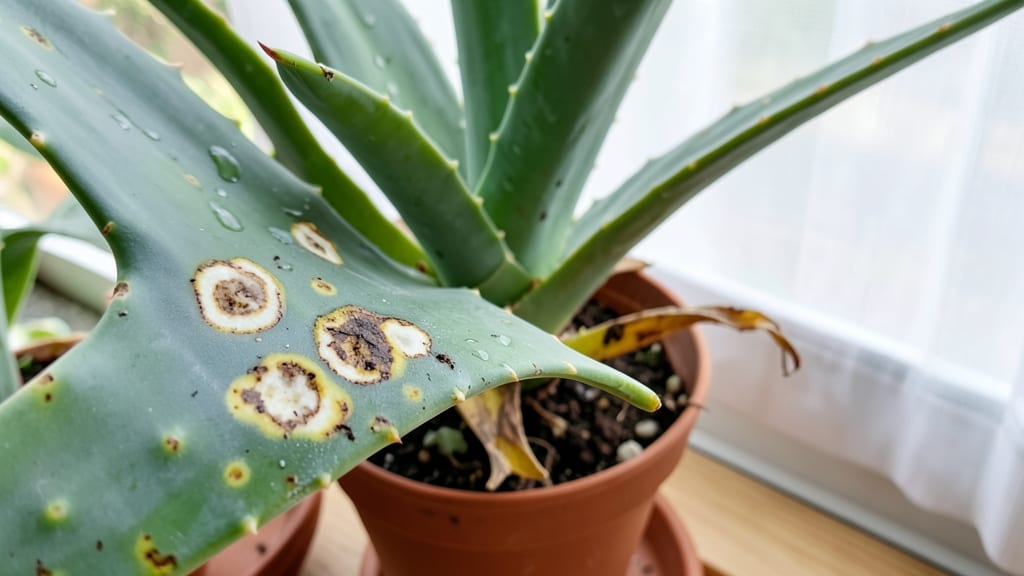
Aloe vera leaf spot disease turns your sun-loving plant into a sad, spotted mess. 🌱 The copper spray cure works fast—within days—when you catch it early, and I’ve saved more plants with this method than I’d like to admit.
Those ugly brown spots? They’re usually fungal, and they spread like wildfire if you ignore them.
Overwatering is the #1 culprit, but poor airflow and old leaves create the perfect fungal party. I’ve seen healthy aloe plants turn into leaf-spot disasters just because someone kept them in a damp bathroom.
The good news? Copper spray kills the fungus on contact, and it’s safe once dry. No harsh chemicals, just a quick fix.
You’ll see new growth pushing out within a week, and those spots will fade to nothing. The key is consistency—spray every 7-10 days until the plant looks fresh again. I’ve even used it on my neighbor’s aloe, and they were shocked at how fast it worked.
Works for indoor plants, outdoor aloe in pots, or even those stubborn houseplants that refuse to stay healthy. Here’s how to do it right the first time—no guesswork, just results.
Root Causes Of Leaf Spots
When your aloe vera plants develop unsightly brown or black spots, it’s often a sign of leaf spot disease—a fungal or bacterial infection that thrives under the right conditions. Understanding the why behind these spots is the first step to preventing them.
Below, we break down the most common triggers, from environmental stressors to poor care habits, so you can protect your plants before issues arise.
Fungal pathogens like Phyllosticta and Alternaria love damp conditions, and overwatering creates the perfect breeding ground. When soil stays soggy for too long:
- Root suffocation: Compacted or poorly draining soil cuts off oxygen, weakening roots and making plants vulnerable to infections.
- Fungal growth: Excess moisture encourages spores to germinate on leaf surfaces, leading to water-soaked spots that turn brown or black.
- Bacterial entry: Open wounds from overwatering (like soft, mushy leaves) invite bacteria like Xanthomonas to invade.
Actionable fix: Let soil dry completely between waterings (stick your finger 2 inches deep—if it’s damp, wait). Use pots with drainage holes and a cactus/succulent mix to prevent waterlogging.
Aloe vera leaves are susceptible to airborne fungal spores, especially in humid or rainy climates. Common culprits include:
- Alternaria: Causes dark, concentric ring spots (like a bullseye) in warm, wet conditions.
- Cercospora: Produces small, irregular brown spots with yellow halos, thriving in high humidity.
- Botrytis (gray mold): Spreads rapidly in crowded or poorly ventilated spaces, creating fuzzy gray spots.
Actionable fix:
- Space plants 3–4 inches apart for airflow.
- Avoid overhead watering (use drip irrigation or bottom-watering instead).
- Sanitize pruners with 70% isopropyl alcohol to prevent cross-contamination.
Aloe vera prefers stable conditions—sudden changes in temperature or humidity stress plants, lowering their resistance to disease. Key triggers:
- Cold stress: Temperatures below 50°F (10°C) can weaken cell walls, making leaves prone to fungal/bacterial attacks.
- High humidity (>60%): Traps moisture on leaves, creating a film that spores latch onto.
- Drafty environments: Cold drafts (e.g., near AC vents) shock plants, while hot drafts (e.g., near heaters) dry leaves unevenly, creating entry points for pathogens.
Actionable fix:
- Keep aloe in 60–80°F (15–27°C) with 40–50% humidity.
- Use a hygrometer to monitor levels and a dehumidifier if needed.
- Avoid placing near windows or doors that cause temperature fluctuations.
Even minor injuries—like sharp pruning cuts or pest bites—create gateways for infections. Common offenders:
| Damage Source | How It Leads to Spots |
|---|---|
| Mealybugs/Scale | Pierce leaves to feed, leaving sticky residue (honeydew) that attracts sooty mold—a fungal growth. |
| Thrips | Scrape leaf surfaces, creating wounds where Alternaria or Botrytis spores colonize. |
| Poor pruning technique | Ragged cuts expose inner tissue, inviting bacterial rot (e.g., Erwinia). |
Actionable fix:
- Use sterile, sharp shears for pruning and seal cuts with cinnamon powder (natural antifungal).
- Inspect leaves weekly for pests—treat infestations with neem oil or insecticidal soap.
- Isolate new plants for 2–4 weeks to prevent introducing pests.
Imbalances in soil nutrients weaken aloe vera’s natural defenses. Key culprits:
- Over-fertilizing: Excess nitrogen or salts burn roots, stressing the plant and making it susceptible to Phytophthora root rot.
- Calcium/magnesium deficiency: Causes leaf tips to brown and crack, creating entry points for bacteria.
- pH imbalances: Aloe thrives in 6.0–7.0 pH; acidic (<5.5) or alkaline (>7.5) soil disrupts nutrient uptake, weakening immunity.
Actionable fix:
- Fertilize only in spring/summer with a balanced 5-5-5 formula, diluted to half strength.
- Test soil pH with a digital meter and amend with lime (to raise pH) or sulfur (to lower pH) as needed.
- Flush soil annually with water to remove salt buildup.
Fixing Browning Spots on Aloe Vera
Aloe vera leaf spot disease can be frustrating, but with the right approach, you can restore your plant’s health and prevent further damage. Below are practical, step-by-step solutions tailored to the most common causes—fungal infections, bacterial issues, environmental stress, or pest-related damage.
Each fix includes prevention tips to keep your aloe thriving long-term.
If dark, sunken spots with yellow halos appear (likely Phytophthora or Alternaria), act fast with copper-based fungicides, the gold standard for aloe vera leaf spot disease.
🍳 Step 1: Remove Infected Leaves
- 🔪 Snip off severely spotted leaves at the base with sterilized pruners (wipe with rubbing alcohol).
- 🗑️ Dispose of infected leaves in the trash (not compost)—fungal spores can linger.
👨🍳 Step 2: Apply Copper Fungicide
- Mix 1 tbsp copper sulfate (or a pre-mixed copper fungicide like Bordeaux mixture) with 1 gallon of water.
- 🌧️ Spray the solution evenly on both sides of healthy and lightly affected leaves.
- ⏰ Reapply every 7–10 days for 3–4 weeks or until new growth appears spot-free.
💡 Prevention Tips
- 🌡️ Improve airflow: Space plants 12+ inches apart to reduce humidity buildup.
- ✨ Water at the base: Avoid overhead watering—soak the soil instead, then let it dry completely before the next watering.
- 🎯 Sterilize tools: Clean pruners and pots with bleach solution (1:10 bleach:water) before reuse.
Bacterial spots (usually small, water-soaked, and brown) require a different approach—disinfection and isolation.
🍎 Step 1: Isolate the Plant
- Move the aloe to a quarantine spot (like a garage or shaded area) to prevent spread.
🧼 Step 2: Clean Leaves with Hydrogen Peroxide
- Mix 1 part 3% hydrogen peroxide with 3 parts water.
- 🧴 Gently dab (don’t spray hard) affected areas with a soft cloth or cotton swab.
- 🌿 Repeat 2x daily for 3–5 days.
🔥 Step 3: Boost Plant Immunity
- 💪 Fertilize lightly with a balanced, organic fertilizer (like fish emulsion) to strengthen defenses.
- 🌱 Repot if needed: If the soil is waterlogged or contaminated, refresh it with sterile cactus/succulent mix.
💡 Prevention Tips
- 🚫 Avoid wet foliage: Water only in the morning so leaves dry quickly.
- 🌿 Use sterile soil: Purchase pasteurized or cactus-specific potting mix to prevent bacterial buildup.
- 🎯 Rotate plants: If outdoors, move aloe every few weeks to avoid prolonged moisture on leaves.
If spots are dry, crispy, or sun-scorched (not fungal/bacterial), the issue is likely overwatering, underwatering, or sunburn.
💧 Step 1: Check Watering Habits
- 🥶 Let soil dry completely between waterings—aloe stores water in its leaves!
- 🌧️ Water deeply but infrequently: Once every 2–3 weeks (less in winter).
☀️ Step 2: Shield from Harsh Sun
- 🏠 Move indoors if outdoors during peak sun (10 AM–4 PM).
- 🪟 Use sheer curtains or partial shade if keeping aloe near a sunny window.
🌱 Step 3: Trim Damaged Tips
- ✂️ Snip off brown, crispy leaf tips with clean scissors.
- 🌱 Propagate healthy cuttings in fresh soil if the plant is severely stressed.
💡 Prevention Tips
- 🌡️ Monitor temperature: Aloe thrives in 70–90°F (21–32°C)—avoid drafts or cold snaps.
- 🥗 Use well-draining soil: Mix cactus soil with perlite or pumice (1:1 ratio).
- 🎯 Acclimate slowly: If moving aloe outside, gradually increase sun exposure over 1–2 weeks.
If spots are sticky, accompanied by webbing, or have tiny holes, pests like scale, mealybugs, or spider mites are likely the culprits.
🍃 Step 1: Wipe Off Visible Pests
- 🧼 Dampen a cotton swab with rubbing alcohol (70% isopropyl).
- 🐜 Gently scrub off pests from leaves and crevices.
🌿 Step 2: Apply Neem Oil Spray
- Mix 1 tsp neem oil + 1 tsp mild soap + 1 quart water.
- 🌧️ Spray thoroughly, covering undersides of leaves where pests hide.
- ⏰ Repeat weekly for 2–3 weeks.
💡 Prevention Tips
- 🌱 Inspect new plants: Quarantine for 2 weeks before introducing to your collection.
- 🎯 Encourage beneficial insects: Ladybugs and lacewings prey on pests—plant companion succulents nearby.
- 🌡️ Maintain humidity balance: Too-dry air attracts spider mites—mist occasionally (but avoid soggy leaves).
For early-stage or minor spots, try these DIY fixes before reaching for chemicals:
- 🍋 Lemon juice spray: Mix 1 tbsp lemon juice + 1 cup water, spray on leaves (acidic properties deter fungi).
- 🧄 Garlic spray: Blend 2 garlic cloves + 1 quart water, strain, and spray (natural antibacterial).
- 🌿 Cinnamon powder: Dust lightly on pruning wounds to prevent infection.
Frequently asked questions
What do aloe vera leaf spots look like, and how can I tell if it's fungal or bacterial?
Fungal spots often appear as dark brown or black patches with yellow halos, sometimes forming concentric rings (like a bullseye). Bacterial spots are usually small, water-soaked, and irregular, often with a yellowish center. Fungal spots may have a fuzzy or powdery texture, while bacterial spots often ooze a clear or yellow liquid when pressed.
Can I save my aloe vera plant if it already has severe leaf spot disease?
Yes, but act fast! Remove all severely infected leaves immediately and treat with a copper fungicide or hydrogen peroxide solution (for bacterial spots). If more than 50% of the plant is affected, consider propagating healthy cuttings to save the mother plant. With proper care, new growth should emerge within 2–4 weeks.
Is copper spray safe for indoor aloe vera plants?
Copper spray is safe once dry, but avoid spraying near pets or children until fully dry (wait 4–6 hours). For indoor plants, apply in a well-ventilated area and rinse leaves lightly with water after 24 hours to remove residue. Always test a small area first to check for sensitivity.
Why do my aloe vera spots keep coming back even after treatment?
Recurring spots usually mean the root cause isn't fixed. Check for:
- Overwatering (let soil dry completely between waterings)
- Poor airflow (space plants 12+ inches apart)
- Contaminated soil (repot with sterile cactus mix) Fungal spores thrive in damp conditions, so prevention is key—sterilize tools and avoid overhead watering.
Can I use household items like vinegar or baking soda to treat leaf spot disease?
While vinegar (1:1 water ratio) or baking soda (1 tsp + water) can help prevent mild fungal growth, they’re not as effective as copper fungicides for established infections. Vinegar may also burn leaves if too concentrated. For best results, use copper spray or neem oil for fungal/bacterial spots.