
Pruning
Trimming bigleaf hydrangeas at the wrong time can turn next year’s blooms into a sad, sparse show — and the best window is late summer, not spring.
Picture this: You’ve spent months admiring your 🌸 bigleaf hydrangea’s lush, vibrant blooms, only to realize you pruned it in early spring. Now, instead of a full, flower-filled display, you’re staring at a few straggly stems.
That’s because bigleaf hydrangeas bloom on new wood, and cutting too early removes next season’s flower buds before they form.
But here’s the good news: If you time it right, you’ll encourage bigger, healthier blooms while keeping your shrub looking its best. The key is waiting until August or September, after the flowers have faded but before the first frost.
This timing works for gardeners in USDA Zone 6a and beyond, giving your plant just enough time to set buds for next spring.
In this guide, I’ll walk you through the exact steps—when to trim, which stems to cut, and how to avoid the most common mistakes. You’ll also learn what to do if you’ve already pruned too soon (or too late) and how to revive your hydrangea for a stunning comeback.
The exact best time to trim big leaf hydrangeas for maximum blooms
If you’ve ever wondered when to trim big leaf hydrangeas for the most stunning blooms next season, the answer isn’t what most gardeners think. While many assume late winter or early spring is ideal, big leaf hydrangeas (Hydrangea macrophylla) actually thrive when pruned in late summer or early fall.
This timing ensures you’re cutting back the old wood that produced this year’s flowers, allowing new stems to grow and bloom next year.
The key is to trim after the first flush of blooms has faded but before the first frost. For most U.S. climates, this means August through September. Pruning at this time gives the plant enough warmth to heal while still having time to harden off before winter.
If you’ve been trimming in spring, you might be accidentally removing next year’s flower buds—leading to sparse blooms or no flowers at all.
Here’s why this timing works: Big leaf hydrangeas bloom on old wood, meaning last year’s growth produces this year’s flowers. Cutting back too early (like in spring) removes those buds before they’ve had a chance to develop.
Waiting too long (fall or winter) risks damaging the plant or leaving it vulnerable to disease. The August-September window strikes the perfect balance.
🌸
One common mistake I see is gardeners trimming big leaf hydrangeas too aggressively in late summer. While it’s important to remove dead or diseased stems, avoid cutting back more than 1/3 of the oldest stems.
This ensures your hydrangea still has enough foliage to photosynthesize and store energy for next year’s growth. Think of it like giving your plant a haircut—you want to shape it, not shave it bald!
If you’re in a warmer climate (USDA Zones 8-10), you might extend your pruning window into October. However, always aim to finish at least 4-6 weeks before the first frost to allow the plant time to heal.
In colder zones (USDA 3-7), stick to August pruning to avoid frost damage to fresh cuts.
Another pro tip: Look for dormant buds along the stems after pruning. These are your next year’s flowers waiting to grow! If you see no buds, you may have pruned too late or too aggressively.
Don’t panic—hydrangeas are resilient, and even if you miss the ideal window, they’ll still grow (just with fewer blooms).
For those who love rejuvenation pruning (cutting back everything to the ground), big leaf hydrangeas aren’t the best candidate. Unlike panicle or oakleaf hydrangeas, which bloom on new wood, big leaf varieties need their old stems to produce flowers.
If you’ve accidentally pruned yours too hard in spring, don’t worry—just focus on light pruning in late summer to encourage new growth.
Finally, if you’re unsure whether your hydrangea is a big leaf type, check the flower shape and leaf size. Big leaf hydrangeas have large, rounded blooms and broad leaves (3-6 inches long).
If yours fits this description, the late-summer pruning rule applies! If not, you might have a panicle or smooth hydrangea, which follows different pruning guidelines.
✂️
Step-by-step pruning guide: how to trim big leaf hydrangeas like a pro
Now that you know when to trim your big leaf hydrangeas, let’s dive into the actual process. Pruning these beauties isn’t just about snipping randomly—it’s about encouraging healthier growth and bigger blooms next season.
The key is targeting the right stems and using the proper technique to avoid stressing your plant.
First, gather your tools: sharp bypass pruners for clean cuts, sterilized shears to prevent disease, and gloves to protect your hands from thorns. You’ll also want a bucket for trimmings and a measuring tape to gauge stem thickness.
Pro tip: Sterilize your tools with rubbing alcohol to avoid spreading bacteria between cuts.
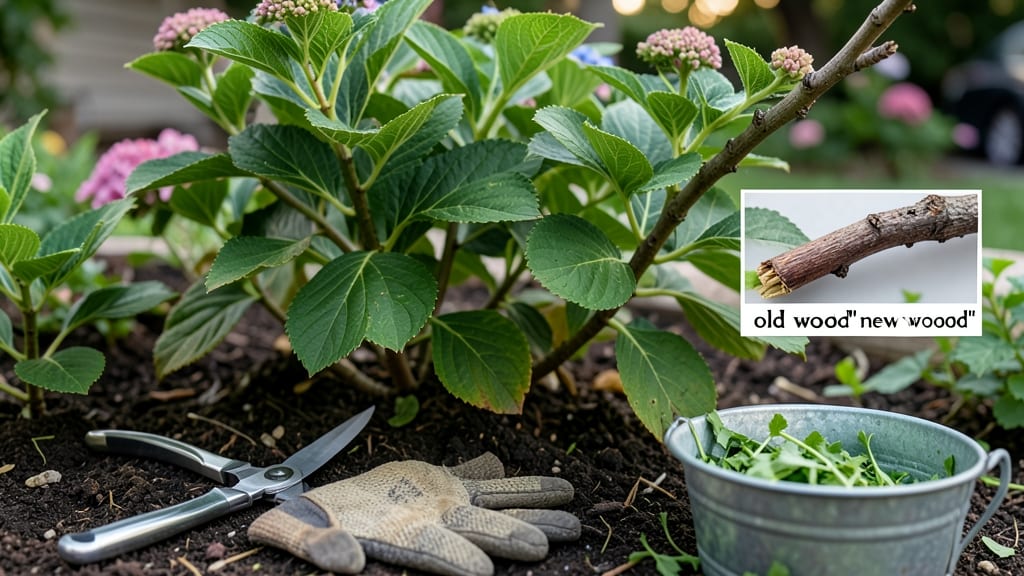
Before you start, identify the old wood (last year’s growth) and new wood (this year’s stems). Big leaf hydrangeas bloom on new wood, so focus on shaping and thinning out crowded stems.
Look for dead or crossing branches—these should be your first targets. Cut these back to a healthy bud or joint, angling the cut slightly to encourage water runoff.
For size control, trim back 1/3 of the oldest stems to the ground. This rejuvenates the plant and promotes fresh growth. Avoid cutting into green stems unless they’re weak or diseased—these are your future blooms!
Use your pruners at a 45-degree angle just above a leaf node or outward-facing bud to direct growth where you want it.
⚠️ Warning: Timing is Everything!
Trimming big leaf hydrangeas at the wrong time—like late summer after blooms or early spring—can kill next year’s flowers. Always prune in late summer (August-September) to allow new stems to harden off before winter. If you missed the window, wait until early spring but avoid heavy cuts.
As you prune, step back frequently to assess the shape and balance of your hydrangea. Aim for an open center to improve airflow and reduce disease risk. Remove any suckers or water sprouts (thin, weak stems) growing from the base or inside the plant.
These compete with your main stems for nutrients and can weaken your hydrangea’s overall health.
After pruning, give your hydrangea a light fertilizer to support new growth. Water deeply to help it recover, and mulch around the base to retain moisture and regulate soil temperature. In 3-4 weeks, you’ll see fresh, vibrant stems emerging—proof that your pruning paid off!
For a visual guide, snap a photo of your hydrangea before and after pruning to track its progress.
Remember, patience is key. Big leaf hydrangeas respond well to gradual pruning over time. If you’re unsure, start small—remove just the dead or crossing branches first, then expand your pruning in future seasons. With practice, you’ll master the art of trimming and enjoy show-stopping blooms year after year. 🌸