
Flowers
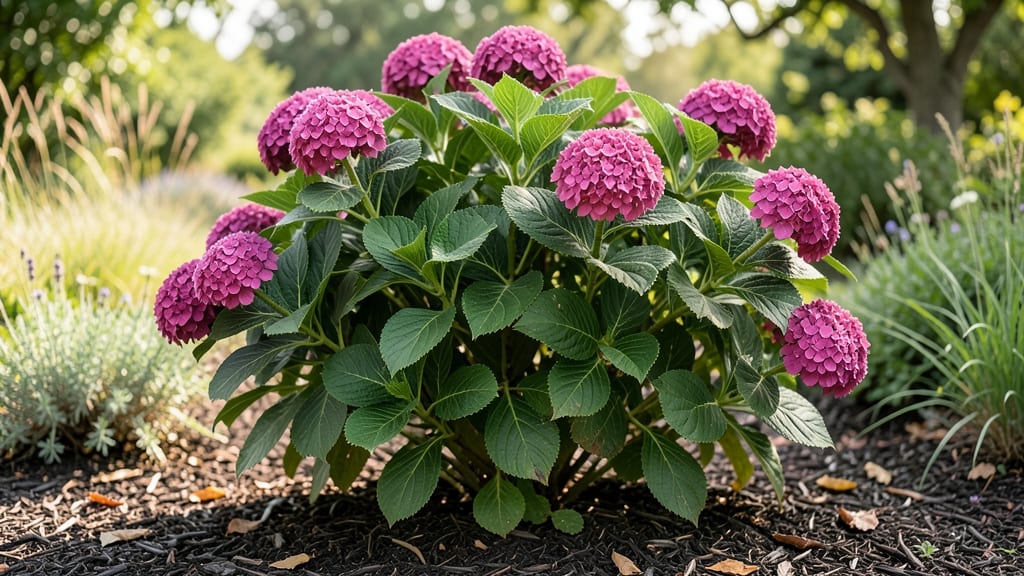
Bigleaf hydrangea flowers transform shady corners into lush, romantic displays—and they’re easier to grow than most gardeners think. ✨ I’ve watched mine go from awkward new transplants to the showstopper of my garden in just three seasons, with blooms that change color as the seasons shift.
The key? Understanding their love for moisture, partial shade, and rich soil. These plants reward patience with dramatic blooms in shades of blue, pink, or white, plus deep green foliage that stays vibrant even in low light.
Varieties like ‘Nikko Blue’ and ‘Endless Summer’ produce flowers on both old and new wood, so you get two seasons of blooms instead of just one. The trick is keeping the soil consistently moist but not soggy—hydrangeas hate drought stress.
By midsummer, you’ll be snipping stems for bouquets that last for weeks, and the plant will keep growing stronger each year. The foliage stays lush even when other shade plants wilt, making it the perfect anchor for woodland-style gardens.
Pair it with hostas, ferns, or impatiens for a layered, dreamy effect. Works in containers too—just choose a pot with drainage and keep it near a dappled-light spot. Here’s how to keep yours thriving all season long.
📚 In This Guide
- What you need
- Instructions
- Tips and common mistakes
- Wrapping up and next steps
What you need
- ● Bigleaf hydrangea plants: Choose healthy nursery-grown specimens (1–3 gallon pots) with vibrant foliage. Pro tip: Look for Hydrangea macrophylla varieties like 'Nikko Blue' or 'Endless Summer'.
- ● Well-draining potting soil: 5–10 gallons (or a 50/50 mix of garden soil and compost for in-ground planting).
- ● Organic mulch: 2–3 inches of shredded bark or pine needles to retain moisture.
- ● Slow-release fertilizer: 10-10-10 or acid-loving plant formula (e.g., Miracle-Gro Azalea/Camellia).
- ● Pruning shears: Sharp, sterilized shears (or small bypass pruners) for shaping.
- ● Garden trowel or shovel (for digging holes 12–18" wide/deep).
- ● Garden hose with spray nozzle (hydrangeas love 1–2 inches of water weekly).
- ● pH test kit (ideal range: 5.0–6.0 for blue blooms; 6.0–7.0 for pink).
- ● Aluminum sulfate or lime (to adjust soil pH if needed).
- ● Stakes & twine (for young plants in windy areas).
- ○ Decorative rocks or edging (optional, for a polished look!).
How to grow bigleaf hydrangeas for stunning shade garden displays
Here's the straightforward approach I use to grow bigleaf hydrangeas that burst with color every season.
🌱 Step 1: Choose the Right Planting Location
Bigleaf hydrangeas thrive in partial shade—think morning sun with afternoon shade or dappled sunlight under trees. I always test the spot first by placing a white plate where the plant will go. If it stays cool to the touch by midday, it's perfect. Avoid full sun, which scorches leaves, or deep shade, which weakens blooms.
Dig a hole twice as wide as the root ball but only as deep—hydrangeas hate being buried too deep. Loosen the roots slightly if they're circling the root ball. This prevents root strangulation and encourages outward growth. I like to add a handful of garden compost to the bottom of the hole for extra nutrients.
☀️ Step 2: Prepare Soil for Optimal Growth
Bigleaf hydrangeas love acidic soil with a pH between 5.5 and 6.2 for those signature blue blooms (higher pH shifts them to pink). Test your soil with a kit—if it's too alkaline, mix in sulfur or peat moss to lower the pH. I blend 1 part peat moss or compost with 2 parts native soil in the planting hole.
Water the hole deeply before planting to settle the soil. The roots need moisture to establish quickly. If your soil drains poorly, add a 1-inch layer of coarse sand to the bottom of the hole. This prevents soggy roots while keeping the soil moist enough for hydrangeas to thrive.
🪴 Step 3: Plant and Water for Strong Establishment
Place the hydrangea in the hole so the top of the root ball sits level with the surrounding soil—never deeper. Fill the hole with soil, pressing gently to remove air pockets. Water deeply until the soil is evenly moist to 6 inches down. You'll see water pooling at the surface before draining—this ensures roots get hydrated.
Mulch around the base with 2-3 inches of organic mulch (like shredded bark or pine needles) to retain moisture and regulate soil temperature. Keep mulch 2 inches away from the stem to prevent rot. I water 2-3 times weekly for the first month, checking that the soil stays damp but not soggy—hydrangeas wilt quickly if thirsty.
✂️ Step 4: Prune for Health and More Blooms
Prune bigleaf hydrangeas in late winter or early spring (before buds swell) to shape the plant and encourage blooms. I cut back last year's stems by ⅓—this removes dead wood and redirects energy to new growth. Never prune in fall, or you'll cut off next year's flower buds.
Remove any dead, damaged, or crossing branches first. Then, trim back the remaining stems to an outward-facing bud. This opens the center of the plant for better airflow and sunlight penetration. Hydrangeas bloom on old wood, so avoid heavy pruning—just shape and clean up.
💧 Step 5: Maintain Soil Moisture and pH for Vibrant Blooms
Water deeply 1-2 times weekly during dry spells—hydrangeas need consistent moisture to prevent bud drop. I check soil moisture by sticking my finger 2 inches down; if it's dry, it's time to water. Avoid overhead sprinkling, which can cause fungal diseases. Instead, water at the base.
Every 2-3 months, test soil pH and adjust if needed. For blue blooms, add aluminum sulfate (follow package instructions). For pink, use lime. I also feed plants once in spring with a balanced, acid-loving plant fertilizer to support lush foliage and abundant blooms.
Tips & tricks for growing stunning bigleaf hydrangeas
These simple strategies will help you cultivate vibrant, healthy bigleaf hydrangeas that become the star of your shade garden.
Location Secret: I've found that testing your spot with a white plate is a game-changer. Place it where you plan to plant and check it at midday. If it stays cool to the touch, you've got the perfect partial shade location. This simple trick helps you avoid those scorched leaves that come from too much sun or weak blooms from too little light.
Soil Prep Strategy: When preparing the planting hole, I blend 1 part peat moss or compost with 2 parts native soil to create the ideal acidic environment. For heavy clay soils, add that 1-inch layer of coarse sand at the bottom—it's a game-changer for preventing soggy roots while keeping moisture levels perfect for these thirsty plants.
Watering Wisdom: The key to consistent moisture is checking soil depth. Stick your finger 2 inches down—if it's dry, it's time to water. I've learned the hard way that overhead sprinkling leads to fungal issues, so always water at the base. For the first month, I water 2-3 times weekly to help roots establish properly.
Pruning Precision: When you're ready to prune in late winter or early spring, focus on cutting back last year's stems by ⅓. This might seem drastic, but it's what redirects energy to new growth. I always make my cuts just above an outward-facing bud—this opens up the plant for better airflow and sunlight penetration, which translates to more abundant blooms.
Pro Tips for Bigleaf Hydrangea Flower
- These simple strategies will help you cultivate vibrant, healthy bigleaf hydrangeas that become the star of your shade garden.
- Location Secret: I've found that testing your spot with a white plate is a game-changer.
- Soil Prep Strategy: When preparing the planting hole, I blend 1 part peat moss or compost with 2 parts native soil to create the ideal acidic environment.
Frequently asked questions
Got questions about growing and caring for bigleaf hydrangeas? You’re not alone! Here are some of the most common queries gardeners have—plus straightforward answers to help you cultivate stunning blooms with ease.
How do I know if my bigleaf hydrangea is getting enough sunlight?
Bigleaf hydrangeas thrive in partial shade (2–6 hours of morning sun) but can tolerate full shade in hotter climates. If leaves turn yellow or flowers are sparse, it may need more light. Conversely, scorched leaves or wilting? It’s getting too much sun. Aim for dappled shade under trees or a north-facing wall.
Why aren’t my bigleaf hydrangea flowers changing color?
Color shifts (e.g., pink to blue) depend on soil pH. Test your soil—acidic (pH 5.5–6.0) turns blooms blue, while alkaline (pH 6.0–7.0) keeps them pink. Adjust with sulfur (for acidity) or lime (for alkalinity). Note: Some varieties (like ‘Nikko Blue’) are naturally blue, while ‘Annabelle’ stays white.
When and how should I prune bigleaf hydrangeas?
Prune after blooming (late summer/early fall) to avoid cutting off next year’s buds. Remove dead or weak stems at the base and trim others by ⅓ for shape. Never prune in winter—it harms dormant buds! For older plants, rejuvenate by cutting back ⅓ of the oldest stems annually.
What pests or diseases should I watch for with bigleaf hydrangeas?
Common issues include:
- Slugs/snails: Raveling leaves? Use beer traps or diatomaceous earth.
- Powdery mildew: White dust on leaves? Improve airflow and spray with neem oil.
- Leaf spot: Brown spots? Prune infected leaves and avoid overhead watering.
- Scale insects: Sticky residue? Wipe off with soapy water or use horticultural oil.
Prevent problems with well-draining soil and mulch.
Can I grow bigleaf hydrangeas in containers? If so, what’s the best setup?
Choose a large container (15+ gallons) with drainage holes and use a balanced potting mix (add perlite for aeration). Water frequently (containers dry out fast) and fertilize monthly with hydrangea-specific food. Variegated varieties (like ‘Limelight’) do well in pots but may need winter protection in cold zones.
Wrapping up and next steps
Bigleaf hydrangeas are the star performers of shade gardens, offering vibrant blooms and effortless beauty with minimal fuss. Whether you're drawn to their lush foliage or their stunning color shifts, these plants prove that shade-loving gardens can be just as dramatic—and rewarding—as sun-drenched ones. 🌿
Ready to add some bold charm to your garden? Start by selecting the perfect variety for your climate and soil, then give these hydrangeas the love they deserve—pruning, patience, and a little shade—and watch them transform your outdoor space into a lush, dreamy retreat!