
Diseases
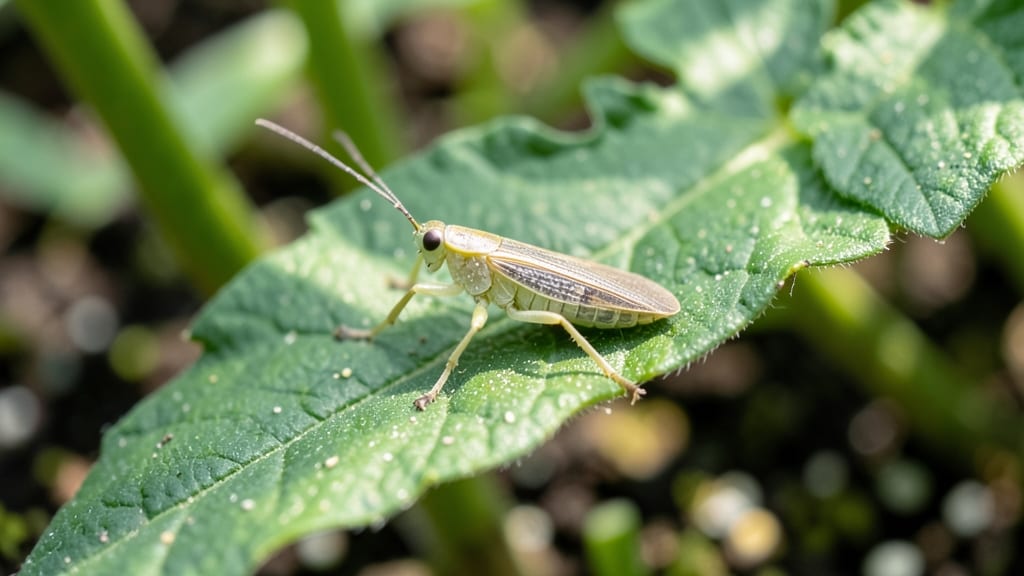
Leafhoppers are tiny, wedge-shaped insects that feed on plant sap using their piercing mouthparts, often causing visible stippling damage and spreading plant diseases like aster yellows.
A leafhopper might look harmless at first glance, but these 1/8-inch jumpers pack a punch. 🌿 Their rapid life cycle—from egg to adult in just 30-45 days—means infestations can explode quickly, especially in warm climates.
The real trouble starts when they pierce plant stems to feed, injecting toxins that create those telltale white or yellow speckles on leaves. What's worse? They're notorious disease vectors, transmitting over 100 plant pathogens that can stunt growth or even kill your crops.
Recognizing their damage early is key—look for honeydew residue (a sticky substance) or sooty mold growth on leaves, which often follows heavy infestations. While they target over 300 plant species, they have a particular fondness for vegetables like beans and ornamentals such as roses.
The good news? Nature has its own pest control with ladybugs and lacewings actively hunting leafhoppers, but severe cases may require targeted organic sprays like neem oil during the nymph stage when they're most vulnerable.
💡 In This Article
- Leafhopper Biology: Life Cycle and Plant Damage Mechanics
- Identifying and Managing Leafhopper Infestations in Gardens
Leafhopper biology: life cycle and plant damage mechanics
Leafhoppers belong to the family Cicadellidae, with over 20,000 species worldwide.
Their wedge-shaped bodies—typically 1/8 to 1/4 inch long—are perfectly adapted for their jumping lifestyle. 🌱 The key to their rapid reproduction lies in their complete metamorphosis: eggs hatch into nymphs (which resemble miniature adults but lack wings), then molt through 4-5 stages before becoming adults capable of flight and reproduction.
This entire process takes just 30-45 days in warm conditions, explaining why infestations can appear overnight.
The real damage begins when these insects use their specialized stylet mouthparts to pierce plant stems and suck out sap. Each feeding creates tiny wounds that trigger plant cells to produce toxins, resulting in the characteristic stippling—tiny white or yellow specks—on leaves.
The severity depends on the plant species: tender vegetables like beans show obvious damage, while hardier plants may only display subtle yellowing. What's particularly concerning is their role as disease vectors; as they move from plant to plant, they transmit pathogens like aster yellows (a phytoplasma disease) through their saliva.
Leafhoppers don't just feed—they excrete honeydew, a sticky sugar-rich substance that attracts sooty mold fungi.
This black fungal growth further stresses plants by blocking sunlight. 🌿 The combination of direct feeding damage, disease transmission, and secondary fungal infections makes leafhoppers one of the most economically damaging insect groups in agriculture.
Their preference for new growth explains why seedlings and young plants are particularly vulnerable, often showing stunted growth or distorted leaves within days of infestation.
Interestingly, leafhoppers have evolved a unique defense mechanism: their powerful hind legs allow them to jump up to 20 times their body length—equivalent to a human leaping over a basketball court. This escape tactic makes them difficult to control with traditional insecticides that rely on contact.
Their jumping ability also helps them spread rapidly across gardens, especially during warm, dry weather when plant stress makes them more attractive feeding targets.
The damage patterns vary by species. For example, the potato leafhopper causes curling of leaf edges, while the aster leafhopper creates more uniform stippling. Understanding these specific patterns helps gardeners implement targeted control measures before the insects reach damaging population levels.
The key is early intervention, as adult leafhoppers can live for months, continuing to reproduce and spread disease throughout the growing season.
What most gardeners don't realize is that leafhoppers aren't just a summer problem—they often overwinter as eggs in plant debris or as adults in protected microclimates.
This means their life cycle can restart as soon as temperatures rise in spring, giving them a head start on damaging your plants before you even notice their presence. 🌱