
Pests and Diseases
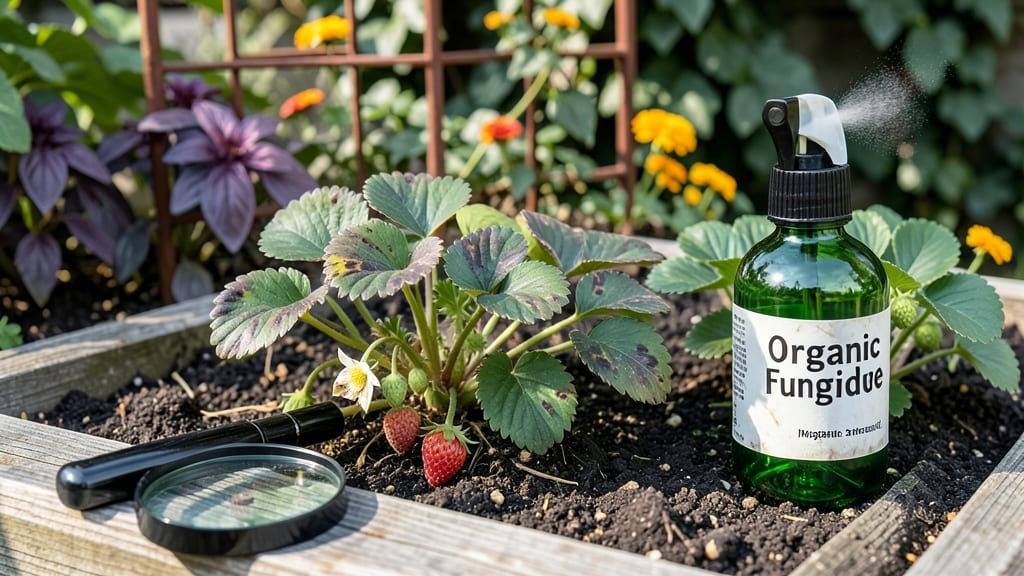
Your strawberries could be saved with just a few sprays—strawberry leaf spot turns lush green leaves into a sad, spotted mess, but copper spray stops it dead. 🌱 I’ve battled this fungal foe for years, and once I mastered the copper treatment, my plants bounced back faster than I expected.
The key? Catching it early and treating it right.
This disease thrives in damp, shady conditions, spreading through splashing water and infected debris. You’ll spot those telltale brown or purple spots with yellow halos on leaves—ignore them, and your berries suffer next.
The good news? Copper fungicide (like Bordeaux mix or liquid copper) is a fail-safe organic solution that disrupts the fungus’s life cycle without harming pollinators.
Within 10-14 days of consistent spraying, new growth stays spot-free, and your plants redirect energy to producing sweet, plump berries instead of fighting disease. The secret’s in the timing: apply copper at the first sign of spots, then again every 7-10 days until rain washes it away—then repeat.
Prevention matters too: space plants for airflow, remove infected leaves, and water at the base.
This method works for home gardens, raised beds, and even container strawberries. No more watching your harvest dwindle—just healthier plants and fewer fungal battles. Let’s get those berries thriving again!
The Hidden Triggers Behind Fungal Spread
Strawberry leaf spot isn’t just a random nuisance—it’s a fungal party 🎉 that thrives when conditions align perfectly for its favorite guests: Colletotrichum and Mycosphaerella (the two main fungal culprits).
Understanding these triggers is your first line of defense. Let’s break down the why behind the how so you can stop the spread before it starts.
The fungal spores that cause strawberry leaf spot love moisture—think of them as tiny, spore-covered mermaids 🧜♀️ who can’t survive without their aquatic playground. Here’s how water fuels the problem:
- Prolonged leaf wetness: Spores need at least 9–12 hours of moisture on leaf surfaces to germinate and infect. Heavy dew, rain, or overhead irrigation keeps leaves damp for too long, creating a fungal spa where spores multiply rapidly.
- Humidity above 80%: High humidity (especially at night) creates a perfect greenhouse for fungal growth. The spores release enzymes that break down the leaf’s protective wax layer, making it easier for them to invade.
- Poor air circulation: Dense plantings or thick foliage trap moisture, turning your strawberry bed into a fungal sauna. Without airflow, spores linger longer and spread faster.
Actionable fix: Space plants properly (12–18 inches apart), avoid watering leaves (use drip irrigation or soaker hoses), and prune for airflow. If rain is forecasted, apply a copper fungicide as a preventive shield.
Stressed strawberries are like open invitations to fungi—weak defenses = easy entry. Here’s what weakens your plants and invites leaf spot:
- Nutrient deficiencies: Low nitrogen, phosphorus, or potassium starves your plants, making them less resistant to fungal attacks. Yellowing leaves (a sign of nitrogen deficiency) or stunted growth are red flags.
- Physical damage: Pruning wounds, hail, or even insect bites (like from aphids or spider mites) create entry points for spores. Think of it like a fungal backdoor.
- Root stress: Compacted soil, poor drainage, or root-bound plants struggle to absorb water and nutrients, leaving them vulnerable to infections.
Actionable fix:
- Test your soil and amend with compost or balanced fertilizer (10-10-10) to boost plant health.
- Prune only when necessary and sterilize tools with rubbing alcohol to avoid spreading spores.
- Improve drainage by adding perlite or sand to heavy clay soil.
Fungal spores are persistent survivors—they can hibernate in dead leaves, mulch, or old plant material for years 🕰️, waiting for the right moment to strike. Here’s how leftover debris becomes a problem:
- Overwintering spores: If you leave infected leaves in the soil or compost pile, spores reanimate when conditions are right (like spring rains). It’s like a zombie apocalypse for your strawberries.
- Contaminated mulch: Straw or wood chips from infected plants can reintroduce spores to healthy beds. Even "clean" mulch can harbor hidden threats.
- Reused containers: Pots or flats that once held infected strawberries may still carry spores. Sterilize them with a 10% bleach solution before reuse.
Actionable fix:
- Remove all infected plant debris and do not compost it—burn or trash it instead.
- Replace old mulch with sterilized options like pine straw or clean straw.
- Rotate crops: Don’t plant strawberries in the same spot for at least 3 years to break the fungal cycle.
Fungi are temperature-sensitive—they have a Goldilocks zone where they thrive. For strawberry leaf spot, that zone is:
- Cool, wet springs (50–75°F): Ideal for spore germination and infection. If your growing season starts with chilly, damp weather, expect an outbreak.
- Warm nights (above 70°F): Fungi grow faster in warm, humid conditions. It’s like a fungal growth spurt.
- Sudden temperature drops: Stress from hot days and cool nights weakens plants, making them more susceptible to infections.
Actionable fix:
- Monitor weather forecasts and apply copper fungicide before rain or humidity spikes.
- Use row covers in early spring to reduce leaf wetness and protect young plants.
- Choose disease-resistant varieties (like 'Albion' or 'Seascape') if you’re in a high-risk climate.
Now that you know the why, you’re one step closer to stopping strawberry leaf spot in its tracks. The key? Prevention—because once those spores get a foothold, they’re not going anywhere without a fight. 💪
Fixing Fungal Foliage Fails
Strawberry leaf spot can turn your lush green plants into a sad, spotted mess—but don’t panic! With the right approach, you can revive your strawberries and prevent future outbreaks.
Below, we break down the most effective fixes based on the root cause, from quick remedies to long-term strategies. Let’s get those leaves back to their vibrant best!
If you’ve spotted brown or yellow patches with dark centers, the first step is pruning. Fungal spores thrive on decaying leaves, so removing them stops the spread.
- 👨🍳 How to do it: Use clean, sharp pruners to snip off only the affected leaves—never the entire plant. Dispose of them in the trash (not compost) to prevent reinfection.
- ⏰ When to act: Do this early in the morning when humidity is lower, reducing spore dispersal.
- 💡 Pro tip: Avoid wetting healthy leaves while watering—use drip irrigation or water at the base to keep foliage dry.
Copper-based fungicides are highly effective against strawberry leaf spot because they disrupt fungal cell walls. Organic options like copper sulfate or copper hydroxide work wonders.
- 🔪 Application steps:
- Mix 1 tablespoon of copper fungicide per gallon of water (follow product instructions).
- Spray both sides of leaves thoroughly, focusing on undersides where spores hide.
- Apply every 7–10 days during wet conditions or after heavy rain.
- 🌡️ Best timing: Early morning or late evening to minimize plant stress from sun exposure.
- ✨ Bonus: Copper sprays also deter powdery mildew and anthracnose—double the protection!
A weak plant is an open invitation to fungi. Strengthen your strawberries with these preventive care habits:
- 💪 Improve air circulation:
- Space plants 12–18 inches apart to reduce humidity buildup.
- Prune overcrowded foliage to let sunlight and air reach the center.
- 🥗 Fertilize wisely:
- Use a balanced fertilizer (10-10-10) to avoid nitrogen overload, which weakens leaves.
- Add compost or well-rotted manure to improve soil health.
- 🎯 Rotate crops: Avoid planting strawberries in the same spot yearly—fungi linger in the soil!
The best cure is prevention. Follow these easy habits to protect your strawberry patch:
| Action | Why It Works |
|---|---|
| ✅ Water at the base (not overhead) | Prevents leaf wetness, which fuels fungal growth. |
| ✅ Mulch with straw (2–3 inches) | Keeps soil moist without wetting leaves. |
| ✅ Choose resistant varieties (e.g., 'Seascape' or 'Albion') | Some strawberries are naturally more tolerant to leaf spot. |
| ✅ Clean tools with rubbing alcohol between uses | Stops cross-contamination to other plants. |
With these targeted fixes, your strawberries will bounce back faster—and stay healthier for seasons to come. Happy growing! 🌱🍓
Frequently asked questions
What do strawberry leaf spot symptoms look like?
Look for round or irregular brown/purple spots with yellow halos on leaves—sometimes with gray centers. The undersides of leaves often show white or pink fungal growth. Spots may merge, causing leaves to yellow and die prematurely.
How often should I spray copper fungicide?
Apply copper spray every 7-10 days during wet conditions or after rain. Start at first signs of spots, then continue until new growth appears healthy. For prevention, spray every 2-3 weeks during high-risk seasons (spring/fall).
Can I still harvest berries from infected plants?
Yes, but only if the fruit itself shows no spots. Remove all infected leaves first. The fungus doesn't typically spread to berries, but severely infected plants may produce fewer fruits. Harvest carefully to avoid spreading spores to healthy plants.
Will baking soda help with strawberry leaf spot?
Baking soda can help as a preventive spray (1 tsp baking soda + 1 quart water + drop of dish soap), but it's not as effective as copper for active infections. Use it as a supplement between copper treatments, especially for organic gardens.
How do I clean garden tools to prevent spreading?
Wipe tools with rubbing alcohol or soak in a 10% bleach solution (1 part bleach to 9 parts water) for 10 minutes. Rinse thoroughly and dry before next use. Never share tools between infected and healthy plants.