
Blooming
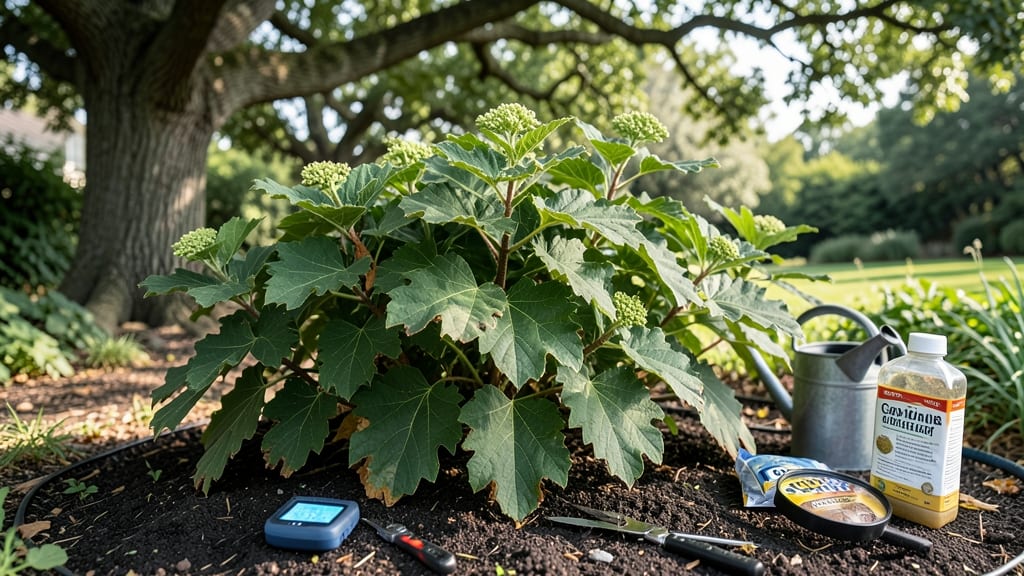
Your oakleaf hydrangea not blooming is stunning with its bold foliage, but where are the flowers? 🌿 The problem usually boils down to pruning timing, sunlight, or over-fertilizing—all fixable with the right adjustments. I’ve revived multiple oakleaf hydrangeas by focusing on these three key areas, and you can too.
First, check your pruning habits—oakleaf hydrangeas bloom on old wood, so pruning in late winter or early spring removes next year’s flowers. Instead, prune right after blooming to shape the plant without sacrificing blooms.
Also, ensure it gets morning sun and afternoon shade, as too much direct sun can stress the plant.
Soil and nutrients play a huge role too. Oakleaf hydrangeas thrive in well-draining, acidic soil (pH 5.0-6.0). If your soil is alkaline, add sulfur or peat moss to lower the pH. Over-fertilizing with nitrogen can also stunt blooms—opt for a balanced, low-nitrogen fertilizer in early spring instead.
With these tweaks, you’ll see new blooms forming by next season. The key is patience—oakleaf hydrangeas reward careful care with vibrant foliage AND stunning blooms. Let’s get your plant back on track!
Hidden Triggers Behind Skipped Blooms
When your oakleaf hydrangea (Hydrangea quercifolia) refuses to bloom, it’s often a silent cry for help—one that’s rooted in science, not just guesswork. These stunning shrubs rely on a delicate balance of light, energy, and environmental cues to trigger their show-stopping flowers.
If those signals get scrambled, buds may fail to form entirely. Let’s break down the real culprits behind the lack of blooms, backed by horticultural research and actionable fixes.
Oakleaf hydrangeas are part-sun plants, craving morning sunlight and afternoon shade (or dappled light all day). Too much shade? They’ll prioritize lush foliage over flowers. Too much harsh sun? Stress can halt bud development. Here’s the science:
- Chlorophyll vs. Florigen: In low light, plants focus energy on leaf production (chlorophyll) instead of flowering hormones (florigen). Oakleaf hydrangeas need 4–6 hours of direct sun daily to trigger blooms.
- Heat Stress: Afternoon sun in hot climates can scorch buds, causing them to abort. Look for crispy leaf edges or brown flower buds—a sign of heat damage.
- Location Check:
- ✅ Ideal: East-facing spots or filtered light under tall trees.
- ❌ Avoid: Deep shade (under dense canopies) or west/south exposures in sweltering zones.
Pro Tip: 🌡️ If your shrub is in full shade, try gradually increasing light exposure over 2–3 weeks to avoid shock.
Timing is everything with hydrangeas. Oakleaf hydrangeas bloom on old wood (last year’s growth), so aggressive pruning in late winter or early spring can remove next year’s flower buds before they form. Here’s how to avoid it:
- Critical Window: Prune right after blooming (late spring to early summer) to shape the shrub without cutting back more than 1/3 of the stems.
- Deadheading Mistake: Removing spent blooms in fall or winter can signal the plant to stop preparing for spring blooms.
- Signs of Overpruning:
- Sparse foliage with no new growth at the base.
- Stems that look bare or leggy.
Pro Tip: ✂️ If you’ve overpruned, don’t panic—oakleaf hydrangeas are forgiving. Focus on fertilizing and watering to encourage new growth, and blooms may return in 1–2 years.
Hydrangeas are thirsty shrubs, and inconsistent watering sends mixed signals to their root system. Drought or soggy soil can both disrupt flowering:
- Drought Stress: When roots dry out, the plant conserves energy by skipping flower production to survive. Oakleaf hydrangeas need 1–1.5 inches of water weekly (more in containers).
- Overwatering Risks: Poor drainage or waterlogged soil starves roots of oxygen, preventing nutrient uptake needed for bud formation. Look for yellowing leaves or moldy soil.
- Root Zone Check:
- 🔍 Test drainage: Dig 6 inches down—soil should feel moist but not soggy.
- 💡 Mulch matters: Apply 2–3 inches of mulch (wood chips or pine straw) to retain moisture and regulate soil temp.
Pro Tip: 🌧️ Deep watering (slowly, at the base) is better than frequent shallow watering. Use a soaker hose or drip irrigation for consistency.
Oakleaf hydrangeas are sensitive to extreme temperature shifts, especially during their critical bloom-initiation phase (late summer to early fall). Here’s how weather plays a role:
- Late Summer Heatwaves: Temperatures above 90°F (32°C) can halt bud development if the plant is also stressed by drought.
- Early Fall Chill Requirement: Oakleaf hydrangeas need 60–80 days of temps below 60°F (15°C) to set flower buds. Unusually warm falls can prevent this process.
- Frost Damage: Late spring frosts can kill emerging buds, but early fall frosts (before buds form) are less harmful.
Pro Tip: ❄️ If your area has mild winters, consider lightly covering the shrub with burlap in late fall to trick it into thinking winter is coming.
Hydrangeas are heavy feeders, and a lack of key nutrients can stall blooming. Soil pH and fertilizer type matter:
- Nitrogen Overload: Too much nitrogen (first number on fertilizer) promotes leafy growth at the expense of flowers. Use a balanced 10-10-10 or 5-10-10 fertilizer instead.
- Potassium Deficiency: The third number (potassium) helps with flower and root development. Yellowing leaf edges? It’s a red flag.
- pH Problems:
- Oakleaf hydrangeas prefer slightly acidic to neutral soil (pH 5.5–7.0).
- 📊 Test your soil: If pH is below 5.5, add lime; if above 7.0, use sulfur or peat moss.
Pro Tip: 💡 Feed in early spring (when new growth starts) with a slow-release fertilizer to avoid burning roots.
Revive Your Hydrangea’s Beauty
---
If your oakleaf hydrangea is refusing to bloom, don’t despair—there’s still hope! The key is identifying the root cause and taking targeted action. Below, we’ve mapped out practical solutions for common issues, along with prevention tips to keep your plant thriving. Let’s get those buds blooming again!
---
Oakleaf hydrangeas (Hydrangea quercifolia) need at least 4–6 hours of sunlight daily to set buds properly. If your plant is tucked away in deep shade, it may skip flowering altogether.
How to Fix It: - 🔥 Move it gradually – Shift your hydrangea to a sunnier spot over a week or two to avoid shock. - 🍳 Prune nearby obstacles – Trim overgrown trees or shrubs blocking sunlight. - 👨🍳 Use reflective surfaces – Place a mirror or light-colored wall behind it to bounce extra light onto the foliage.
💡 Prevention Tip:
Plant in a location with morning sun and afternoon shade—this balances heat stress while ensuring enough light for blooms.
---
Oakleaf hydrangeas are deciduous and often need winter chill (30–50 days below 45°F/7°C) to trigger spring blooms. If your region is too warm year-round, buds may fail to form.
How to Fix It: - 🌡️ Simulate winter chill – Store potted hydrangeas in a cool garage (35–45°F/2–7°C) for 6–8 weeks in late fall/winter. - 🎯 Use a fan or misting – If your climate stays too warm, lightly mist the plant daily to mimic cooler conditions. - ✨ Choose the right variety – Some oakleaf hydrangeas (like ‘Snow Queen’) are more heat-tolerant—opt for these if you live in a warm zone.
💡 Prevention Tip:
If you’re in a tropical or subtropical climate, consider winter-dormant varieties or use artificial chilling (like a refrigerator with ventilation).
---
Too much moisture (or soggy soil) can stress the plant, leading to weak growth and no blooms. Oakleaf hydrangeas prefer moist but well-draining soil—not swampy conditions.
How to Fix It: - 🔪 Check the soil – Stick your finger 2 inches deep; if it’s damp, hold off on watering. - 🥘 Amend heavy clay soil – Mix in compost or perlite to improve drainage. - ⏰ Water deeply but less often – Water once a week (or when the top 1–2 inches of soil dry out) rather than daily shallow watering.
💡 Prevention Tip:
Plant in a slightly raised bed if your yard has poor drainage. Mulch around the base (but not touching the stem) to retain moisture without suffocating roots.
---
Too much high-nitrogen fertilizer (like lawn food) promotes leafy growth at the expense of flowers. Oakleaf hydrangeas need a balanced or phosphorus-rich feed to encourage blooms.
How to Fix It: - 📊 Switch to bloom-boosting fertilizer – Use a 10-10-10 or 5-10-10 formula (or one labeled for flowering shrubs). - 🥗 Apply in early spring – Feed once in March (before new growth starts) and again in early summer (after pruning). - 🍎 Avoid slow-release granules – They can overfeed and burn roots; opt for liquid or granular fertilizers applied sparingly.
💡 Prevention Tip:
Test your soil before fertilizing—over-fertilizing can harm roots. A simple DIY test kit (or lab test) helps adjust pH and nutrients.
---
If you prune in late summer or fall, you risk cutting off next year’s flower buds. Oakleaf hydrangeas bloom on old wood, so timing matters!
How to Fix It: - 🔥 Prune right after blooming (late spring/early summer) – Remove dead, crossing, or weak branches to encourage airflow. - 👨🍳 Never prune in fall or winter – This removes next year’s flower buds before they form. - 🌿 Shape lightly – Oakleaf hydrangeas have lovely exfoliating bark; avoid heavy pruning to preserve their natural form.
💡 Prevention Tip:
Mark pruning dates on your calendar—early summer is your only safe window for shaping!
---
If aphids, spider mites, or fungal issues (like powdery mildew) stress your hydrangea, it may divert energy away from blooming.
How to Fix It: - 🔪 Spot-check leaves – Look for yellowing, sticky residue (aphids), or white powder (mildew). - 🥘 Treat with neem oil or insecticidal soap – Spray early morning or evening to avoid burning foliage. - 🌡️ Improve airflow – Space plants 3–5 feet apart to reduce humidity-related diseases.
💡 Prevention Tip:
Mulch properly (2–3 inches deep, keeping it 6 inches from the stem) to deter fungal growth while retaining moisture.
---
With these fixes, your oakleaf hydrangea should rebound with vibrant blooms next season. The key is patience and consistency—hydrangeas reward careful care with stunning foliage and flowers!
Frequently asked questions
Why does my oakleaf hydrangea have leaves but no flowers?
Oakleaf hydrangeas prioritize leaf production when stressed. Common culprits include too much shade (they need 4-6 hours of sunlight), over-fertilizing with nitrogen (which fuels leaves over blooms), or pruning at the wrong time. Check your plant's light exposure and fertilizer type first—these are the most likely issues.
Can I still get flowers if I pruned my oakleaf hydrangea in winter?
Yes, but it may take 1-2 years to recover. Oakleaf hydrangeas bloom on old wood, so winter pruning removes next year's buds. Focus on proper care now—water consistently, use a balanced fertilizer in spring, and avoid heavy pruning until after blooming next year.
How do I know if my oakleaf hydrangea needs more sun or less?
Check the leaves: Pale or sparse foliage means it needs more sun (move to a brighter spot gradually). Brown leaf edges or crispy tips mean too much sun—provide afternoon shade. Oakleaf hydrangeas thrive with morning sun and afternoon shade in most climates.
Will changing my fertilizer fix the problem?
Possibly! If you're using high-nitrogen fertilizer (like lawn food), switch to a balanced 10-10-10 or bloom-specific formula. Apply it in early spring when new growth starts. Avoid fertilizing in late summer/fall—this can stimulate tender growth that won't survive winter.
How long should I wait before seeing new blooms?
With proper care, you should see new flower buds forming by late summer of the same year. If you've made changes (like adjusting sunlight or fertilizer), give it 3-4 months to respond. For severe cases (like heavy winter pruning), it may take 1-2 seasons to fully recover.