
Pruning
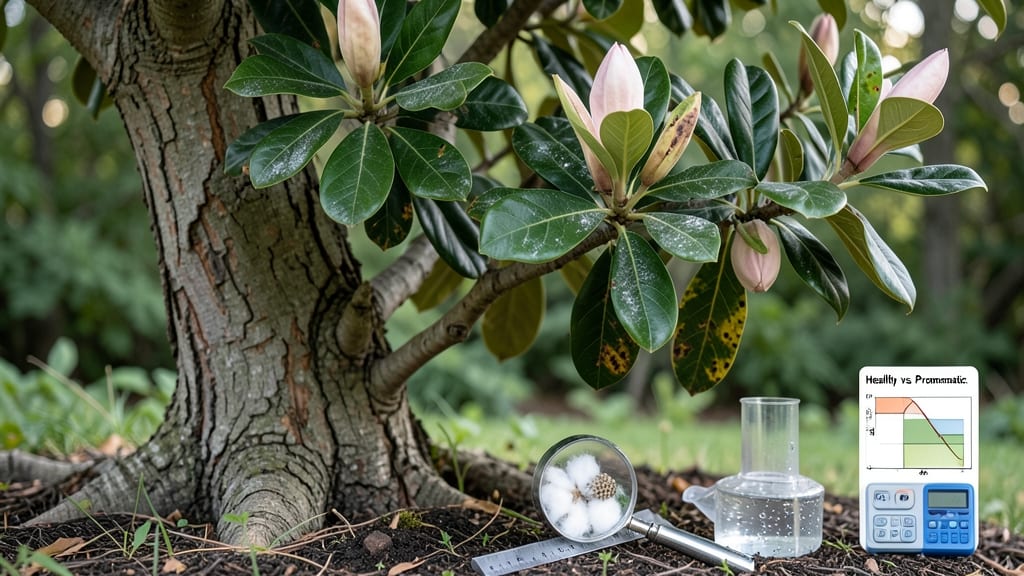
Magnolia tree leaf problems can turn your stunning spring blooms into a sad, spotty mess—unless you act fast. 🌿 I’ve seen powdery mildew turn glossy magnolia leaves into dusty, curled disasters, but the right steps can save them before they fall.
The key is catching issues early, whether it’s fungal spots, yellowing, or pests sucking the life out of your tree.
Most leaf problems start with fungal infections like powdery mildew or anthracnose, which thrive in humid summers. Others come from nutrient deficiencies (like iron chlorosis) or pests like scale insects hiding under leaves.
The good news? Pruning diseased branches, applying fungicide at the first sign of spots, and improving airflow around your tree can turn things around in weeks.
By the time you’re done, your magnolia will be back to its glossy, disease-free glory, with fewer spots and stronger growth. The secret is acting before the problem spreads—so grab your pruners and let’s get those leaves healthy again.
We’ll cover exactly what to look for and how to fix it without waiting for next season.
Works for both Southern magnolias (like ‘Little Gem’) and saucer magnolias, whether you’re dealing with new growth or established trees. Let’s tackle this before your tree’s canopy turns into a leaf-litter disaster.
Root Causes Of Leaf Issues
Understanding why magnolia leaves develop problems starts with recognizing the environmental stressors, pathogens, and physiological factors that trigger damage. These issues rarely appear in isolation—they’re often symptoms of deeper imbalances in your tree’s care.
Let’s break down the most common culprits and why they turn your magnolia’s lush foliage into a battleground.
---
Fungi thrive in moist, shaded, or stagnant conditions, and magnolias—especially those with dense canopies—create the perfect breeding ground. Here’s how they strike:
- Powdery Mildew - Why it happens: This white, powdery coating forms when humidity stays high (above 75%) for prolonged periods and airflow is restricted.
Fungal spores (Erysiphe or Sphaerotheca species) land on leaves and germinate in these conditions. - Key triggers: - Overhead watering (leaves stay wet overnight). - Tight planting (other plants or structures block airflow). - Late-spring to early-summer (ideal fungal growth window). - Science note: The fungus feeds on leaf sugars, weakening photosynthesis and causing premature leaf drop.
- Anthracnose - Why it happens: Caused by Colletotrichum or Gloeosporium fungi, this disease attacks when leaves remain wet for 6+ hours (e.g., after rain or poor drainage).
It’s worse in cool, damp springs (50–75°F). - Key triggers: - Poor soil drainage (root zone stays soggy). - Wounded leaves (from hail, pests, or mechanical damage). - Young, tender leaves (more susceptible in early growth).
- Leaf Spot Diseases - Why it happens: Fungi like Cercospora or Septoria create brown/black spots with yellow halos when leaves splash with contaminated water or debris accumulates (e.g., fallen leaves harboring spores). - Key triggers: - Rain splashing from the ground (mulch or thatch acts as a spore reservoir). - Nitrogen-heavy fertilizers (soft, sappy leaves = easier fungal entry).
--- Pests don’t just eat leaves—they damage tissue, introduce bacteria, or excrete honeydew (a fungal buffet). Magnolias are magnets for:
- Magnolia Scale - Why it happens: These armored scale insects (not true bugs) suck sap, causing yellowing, curling, and sticky honeydew.
They thrive in hot, dry conditions (60–90°F) and stressed trees (drought or compacted soil). - Science note: Their waxy coating makes them resistant to many sprays—systemic treatments are often needed.
- Japanese Beetles - Why it happens: Adults skeletonize leaves (eat between veins) in late summer, while grubs (larvae) munch on roots in soil.
They’re drawn to healthy, lush magnolias—the more vigorous the tree, the more appealing. - Key triggers: - Over-fertilization (excess nitrogen = more leaf surface area for beetles). - Nearby lawns (grubs from turf grass migrate to trees).
- Spider Mites - Why it happens: These tiny arachnids (not insects) thrive in dry, dusty conditions and weaken leaves with their piercing mouthparts.
They explode in populations when relative humidity drops below 40%. - Science note: They produce webbing on undersides of leaves, which traps heat and moisture—perfect for fungal secondary infections.
--- Magnolias are resilient, but extreme or inconsistent conditions can trigger leaf problems without pathogens or pests:
- Water Stress (Over/Under) - Why it happens: - Drought: Roots can’t supply enough water → leaf scorch (brown edges, crispy texture).
Magnolias have shallow roots and hate dry soil. - Overwatering: Root rot (Phytophthora fungi) from waterlogged soil cuts off oxygen, causing yellowing (chlorosis) and premature leaf drop. - Key triggers: - Clay soil (poor drainage). - Lack of mulch (soil dries out faster). - Irrigation timing (watering at night = fungal risk).
- Nutrient Imbalances - Why it happens: - Iron deficiency (chlorosis): Yellow leaves with green veins occur when soil pH is too high (alkaline) or iron isn’t available (common in Southern U.S. soils). - Magnesium deficiency: Yellow patches between veins happen when soil is too acidic or potassium is overused. - Science note: Magnolias prefer slightly acidic soil (pH 5.0–6.5)—test your soil to rule out pH-related issues.
- Physical Damage - Why it happens: - Hail, wind, or machinery tears leaves, creating entry points for bacteria/fungi. - Salt spray (near coastal areas) causes brown, crunchy leaf edges. - Key triggers: - Poor pruning techniques (tearing instead of cutting). - De-icing salts (from nearby roads).
--- Sometimes, the problem isn’t external—it’s internal. Magnolias can develop issues due to:
- Winter Burn - Why it happens: Desiccating winds + temperature swings (e.g., sunny days followed by freezing nights) cause leaf edges to turn brown and crispy.
Young leaves in early spring are most vulnerable. - Key triggers: - Lack of winter water (deep roots need moisture even in cold months). - Exposed sites (trees planted in windy areas without windbreaks).
- Sun Scald - Why it happens: Sudden exposure to intense sunlight (e.g., after pruning or transplanting) cooks leaf tissue, causing bleached or brown patches.
Common in Southern magnolias (Magnolia grandiflora) when winter sun hits thawing leaves. - Science note: Cells lose water faster than roots can replace it, leading to necrosis (dead tissue).
- Transplant Shock - Why it happens: Root disturbance during moving or repotting disrupts nutrient/water uptake, leading to yellowing, wilting, or leaf drop.
Magnolias have sensitive root systems and take 2–3 years to fully recover from transplanting. - Key triggers: - Root circling (from container-grown trees). - Improper planting depth (trunk flare buried too deep).
Fixing Fungal Foes on Magnolia Leaves
Now that you’ve identified the culprit behind your magnolia’s leaf woes, it’s time to take action! Fungal infections like powdery mildew, anthracnose, or leaf spot can weaken your tree—but with the right steps, you can restore its health.
Below are practical, step-by-step solutions tailored to each common issue, plus prevention tips to keep your magnolia thriving.
---
Powdery mildew thrives in humid conditions, coating leaves in a white, powdery film. The good news? It’s one of the easier fungal issues to manage.
#### 🔥 Step 1: Prune for Better Airflow - Remove infected leaves (wear gloves!) and dispose of them in the trash—not the compost bin. - Trim back dense branches to improve sunlight penetration and reduce humidity near the foliage.
#### 🍳 Step 2: Apply Fungicide (Organic or Chemical) - Neem oil spray (1 tbsp per quart of water + a drop of dish soap) is a natural, effective treatment.
Spray both sides of leaves thoroughly. - For severe cases, use a fungicide with sulfur or potassium bicarbonate (follow label instructions). - Reapply every 7–10 days until new growth appears free of powder.
#### 🌡️ Step 3: Adjust Growing Conditions - Water in the morning (not at night) to let leaves dry quickly. - Space plants at least 6–8 feet apart to reduce humidity buildup. - Avoid overhead watering—use drip irrigation or soaker hoses instead.
💡 Pro Tip: If mildew returns yearly, consider planting mildew-resistant varieties like Magnolia ‘Little Gem’ or Magnolia ‘Black Tulip.’
---
Anthracnose causes dark, sunken spots with yellow halos. This fungus loves wet leaves, so prevention is key.
#### 🔪 Step 1: Sterilize Pruning Tools - Disinfect shears with 70% rubbing alcohol or a 10% bleach solution before and after pruning to prevent spreading spores.
#### 👨🍳 Step 2: Rake & Remove Debris - Clean up fallen leaves and twigs—they harbor fungal spores. Bag and trash them (don’t mulch). - Aerate the soil around the base to reduce moisture retention.
#### ⏰ Step 3: Apply Copper Fungicide - Copper-based fungicides (like Copper Sulfate) are highly effective against anthracnose. - Spray every 2–3 weeks during wet seasons (spring and fall). - Reapply after heavy rain to maintain protection.
#### 🌧️ Prevention for Wet Seasons - Improve drainage—if your magnolia sits in soggy soil, amend with compost or sand. - Water at the base (not the leaves) to keep foliage dry. - Plant in full sun—anthracnose thrives in shady, damp conditions.
---
Leaf spot fungi create small, brown or black spots with yellow borders. The fix? Isolation and fungicide.
#### 🔍 Step 1: Identify & Isolate - Remove and destroy all spotted leaves (don’t compost!). - If other plants nearby are infected, treat them too to prevent reinfection.
#### 🍄 Step 2: Use a Multi-Step Fungicide Plan - First spray: Baking soda solution (1 tbsp baking soda + 1 tsp dish soap + 1 gallon water). - Second spray (if needed): Chlorothalonil-based fungicide (like Daconil) for stubborn cases. - Apply in the evening to reduce UV damage to leaves.
#### 🌿 Step 3: Boost Tree Health - Fertilize lightly with a balanced, slow-release fertilizer (10-10-10) in early spring to strengthen immunity. - Mulch properly—keep mulch 3–4 inches deep but 6 inches away from the trunk to prevent rot.
✨ Prevention Bonus: Prune for sunlight—leaf spot loves shaded, damp conditions. Trim back nearby trees or shrubs if they’re blocking light.
---
No matter the fungus, strong tree health = fewer problems. Follow these year-round tips:
| Season | Action | Why It Works | |------------------|----------------------------------------------------------------------------|------------------------------------------| | Spring | Apply preventative fungicide (neem oil or copper) before buds swell. | Stops spores from infecting new growth. | | Summer | Water deeply but infrequently (1–2 inches per week). | Avoids soggy soil that fuels fungi. | | Fall | Rake and remove all debris before winter. | Eliminates overwintering spores. | | Winter | Check for winter burn (dry, crispy edges) and prune dead branches. | Reduces hiding spots for fungi. |
--- 💡 Final Reminder: Consistency is key! Fungi often return if you stop treatments mid-season. Monitor your magnolia weekly during growing months, and act fast at the first sign of trouble.
With these steps, your magnolia will bounce back—and next season, it’ll greet you with lush, healthy leaves instead of fungal free-for-alls! 🌿💪
Frequently asked questions about magnolia tree leaf problems
Why are my magnolia leaves turning yellow with green veins?
This is a classic sign of iron chlorosis, common in alkaline soils where iron becomes unavailable. Test your soil pH—magnolias thrive in acidic soil (pH 5.0-6.5). If needed, apply chelated iron or sulfur to lower pH gradually over 2-3 months.
How do I tell if my magnolia has powdery mildew vs. spider mites?
Check the leaf texture: powdery mildew leaves a white, powdery coating on both sides, while spider mites cause tiny yellow stipples and fine webbing on undersides. Hold a leaf up to light—mildew looks like flour dust, mites create silver speckles.
Can I save my magnolia if half the leaves are already dropping?
Yes! Act fast: prune out 30% of infected branches to improve airflow, apply copper fungicide (for anthracnose) or neem oil (for mildew), and water at the base only. New growth should appear in 4-6 weeks if roots are healthy—if not, check for root rot.
Why do my magnolia leaves get brown edges in winter?
This is winter burn, caused by desiccating winds or temperature swings. Protect your tree by watering deeply in late fall (before ground freezes), mulching 3-4 inches deep, and planting windbreaks if exposed. New leaves in spring will be healthier!
How often should I spray fungicide on my magnolia?
For prevention: every 2-3 weeks during spring and summer (peak fungal season). If treating an active infection: weekly for 3 weeks, then biweekly until new growth appears. Always spray in the evening to reduce leaf burn from sunlight.