
Planting
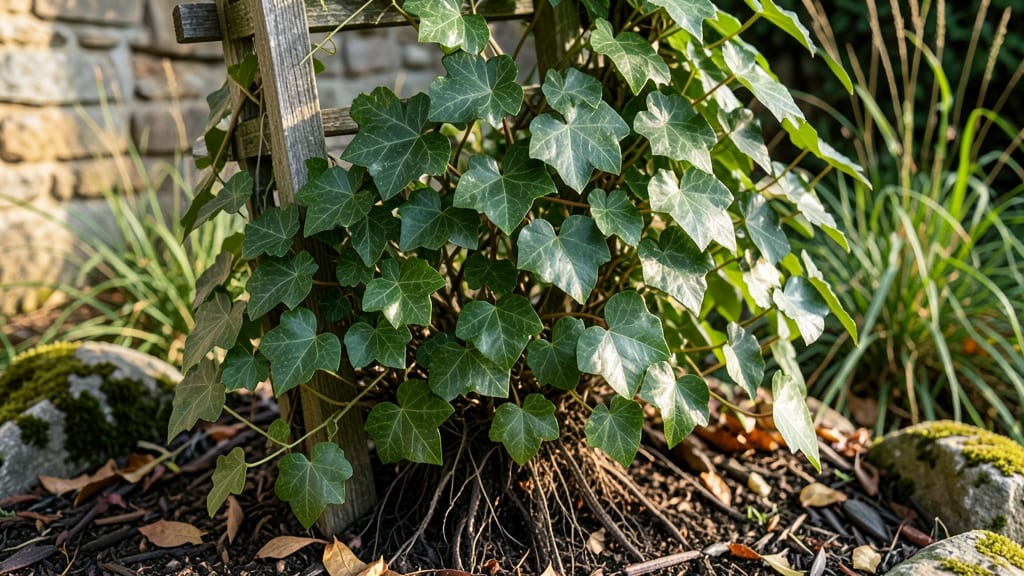
That first glimpse of a mysterious vine climbing your trellis—now you can finally identify the climbing plant by leaf. 🌿 The right leaf clues reveal whether you're dealing with a delicate clematis, a hardy ivy, or something more exotic, and this guide turns leaf-hunting into a satisfying detective story.
Start with the basics: leaf shape (lobed, heart-shaped, or compound?), edges (smooth, serrated, or jagged?), and arrangement (opposite, alternate, or whorled?). A single leaf can tell you more than a full plant description—like how Boston ivy’s glossy, five-lobed leaves set it apart from Virginia creeper’s seven-pointed fingers.
Texture matters too: rough, fuzzy, or silky leaves narrow it down further. By matching these traits to common vines, you’ll unlock care tips tailored to your plant’s needs—whether it’s pruning wisteria’s aggressive growth or coaxing clematis to bloom.
The right ID means you’ll know exactly how much sun, water, and support it craves. No green thumb required—just a sharp eye and this visual guide. Let’s decode those leaves together!
How Leaf Traits Evolve Naturally
Climbing plants develop their distinctive leaf shapes, textures, and growth patterns through a mix of evolutionary adaptations and environmental pressures. Understanding these processes helps explain why certain leaves are easier to identify than others—and why some vines look so different from their ground-level cousins.
Here’s a breakdown of the key factors driving leaf diversity in climbing plants:
Climbing plants often have leaves that differ from non-climbing species because their survival depends on reaching sunlight in dense canopies or crowded spaces. Key evolutionary traits include:
- Light Efficiency: Many vines develop larger, thinner leaves (like those of Passiflora or Clematis) to maximize photosynthesis in low-light conditions under trees. Thinner leaves also reduce weight, making it easier for vines to climb without snapping under their own weight.
- Shade Tolerance: Plants like Parthenocissus (Virginia creeper) have deeply lobed or compound leaves that increase surface area without adding bulk. This design captures faint light in shaded environments where direct sunlight is scarce.
- Climbing Mechanics: Some vines, such as Wisteria, grow smaller, tougher leaves to minimize wind resistance while clinging to structures. Others, like Honeysuckle, produce opposite or alternate leaf arrangements to optimize light exposure as they spiral upward.
💡 Pro Tip: If a vine’s leaves are palmate (finger-like, e.g., Bignonia) or pinnate (feather-like, e.g., Poison Ivy), it’s often an adaptation to balance strength and flexibility—critical for supporting the plant’s weight as it climbs.
Where a climbing plant grows directly influences its leaf structure. Soil quality, water availability, and climate play major roles:
| Factor | Leaf Adaptation | Example Plants |
|---|---|---|
| Arid Climates | Thick, leathery, or succulent-like leaves (e.g., Bougainvillea) to retain moisture. | Gloriosa lily, Smilax (greenbrier) |
| Humid Regions | Large, broad leaves with smooth edges (e.g., English Ivy) to absorb humidity. | Philodendron, Pothos |
| Poor Soil | Fine, needle-like leaves (e.g., Cuscuta, dodder) to reduce nutrient demands. | Dutchman’s pipe (Aristolochia) |
| High Wind | Small, leathery, or deeply veined leaves (e.g., Boston Ivy) to prevent tearing. | Wisteria, Hops |
✨ Fun Fact: Some vines, like Tradescantia (spiderwort), change leaf color or size based on light exposure—a trait called plasticity that makes identification trickier in variable conditions.
Not all leaf differences stem from environment—genetics play a huge role. Here’s how:
- Hybrid Vigor: Crossbreeding (e.g., Clematis × jackmanii) can produce unpredictable leaf shapes or colors, blending traits from parent plants. This is why some "mystery vines" resist easy identification.
- Mutations: Natural genetic mutations lead to variations like variegated leaves (e.g., Hedera helix ‘Glacier’, a variegated ivy) or extra lobes (e.g., some Campsis trumpet vines). These don’t always improve survival but can make a plant stand out.
- Polyploid Species: Plants with extra chromosome sets (e.g., Actinidia, kiwi vine) often have larger, more complex leaves due to altered growth hormones.
🔥 Watch For: If a vine’s leaves look abnormally uniform (e.g., all perfectly heart-shaped or all deeply serrated), it might be a cultivated hybrid rather than a wild species. This can be a clue for gardeners trying to ID unknown vines!
Quick Fixes for Plant ID Puzzles
Got a mysterious vine creeping up your trellis, fence, or garden wall? Don’t let it stay a mystery! Whether you’re dealing with a leafy invader or just want to confirm your favorite climbing plant, these practical, step-by-step solutions will help you nail the ID—fast.
We’ll tackle common stumbling blocks (like fuzzy leaves, thorns, or weird growth habits) and show you how to turn confusion into clarity.
---
If two climbing plants have leaves that almost match—same shape, same green hue—don’t panic. Dig deeper with these tricks:
#### 🍃 Step 1: Check the Leaf Arrangement - Opposite leaves? (Pairs at each node, like a ladder) → Likely ivy, honeysuckle, or trumpet vine. - Alternate leaves? (Single leaf per node, staggered) → Could be wisteria, clematis, or morning glory. - Whorled leaves? (3+ leaves at a node) → Poison ivy or Virginia creeper (but the latter has blue-black berries).
> 💡 Pro Tip: Snap a close-up photo of the leaf attachment (where the stem meets the leaf). This tiny detail often cracks the case!
#### 🌿 Step 2: Hunt for Hidden Features Some plants hide their best ID clues in plain sight: - Underside of the leaf: Dusty, hairy, or shiny? Honeysuckle leaves are fuzzy; English ivy has smooth, leathery undersides. - Leaf edges: Lobed (like Virginia creeper), serrated (like bittersweet), or smooth (like jasmine)? - Stems: Are they woody, flexible, or succulent? Wisteria has thick, brown stems; morning glory is thin and vine-like.
#### 🍇 Step 3: Look for Fruit, Flowers, or Seeds If the vine isn’t flowering yet, wait a few days or check nearby plants.
Key identifiers: - Berries: Bittersweet (red/orange), Virginia creeper (blue-black), grapevine (purple). - Flowers: Honeysuckle (tubular, fragrant), clematis (bell-shaped), morning glory (funny-shaped, trumpet-like). - Seed pods: Poison ivy has white berries; wisteria has long, dangling pods.
> ⚠️ Warning: Never touch unknown plants—especially if they’re glossy, have thorns, or grow aggressively. Poison ivy and English ivy can look alike, but one’s a garden star and the other’s a skin-irritating nightmare!
---
Once you’ve ID’d your vine, stop the spread before it takes over: - Prune regularly: Trim back vines after flowering to encourage bushier growth (and easier ID next year). - Use barriers: If a vine is invasive (like kudzu or bittersweet), install hardware cloth at the base of your fence or trellis. - Label your plants: A simple stake with the name saves future head-scratching. - Learn the locals: Research native vs. invasive vines in your area—some (like Japanese honeysuckle) are beautiful but ecological bullies.
> 🎯 Gold Star Tip: Keep a plant journal with photos of leaves, flowers, and growth habits. Next time you spot a mystery vine, flip through your notes—you’ll recognize it in seconds!
---
Still stuck? Leverage tech for a foolproof ID: - PlantNet or PictureThis (upload a leaf photo, get instant matches). - iNaturalist (crowdsourced IDs from real botanists). - Google Lens (point your phone at the leaf, boom—results).
> ⏰ Time-Saver: Take 3 photos: > 1. Close-up of the leaf (front and back). > 2. Whole plant (showing growth habit). > 3. Flowers/fruit (if present).
--- Some "vines" are not welcome in gardens.
If yours is: - Poison ivy ("Leaves of three, let it be") → Wear gloves, pull carefully, and smother with cardboard to kill roots. - Bittersweet (invasive, chokes trees) → Dig up roots or apply vinegar spray (1 gallon vinegar + 1 oz dish soap). - Kudzu (the "vine that ate the South") → Professional removal is often needed—this one’s a beast!
--- Before you give up, run through this quick checklist: ✅ Leaf shape (heart, lobed, needle-like?) ✅ Leaf arrangement (opposite, alternate, whorled?) ✅ Stem texture (woody, hairy, smooth?) ✅ Flowers/fruit (color, shape, time of year?) ✅ Growth habit (twines, clings, or sprawls?)
If you’ve checked all five, you’re 90% there—now just cross-reference with our [visual guide](#)!
--- Need more help? Drop a photo in the comments—we’ll ID it for you! 🌿🔍
Frequently asked questions
What’s the quickest way to tell if a vine is poison ivy?
Look for three glossy, pointed leaves growing from a single stem—remember the rhyme: \"Leaves of three, let it be\". The leaves are usually smooth-edged and grow in a whorled pattern (3+ leaves at a node). If you see white berries later in the season, that’s another dead giveaway.
Can I use my phone to identify a climbing plant by leaf?
Apps like PlantNet or PictureThis let you upload a photo of the leaf (front and back) and get instant matches. For best results, include a close-up of the leaf attachment and a shot of the whole vine’s growth habit—this narrows it down faster than just the leaf alone.
Why do some climbing plants have fuzzy leaves while others are smooth?
Fuzzy leaves (like on honeysuckle) often help retain moisture or deter pests, while smooth leaves (like English ivy) maximize light absorption. The texture can also clue you in: Hairy leaves often belong to plants that thrive in dry climates or need extra protection from insects.
What should I do if I can’t find my vine in any plant guides?
Check for flowers, berries, or seed pods—these often hold the key! If you’re still stuck, try iNaturalist or post a photo in gardening forums. Many rare or hybrid vines aren’t in basic guides, but experts can help match your mystery plant to lesser-known species.
How do I know if a climbing plant is invasive in my area?
Research local invasive species lists (check your state’s Department of Agriculture website). Common culprits like kudzu or bittersweet spread aggressively and can strangle native plants. If your vine matches these, remove it carefully—gloves and root barriers are your best tools!