
How To
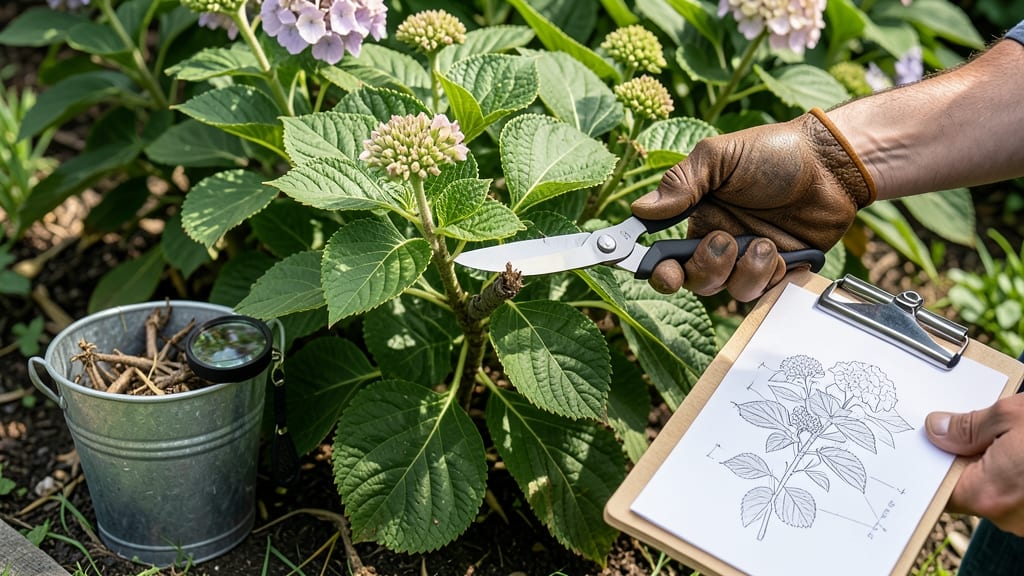
Pruning big leaf hydrangeas transforms your garden from ordinary to showstopping. ✂️ I’ve learned the hard way that cutting at the wrong time or in the wrong way can turn lush blooms into leggy branches—but the right approach guarantees vibrant, fuller plants every season.
The secret lies in understanding when and how to shape these beauties, and it’s simpler than you think.
Start by gathering your tools: sharp pruners, gloves, and a clear plan. The best time to prune is late winter or early spring, right before new growth begins. Big leaf hydrangeas bloom on old wood, so avoid cutting back until after they’ve finished flowering.
Focus on removing dead or weak stems first, then shape the plant by cutting just above a set of leaves or buds—this encourages dense, healthy growth.
📚 In This Guide
- What you need
- Instructions
- Tips and common mistakes
- Wrapping up and next steps
What you need
- ● Bypass pruners – Sharp, clean pruners (like Felco F-2 or Gonicc TPR) for cutting stems up to ½-inch thick. Disinfect with rubbing alcohol before and after use to prevent disease spread.
- ● Loppers – For thicker stems (½-inch to 1½-inch), opt for bypass loppers (e.g., Fiskars PowerGear) with long handles for leverage.
- ● Hand saw or pruning saw – For thick, woody stems (over 1½ inches). A curved-tooth pruning saw (like Bahco) minimizes tear-out.
- ● Garden gloves – Heavy-duty, cut-resistant gloves (e.g., Wolverine) to protect hands from thorns and sap.
- ● Ladder or step stool – If your hydrangea is taller than 6 feet, a stable extension ladder or foldable step stool (rated for 300+ lbs) is a must.
- ● Disinfectant spray – 70% isopropyl alcohol or a copper-based fungicide (e.g., Bonide Copper Fungicide) to sterilize tools.
- ○ Pruning sealant (optional) – Pruning wax (like Tanglefoot Tree & Shrub Sealant) to coat large cuts and prevent disease entry.
- ● Trash bags or bucket – For collecting pruned branches (aim for 10–20 gallons capacity, depending on bush size).
- ● Permanent marker – To label new growth or dead wood for future reference.
- ● Water & cloth – For cleaning tools and wiping sap off hands.
- ● Check the best pruning time for your climate (early spring or late winter for most regions, but avoid pruning in fall if blooms appear in summer).
- ● Ensure the plant is dormant (no new growth) or has finished blooming (for summer-flowering varieties).
- ● Choose a dry, overcast day to minimize stress on the plant.
- ● Have a clear plan—sketch or research how to identify old vs. new wood in big leaf hydrangeas.
Step-by-step guide to pruning big leaf hydrangeas
Here's how I keep my big leaf hydrangeas thriving year after year—no guesswork, just strategic cuts.
✂️ Step 1: Identify the Right Time to Prune
Big leaf hydrangeas bloom on old wood, so prune them right after flowering—typically in late summer or early fall. This gives the plant time to set next year's buds before winter dormancy. If you prune in spring or summer, you risk cutting off next year's blooms entirely.
Look for spent flower clusters that have turned brown and dried up. These are your visual cue that the plant has finished blooming for the season. I like to wait until mid-September in my zone 6 garden, but adjust based on your local frost date.
🌿 Step 2: Remove Dead or Weak Growth
Start by cutting out any dead, diseased, or crossing branches first. Use clean, sharp pruners to make 45-degree cuts just above a healthy bud or lateral branch. Dead wood is easy to spot—it's brown, brittle, and won't bend without snapping.
Next, remove any branches that are rubbing against each other or growing inward. These compete for energy and can create entry points for pests. You'll see these as thin, weak stems growing toward the center of the plant. Cut them back to the main stem or to a healthy outward-facing bud.
✂️ Step 3: Thin Out Crowded Branches
Big leaf hydrangeas thrive when they have good airflow. Aim to keep the plant's center open by removing 10-20% of the oldest, thickest stems at the base. These are the ones that have been around for 3-4 years—they're less productive and take up valuable space.
Start at the base and work your way up. Look for stems that are thicker than your thumb or show signs of decline (peeling bark, no new growth). Cut these back to the ground or to a strong lateral branch. This encourages younger, more vigorous growth from the roots.
🌱 Step 4: Shape for Balance and Airflow
Now it's time to shape the plant. Step back and visualize the plant's natural form—big leaf hydrangeas have a loose, rounded shape. Remove any branches that disrupt this form or grow in awkward directions. Cut back to a healthy bud or lateral branch to maintain the plant's structure.
Pay attention to the plant's growth pattern. If one side is denser than the other, thin out that side slightly. You want the plant to look full but not cramped. Avoid cutting back more than 1/3 of the plant's total growth in one season—this can stress the hydrangea and reduce next year's blooms.
💧 Step 5: Clean Up and Mulch
After pruning, rake up all the clippings and dispose of them properly. Don't leave them on the ground—they can harbor pests and diseases. I like to use the clippings as mulch around other plants, but never on the hydrangea itself.
Apply a 2-3 inch layer of mulch around the base of the plant, keeping it 6 inches away from the stem. This helps retain moisture, regulate soil temperature, and protect the plant's roots during winter. Water the plant deeply after mulching to help it recover from the pruning.
Tips & tricks for pruning big leaf hydrangeas
These simple strategies will transform your pruning routine from guesswork to garden confidence.
Timing is Everything: The late summer to early fall window is non-negotiable for big leaf hydrangeas. I've learned the hard way that pruning too early risks cutting off next year's blooms—those buds form on old wood after flowering. Mark your calendar for mid-September in most climates, but always wait until after the last flower cluster has completely dried and browned. This visual cue is your best friend.
Tool Prep Saves Time: Before you even touch a branch, sharpen your pruners with a file or honing stone. Dull blades crush stems instead of making clean cuts, which can damage the plant and invite disease. I also wipe my tools with rubbing alcohol between cuts on the same plant to prevent spreading any potential pathogens. A small investment in quality bypass pruners makes the job faster and cleaner too.
Visual Cues Over Rules: Forget memorizing percentages—focus on what you see. In Step 3, when thinning crowded branches, look for stems thicker than your thumb or showing signs of decline like peeling bark. These are the ones to remove completely. For shaping in Step 4, step back frequently and visualize the plant's natural rounded form. If one side looks denser, that's your signal to thin out just a few branches there rather than doing a wholesale cut.
Mulch Like a Pro: After pruning, that 2-3 inch layer of mulch isn't just decoration—it's protection. I use shredded hardwood mulch because it breaks down slowly and improves soil structure over time. The key detail? Keep it 6 inches away from the stem to prevent rot. Water deeply right after mulching to help the plant recover from the stress of pruning. This final step makes all the difference in winter survival.
Pro Tips for Prune Big Leaf Hydrangeas
- These simple strategies will transform your pruning routine from guesswork to garden confidence.
- Timing is Everything: The late summer to early fall window is non-negotiable for big leaf hydrangeas.
- Tool Prep Saves Time: Before you even touch a branch, sharpen your pruners with a file or honing stone.
Frequently asked questions
Got questions about pruning big leaf hydrangeas? You’re not alone!
Whether you’re a first-time gardener or a seasoned green thumb, these FAQs will help you tackle pruning like a pro—without the guesswork. Let’s dive in!
When is the best time to prune big leaf hydrangeas?
The ideal time is late winter or early spring (before new growth starts), but you can also prune lightly in summer to shape the plant. Avoid heavy pruning in fall—it leaves stems vulnerable to winter damage. Pro tip: Wait until after the first flush of blooms if you’re unsure, as big leaf hydrangeas flower on old wood.
Can I prune big leaf hydrangeas in fall?
Light shaping is fine in fall, but avoid heavy pruning—it can stress the plant and reduce next year’s blooms. If you must prune, stick to removing dead or diseased stems. For safety, save major cuts until late winter when the plant is dormant. Think of it like trimming your hair: small tweaks now, big changes later!
Why did my hydrangeas stop blooming after pruning?
Big leaf hydrangeas bloom on last year’s wood, so pruning too late (after buds form) can cut off next year’s flowers. If you pruned at the wrong time, don’t panic! The plant will still bloom, but you may see fewer flowers. Next year, prune in late winter and avoid cutting back more than 1/3 of the plant.
Do I need to deadhead big leaf hydrangeas?
Deadheading (removing faded blooms) isn’t necessary for big leaf hydrangeas, but it can keep your plant tidy and encourage a second flush of blooms in some cases. Just snip off the spent flowers—not the stems—to preserve next year’s buds. If you’re aiming for winter interest, leave the dried blooms for texture!
What if I pruned at the wrong time? Can I still save my hydrangea?
Don’t stress! Big leaf hydrangeas are forgiving. If you pruned too late, focus on light maintenance next year—remove dead wood in late winter and avoid heavy cuts. Over time, your plant will bounce back. Just remember: Patience is key! With proper care, it’ll reward you with lush foliage and stunning blooms.
Bonus Tip: Mark your calendar!
Stick a reminder on your fridge or phone to prune in late February or March—just as spring peeks around the corner. A little prep now means big rewards later!
Wrapping up and next steps
Pruning your big leaf hydrangeas doesn’t have to be intimidating—with the right timing, tools, and techniques, you’ll unlock vibrant blooms and healthier growth year after year! 🌿✂️ Remember, the key is patience and precision: focus on removing dead wood, shaping for airflow, and avoiding over-pruning.
Now that you’re armed with knowledge, grab those shears and give your hydrangeas the TLC they deserve!
Ready to see the results? Mark your calendar for next year’s pruning season—your hydrangeas will thank you with show-stopping color and lush foliage! For extra inspiration, check out before-and-after photos or join gardening forums to share your progress. Happy pruning! 🌸