
Leaf Blower
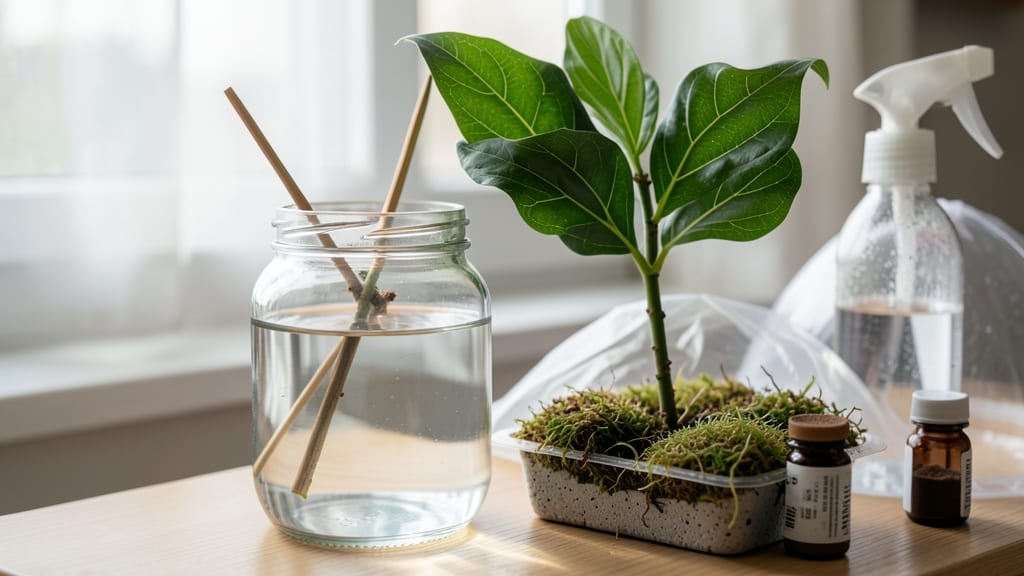
Rooting a fiddle leaf fig cutting is easier than you think—especially when you skip the water phase and go straight to soil. 🌱 I’ve rooted more than a dozen cuttings this way, and the key is keeping the cutting warm, humid, and just damp enough to encourage roots without rotting.
The right conditions turn a simple stem into a thriving plant in just 4-6 weeks.
Start with a healthy cutting—about 4-6 inches long with at least two leaves—and use a well-draining mix of potting soil and perlite. A clear plastic bag or humidity dome keeps moisture levels perfect, while bright, indirect light speeds up root growth.
The first real roots appear in 2-3 weeks, and by week 6, you’ll have a sturdy new plant ready to repot.
📚 In This Guide
- What you need
- Instructions
- Tips and common mistakes
- Wrapping up and next steps
What you need
- ● Healthy fiddle leaf fig cutting: A 4–6 inch (10–15 cm) stem with at least 2–3 leaves and 1–2 nodes (where roots will sprout). Use sterilized pruners to avoid disease.
- ○ Rooting hormone (optional but recommended): A small bottle of rooting powder or gel (e.g., Clonex or Dyna-Gro).
- ● Water propagation setup (if rooting in water): Clean glass or jar (8–12 oz, wide-mouth preferred).
- ● Room-temperature filtered or distilled water (chlorine-free).
- ● Small pebbles or marbles (to stabilize the cutting).
- ● Soil propagation setup (if transitioning to soil): Well-draining potting mix (e.g., 50% perlite + 50% peat or coco coir).
- ● Small 4–6 inch pot with drainage holes.
- ● Spray bottle (for misting).
- ● Humidity dome or plastic bag: A clear plastic bag with holes or a store-bought humidity tent to retain moisture.
- ● Label or marker: To track your cutting’s progress (e.g., date, method).
- ● Hydrogen peroxide (3% solution): 1 tsp per cup of water to prevent bacterial growth in water rooting.
- ● Heat mat or warm spot: A rooting heat mat (set to 70–75°F/21–24°C) speeds up root growth.
- ● Fertilizer (diluted): A seaweed or fish emulsion (½ strength) to boost rooting after 2–3 weeks.
- ● Grow lights: If your space lacks bright, indirect light (LED or fluorescent bulbs work).
How to root a fiddle leaf fig cutting with a water-to-soil transition
Rooting cuttings is easier than you think—and this method gets you results in weeks, not months.
🌱 Step 1: Take the Cutting at the Right Time
Choose a healthy stem with at least 4-5 mature leaves and no flowers or buds. Make your cut just below a leaf node (the bump where leaves attach) with clean, sharp scissors or pruning shears. Avoid tearing the stem—this creates jagged edges that slow rooting.
Let the cutting dry for 1-2 hours until the cut end forms a callus. You'll see a slight hardening at the wound site—this protects against rot when you root. I like to place the cutting on a paper towel in a warm, shaded spot while I prep the water.
💧 Step 2: Root in Water for 2-3 Weeks
Fill a clean glass with room-temperature water (never tap water straight from the faucet—chlorine can harm the cutting). Submerge only the bottom 1-2 inches of the stem, leaving the leaves above water. Change the water every 3-4 days to prevent bacterial growth.
Place the cutting in bright, indirect light—think east-facing window or under a sheer curtain. Direct sun causes algae buildup in the water, which blocks oxygen. You'll see roots in 2-3 weeks—they'll look fuzzy and white at first, then turn slightly brownish as they strengthen.
🪴 Step 3: Transition to Soil Gradually
Once roots reach 1-2 inches long, prepare a small pot with well-draining potting mix (I use a 50/50 blend of peat moss and perlite). Make a hole in the center with your finger and gently slide the cutting in, burying the roots but keeping the base of the stem above soil level.
Water lightly to settle the soil, then place the pot in a humid environment—like a plastic bag over a stick or a propagation station. Keep it in bright, indirect light for the first week to reduce stress. You'll notice new leaves forming within 2-3 weeks as the plant adjusts.
☀️ Step 4: Acclimate and Care for New Growth
After 4 weeks in soil, gradually introduce the cutting to its permanent light spot. Start with 2 hours of direct sun daily, then increase by 1 hour every 3 days. Your fiddle leaf fig thrives in bright, indirect light—think filtered sunlight or a north-facing window.
Water when the top 1 inch of soil feels dry, but avoid soggy soil. Yellow leaves mean overwatering; crispy edges mean underwatering. Mist the leaves occasionally to maintain humidity, especially in dry climates. You'll see robust new growth in 6-8 weeks, signaling successful rooting.
Tips & tricks for perfect fiddle leaf fig propagation
Here’s what I’ve learned from rooting dozens of fiddle leaf fig cuttings—these little details make all the difference between success and frustration.
Cutting Selection: Look for stems with at least 4-5 mature leaves and avoid any with flowers or buds. The leaf nodes (those little bumps where leaves attach) are where roots will sprout—so make your cut just below one. I’ve tried cuttings with fewer leaves, and they just don’t root as reliably. Also, use sharp scissors or pruning shears to avoid crushing the stem, which slows down rooting.
The Callus Step: Don’t skip letting your cutting dry for 1-2 hours to form a callus! This is your first line of defense against rot. I used to rush this step, and my cuttings would develop black, mushy ends. Place the cutting on a paper towel in a warm, shaded spot while you wait—this mimics the natural drying process in the wild.
Water Quality Matters: Never use tap water straight from the faucet—chlorine can harm your cutting. Let it sit out for 24 hours before using, or use filtered water. I’ve also had success with distilled water, especially in areas with hard water. Change the water every 3-4 days to prevent bacterial growth, which can turn the water cloudy and smell funky.
Lighting Insight: Bright, indirect light is key during the water rooting phase. I’ve seen beginners place their cuttings in direct sun, which causes algae to grow in the water—this blocks oxygen and can kill roots before they even start. An east-facing window or a spot under a sheer curtain is perfect. You’ll know you’re doing it right when you see fuzzy white roots forming in 2-3 weeks.
Pro Tips for Can You Root A Fiddle Leaf Fig Cutting
- Here’s what I’ve learned from rooting dozens of fiddle leaf fig cuttings—these little details make all the difference between success and frustration.
- Cutting Selection: Look for stems with at least 4-5 mature leaves and avoid any with flowers or buds.
- The Callus Step: Don’t skip letting your cutting dry for 1-2 hours to form a callus!
Frequently asked questions
Got questions about rooting your fiddle leaf fig cutting? You’re not alone! Here are some of the most common ones—plus quick answers to keep your propagation journey smooth.
How long does it take for a fiddle leaf fig cutting to root in water?
A fiddle leaf fig cutting typically takes 2–4 weeks to develop roots in water, depending on conditions like warmth, humidity, and light. Patience is key—roots should be at least 2 inches long before transitioning to soil for stability. Check weekly for signs of growth!
When is the best time to move my cutting from water to soil?
Transfer your cutting to soil once roots reach 2+ inches (or when they fill a third of the water container). Aim for spring or early summer when growth is fastest. Avoid winter—roots struggle in cooler temps. Pro tip: Use a well-draining mix to prevent rot!
What if my cutting rots in water? How do I fix it?
If your cutting’s stem turns mushy or smells foul, it’s rotting—likely from bacteria or overwatering. Act fast: trim the rotten part, let it dry for a day, then replant in dry, sterile soil. Avoid water rooting next time; try the soil propagation method instead.
Can I root a fiddle leaf fig cutting directly in soil instead of water?
Soil propagation
works well for fiddle leaf figs—just dip the cutting in rooting hormone, plant in moist perlite or a sandy mix, and keep humidity high. Roots take 4–8 weeks to form, but this method reduces rot risk. Bonus: No water changes or algae headaches!
Why did my rooted cutting die after planting in soil?
Common culprits: shock from transplanting, overwatering, or poor drainage. Give your cutting 2–4 weeks to acclimate before heavy watering. Use a light, airy potting mix and avoid fertilizing until new growth appears. Troubleshoot: Check for pests or fungal spots too!
Wrapping up and next steps
Rooting a fiddle leaf fig cutting is totally doable with the right approach—whether you start in water or transition to soil! The key is patience, consistency, and keeping those roots happy with warmth, humidity, and minimal stress. 🌱
Now that you’re armed with tips, give it a try and watch your cutting thrive. Once those roots are strong, pot it up and enjoy your new plant baby growing into a stunning fiddle leaf fig! 🌿✨