
Tools
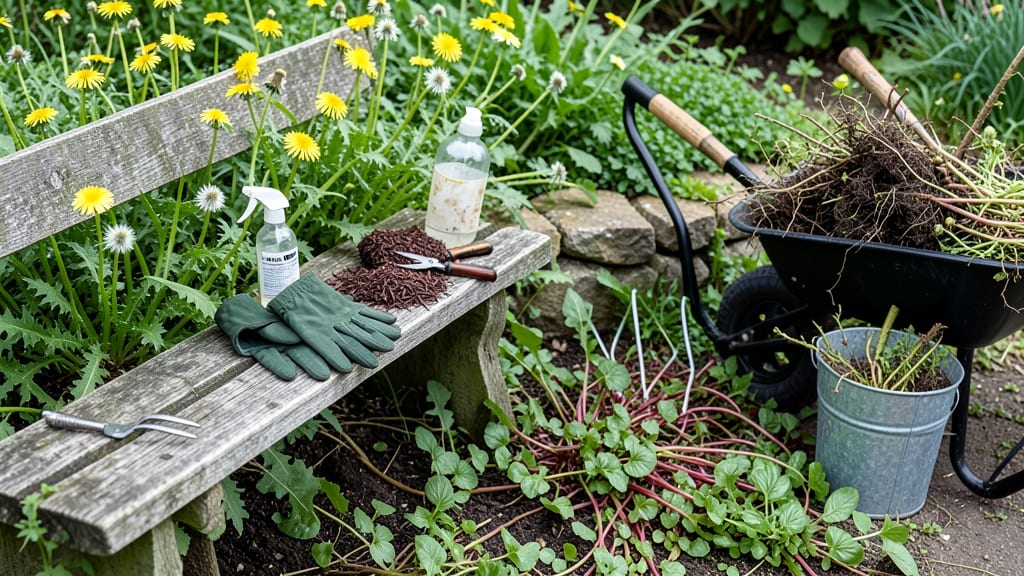
Big leaf weeds in my garden used to look like a lost cause—until I learned the precision removal trick that stops regrowth. 🌱 Those broad, stubborn leaves (think dandelions, plantain, or bindweed) don’t just compete for space; they steal nutrients that could be feeding your tomatoes or herbs.
The key? Targeting the root system before it spreads deeper than your trowel can reach.
Most gardeners grab a hoe and hack at the tops, but that just leaves behind fragments that sprout back thicker. I now use a digging fork to loosen the soil around the base, then pull with a sharp twist—no more broken pieces left to regrow.
For stubborn ones like bindweed, I smother the remaining soil with cardboard mulch for three weeks to starve the roots completely.
By the end of summer, your garden beds will stay weed-free for months, not just days. The soil stays healthier, your plants grow stronger, and you’ll actually enjoy weeding again. No chemicals, no backbreaking work—just a method that works the first time.
This approach works for any garden size, from raised beds to in-ground plots. The secret? Timing—pull weeds when soil is moist (after rain or watering) and roots slide out easily. Let’s make your garden the envy of the neighborhood without the endless battle.
Root Causes Of Broadleaf Weeds
Understanding why broadleaf weeds take over your garden is the first step to stopping them for good. These stubborn plants don’t just pop up by chance—they thrive because of specific conditions and behaviors in your yard.
Let’s break down the science behind their persistence and how you can use that knowledge to outsmart them.
Broadleaf weeds like dandelions, clover, and plantain love damp soil because they evolved to thrive in environments where water isn’t a limiting factor. Here’s why they flourish when your garden stays too wet:
- Oxygen Starvation: Compacted or clay-heavy soil holds excess water, suffocating grass roots and creating the perfect breeding ground for weeds. Without competition from healthy turf, broadleaf weeds spread unchecked. - Seed Germination Boost: Many weed seeds require moisture to activate.
A soggy lawn or garden signals to dormant seeds: "Now’s the time to grow!" - Shady, Wet Spots: Areas under trees or along fences often stay damp longer, creating microclimates where broadleaf weeds dominate.
Actionable Fix: Test your soil’s drainage with a simple percolation test: Dig a 12-inch hole, fill it with water, and time how long it takes to drain. If it takes longer than 6 hours, amend the soil with sand or compost to improve aeration. For clay soil, consider gypsum to break up compaction.
Ironically, broadleaf weeds often invade lawns that look healthy but are actually struggling. Here’s how sunlight and weak grass create the perfect storm:
- Sun Exposure: Weeds like henbit and chickweed thrive in full sun because they grow quickly to outcompete slower-growing plants. If your lawn is patchy, weeds fill the gaps like weeds filling a cracked sidewalk. - Nutrient Competition: Healthy grass crowds out weeds by absorbing sunlight and nutrients.
But if your lawn is thin, stressed, or nutrient-deficient, weeds seize the opportunity. - Mowing Height: Cutting grass too short (below 2–3 inches) weakens roots, leaving bare soil for weed seeds to colonize.
Actionable Fix: Adjust your mowing height to 3–4 inches to shade out weeds and strengthen grass roots. Overseed bare patches in early fall with a high-quality grass mix (like tall fescue or Kentucky bluegrass) to outcompete weeds naturally.
Every time you till, dig, or even walk on your lawn, you’re inviting weeds to move in. Here’s how:
- Seed Banks: Most gardens have millions of dormant weed seeds in the top 2 inches of soil. Disturbing the soil (even with foot traffic) exposes them to light and air, triggering germination. - Root Fragmentation: Weeds like bindweed and nutsedge spread via underground runners.
Digging or aerating can chop these roots into pieces, each capable of growing into a new plant. - Compost & Mulch: While organic matter improves soil, unsterilized compost or mulch can introduce weed seeds. Even "weed-free" mulch may contain hidden invaders.
Actionable Fix:
- Avoid tilling: Use manual weeding or smothering techniques (like cardboard + mulch) instead of turning the soil.
- Walk on paths: Designate gravel or stepping stones to reduce soil compaction in garden beds.
- Solarize soil: For severe infestations, cover bare soil with clear plastic for 4–6 weeks in summer to bake out weed seeds (temperatures reach 140°F+).
Soil pH and nutrient levels directly impact what grows in your yard. Broadleaf weeds exploit imbalances like this:
- Low Nitrogen: Weeds like crabgrass and pigweed thrive in nitrogen-poor soil because they fix their own nitrogen. Meanwhile, grass struggles to grow, leaving open space. - High Phosphorus: Fertilizers with too much phosphorus (common in lawn foods) boost weed growth while stunting grass.
Weeds like bindweed and dandelions love phosphorus-rich soil. - pH Extremes: Most weeds prefer slightly acidic to neutral soil (pH 6.0–7.0). If your soil is too alkaline (pH >7.5), grass weakens, and weeds take over.
Actionable Fix:
- Test your soil: Use a DIY soil test kit (or send a sample to your local extension office) to check pH and nutrient levels.
- Adjust pH: Lower pH with sulfur (for alkaline soil) or raise it with lime (for acidic soil).
- Choose slow-release fertilizers: Opt for organic options (like compost or fish emulsion) to avoid phosphorus spikes.
A balanced ecosystem keeps weeds in check. When you disrupt nature’s checks and balances, weeds win:
- Missing Predators: Insects like ladybugs and ground beetles eat weed seeds and larvae. Pesticides (even "natural" ones) can wipe them out. - Fungal Pathogens: Some soils contain natural fungi that inhibit weed growth.
Chemical treatments or excessive tilling can destroy these beneficial microbes. - Ground Cover Plants: Creeping thyme, clover, or moss can smother weeds by blocking sunlight and soil exposure.
Actionable Fix:
- Encourage biodiversity: Plant native ground covers or clover mixes in shady areas to outcompete weeds.
- Skip synthetic herbicides: Use vinegar-based sprays (for spot treatment) or boiling water to kill weeds without harming beneficial insects.
- Introduce predator-friendly plants: Marigolds, alyssum, and dill attract pollinators and predatory insects that naturally suppress weeds.
Tackle Big Leaf Weeds Effectively
Now that you understand why those stubborn broadleaf weeds pop up in your garden, it’s time to eliminate them for good—without the regrowth. Below are targeted solutions based on the root cause, from quick fixes to long-term prevention. No more guessing—just actionable steps!
When to use: Early-stage weeds (young, small leaves) or spot treatments. Why it works: Removes the entire root if done correctly, preventing regrowth.
- 👨🍳 Wet the Soil First
- Water the area 1–2 hours before pulling to soften the soil. Dry, compacted earth makes roots break off easily.
- 🔪 Grab & Twist (Don’t Just Yank!)
- Use a weed puller (or a sturdy fork) to loosen the root ball.
- Twist and lift at the base—if the root snaps, dig deeper until you feel resistance.
- Pro tip: Wear gloves—some weeds (like dandelions) have milky sap that irritates skin.
- 🗑️ Dispose Properly
- Bag and trash pulled weeds (especially seed-bearing ones like lamb’s quarters).
- Don’t compost! Seeds can survive and sprout later.
✨ Prevention Tip:
- Mulch heavily (3–4 inches of straw or wood chips) to block sunlight and smother new sprouts.
When to use: Weeds in cracks, between pavers, or non-plantable areas. Why it works: Instant cell death—no chemicals, just heat or acid.
Option 1: Boiling Water (🔥)
- 🍳 Heat 1–2 gallons of water to a rolling boil.
- 👨🍳 Pour directly over weeds (aim for the base).
- ⏰ Wait 5–10 minutes, then pull any remaining stems.
- Best for: Driveways, patios, and walkways where soil isn’t deep.
Option 2: Vinegar Solution (🍶)
- Mix 1 gallon white vinegar + 1 cup salt + 1 tbsp dish soap (lowers surface tension).
- 💦 Spray on a sunny day (direct sunlight enhances effectiveness).
- ⏰ Reapply every 2–3 days until weeds die (usually 5–7 days).
- Caution: Avoid spraying desired plants—vinegar kills everything it touches!
💡 Pro Tip:
- Use a spray bottle for precision in tight spaces.
- Test a small area first—some mulches or decorative rocks may stain.
When to use: Large infestations or weeds in hard-to-reach areas (e.g., under fences). Why it works: Kills weeds at the root or prevents seed germination.
🔫 Spot-Treat with Glyphosate (Systemic)
- 🛡️ Use only on weeds (not near edibles or ornamentals).
- 💦 Apply on a wind-free day—spray only the leaves (avoid drift).
- ⏰ Wait 24–48 hours before watering to let it absorb.
- Best brands: Roundup Concentrate (mix with water for control).
🌱 Pre-Emergent for Prevention
- 📅 Apply in early spring (before weed seeds sprout).
- 💧 Water lightly after to activate.
- Best for: Lawns and garden beds prone to annual weeds like chickweed.
- Avoid: Overlapping with post-emergent herbicides (can reduce effectiveness).
⚠️ Safety First:
- Never mix herbicides—follow label instructions precisely.
- Store out of reach of pets and kids.
When to use: Organic gardens, family-friendly yards, or eco-conscious spaces.
🌿 Corn Gluten Meal (Pre-Emergent Barrier)
- 📦 Sprinkle 20 lbs per 1,000 sq ft in early spring.
- 💧 Lightly water in to activate.
- ✨ Blocks seed germination for up to 4 months.
- Best for: Newly planted beds or areas with heavy weed pressure.
🍃 Sheet Mulching (Lasagna Method)
- 📦 Layer:
- Cardboard (block light to existing weeds).
- Wet newspaper (optional, for extra suppression).
- Compost & mulch (4–6 inches).
- 🌱 Plant directly into the mulch once weeds are dead (usually 2–4 weeks).
- Result: Weed-free bed and improved soil!
🐞 Encourage Beneficial Insects
- 🐞 Ladybugs, lacewings, and ground beetles eat weed seeds.
- 🌼 Plant companion flowers like marigolds, alyssum, or clover to attract them.
🔥 Bonus Hack:
- Solarize soil in late summer: Cover bare soil with clear plastic for 4–6 weeks. The trapped heat cooks weed seeds and roots.
Invest in these game-changers to make weed control easier:
- 🔪 Weed torch (for stubborn weeds in gravel or between stones).
- 🪓 Hori-hori knife (precision digging in tight spaces).
- 🌿 Dandelion weeder (for deep-rooted invaders).
- 🚜 String trimmer with a weeding blade (for large areas).
Final Reminder:
- Consistency is key—weeds thrive on neglect.
- Check weekly in spring/fall (peak germination seasons).
- Celebrate small wins—a weed-free garden is a process, not a one-time fix!
Now grab your tools and turn that weed patch into a lush, low-maintenance paradise! 🌿✨
Frequently asked questions about managing big leaf weeds
How do I tell if a big leaf plant is actually a weed?
Look for these red flags: Weeds often have irregular leaf shapes (like jagged edges or uneven lobes), grow in clusters instead of orderly rows, and produce seeds or runners aggressively. Compare to your planted species—most garden plants have uniform growth patterns and don't spread via underground stems.
Why do some big leaf weeds keep coming back even after I pull them?
This happens when you miss the root system or leave behind fragments. Weeds like bindweed and dandelions have deep taproots or horizontal runners—use a digging fork to loosen soil around the base, then pull with a sharp twist. For stubborn regrowth, try smothering with cardboard mulch for 3 weeks to starve remaining roots.
What's the best time of day to remove big leaf weeds?
Early morning or late afternoon when soil is moist but not soggy. This makes roots slide out easily without breaking. Avoid midday heat—it stresses plants and can leave gaps where more weeds will sprout. Water the area 1-2 hours before pulling if your soil tends to dry out quickly.
Can I use vinegar to kill big leaf weeds without harming my flowers?
Only if you're very precise! Vinegar kills everything it touches, so use a spray bottle for spot treatment and avoid overspray. For safer results, try boiling water (for driveways) or manual removal with a hori-hori knife. Always test a small hidden area first—some plants may show temporary browning.
How long does it take for smothering methods to work?
With cardboard mulch, you'll see results in 2-4 weeks as existing weeds die from lack of sunlight. For prevention, maintain the mulch layer for 3-6 months—this blocks new seeds from germinating. The key is keeping the cardboard completely covering the soil with no gaps for light to penetrate.