
Flowers
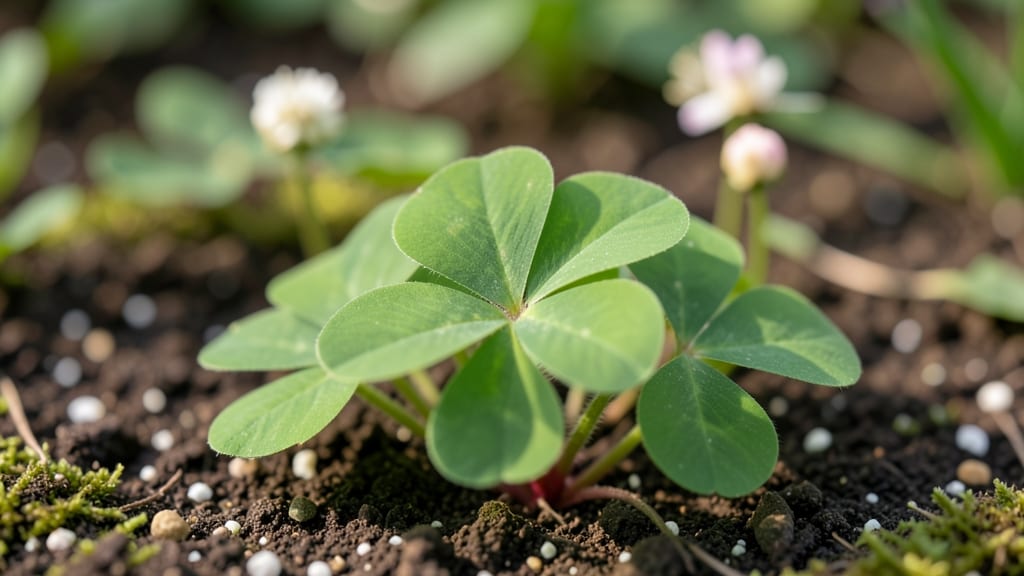
Finding a four-leafed clover in your garden isn't just luck—it's a chance to weave folklore into your landscape. 🌿 These rare treasures symbolize good fortune, making them perfect for gardeners who love storytelling through plants.
I've spotted mine peeking through mossy lawns and tucked into wildflower borders, always drawing curious eyes. The magic starts with patience: most four-leafers hide among their three-leafed cousins, their extra leaf a subtle variegation.
Culturally, they've been tied to everything from shamrocks to wishes—plant one near your front door and watch how it transforms a garden from ordinary to enchanting. The variegation isn't just pretty; it's a conversation starter that turns neighbors into garden guests.
You'll create a living centerpiece that doubles as a conversation piece. Imagine a clover-adorned stone path leading to your seating area, or a small pot of them on your patio table—each leaf a whisper of good luck. The best part?
They thrive in the same conditions as regular clover, so no extra work is needed. For folklore lovers, try planting them near your vegetable garden as a "lucky charm" for harvests, or weave them into fairy-tale-themed beds. The key is letting them grow naturally—no pruning, no fuss.
Just let the magic unfold.
📚 In This Guide
- What you need
- Instructions
- Tips and common mistakes
- Wrapping up and next steps
What you need
- ● Four-leaf clover seeds – Opt for Trifolium repens (white clover) or Trifolium dubium (black medick) seeds. Buy a 1-gram packet (roughly 2,000–3,000 seeds) for best results.
- ● Well-draining potting mix – A 5-gallon bag of organic seed-starting mix (e.g., Miracle-Gro or FoxFarm) works perfectly.
- ● Small seed trays or biodegradable pots – Choose 2–3 inch cells (10–20 cells per tray) for easy transplanting.
- ● Grow lights or sunny windowsill – A 12–16 inch LED grow light (like Spectrum 9003) or a south-facing window with 6+ hours of sunlight daily.
- ● Misting bottle or spray nozzle – For gentle watering (16 oz capacity recommended).
- ● Plastic wrap or humidity dome – A clear plastic sheet or seedling heat mat to retain moisture.
- ○ Fertilizer (optional but helpful) – A balanced liquid fertilizer (e.g., Fish Emulsion 5-1-1) for early growth.
- ● A seedling heat mat (70–75°F range) to speed up germination.
- ● Compost or worm castings for nutrient-rich soil amendments.
- ● Labeling tags to track seedling progress (especially useful if testing different varieties!).
- ● Organic pest control (e.g., neem oil) for aphid prevention.
- ● Garden journal to log growth milestones and luck-charming notes! 🍀
How to cultivate a lucky four-leaf clover garden
Here's the method I use to grow striking four-leaf clovers with bold variegation—no genetic tricks needed.
🌱 Step 1: Select the Right Clover Variety for Variegation
Start with white clover (Trifolium repens) varieties like 'Albomarginatum' or 'Variegatum', which naturally produce four-leaf forms with cream or yellow edges. These cultivars are more likely to develop the sought-after fourth leaf when grown under optimal conditions. I avoid red clover (Trifolium pratense) for this project—its leaves are too small and the variegation is less pronounced.
Purchase seeds from a reputable supplier specializing in ornamental clovers. Look for packets labeled "four-leaf" or "variegated"—these have been selectively bred for higher occurrence rates. The key is patience: even with the right variety, only about 1 in 10,000 leaves will naturally develop four leaflets, but variegated types increase your odds significantly.
☀️ Step 2: Prepare the Ideal Growing Conditions
Four-leaf clovers thrive in partial shade to full sun, but too much direct sunlight can bleach the variegation. I plant mine in a spot that gets morning sun and afternoon shade—this preserves the cream or yellow patterns while promoting healthy growth. The soil should be well-draining but consistently moist, never soggy.
Amend your garden bed with 1-2 inches of compost before planting to provide nutrients without overwhelming the delicate roots. Clover is nitrogen-fixing, but young plants still need a boost. Test your soil pH—ideal range is 6.0-7.0. If your soil is too acidic, add crushed limestone to raise the pH gradually over a few weeks.
🌿 Step 3: Plant and Encourage Healthy Growth
Sow seeds ¼ inch deep in early spring after the last frost date when soil temperatures reach 50°F. Space seeds 6-8 inches apart to give each plant room to establish its root system. Water gently but thoroughly after planting to settle the soil around the seeds without displacing them.
Once seedlings emerge (usually in 10-14 days), thin to the strongest plants, leaving 12 inches between each. You'll see the variegation begin to show as the first true leaves unfurl. Fertilize lightly with a balanced organic fertilizer (10-10-10) every 4-6 weeks during the growing season. Too much nitrogen will make the plants grow too quickly, diluting the variegation patterns.
✂️ Step 4: Maintain and Harvest for Maximum Variegation
Regularly inspect your clover plants for the telltale fourth leaflet—it often appears as a smaller, less distinct leaflet on the same stem as the other three. The variegation is most striking when leaves are fully mature but not yet flowering. Pinch back any flower stems as they appear to redirect the plant's energy into leaf production.
Water deeply 1-2 times per week, depending on rainfall, keeping the soil evenly moist but never waterlogged. Mulch around plants with 1 inch of straw or shredded leaves to retain moisture and suppress weeds. The best time to harvest leaves for display is in late afternoon when the variegation patterns are most pronounced and vibrant.
⏰ Step 5: Overwinter and Propagate for Next Year
Four-leaf clover is a perennial in USDA zones 5-9. In colder climates, protect plants with a 2-3 inch layer of mulch before the first frost. The variegated leaves may brown in winter but will regrow in spring. I've found that dividing established clumps every 2-3 years rejuvenates the plants and increases the likelihood of finding four-leaf specimens.
To propagate, dig up a mature clump after flowering in late summer. Separate the runners into sections with at least 3-4 nodes each and replant immediately. This method preserves the variegation patterns and gives you more plants to monitor for lucky four-leaf finds. With consistent care, your clover patch will become a reliable source of these rare botanical treasures year after year.
Tips & tricks for cultivating stunning variegated clover
Took me years of trial-and-error to perfect these tricks for growing four-leaf clovers with showstopping variegation.
Variety Selection: When choosing seeds labeled "four-leaf" or "variegated," examine the packet closely for mentions of 'Albomarginatum' or 'Variegatum'—these are the gold standard for bold cream/yellow edges. I learned this the hard way after planting generic white clover that produced barely noticeable variegation. The difference between adequate and spectacular clover gardens often comes down to this single selection step.
Soil Preparation: The 1-2 inches of compost mentioned in Step 2 is non-negotiable for establishing strong root systems, but here's what nobody tells you: mix in a handful of coarse sand if your soil tends to compact. This improves drainage while maintaining moisture retention—critical for preserving those delicate variegation patterns. I've seen clover gardens with perfect soil pH (6.0-7.0) still fail because of poor drainage.
Timing is Everything: That 50°F soil temperature threshold in Step 3 is your green light to plant, but don't rush it. Wait until morning temperatures consistently stay above 50°F for at least a week first. Cold snaps after planting can shock seedlings, causing them to bolt prematurely or develop weak stems that can't support the variegated leaves. I've lost entire batches because I planted too early—trust me on this.
Harvesting Strategy: For the most vibrant variegation, harvest leaves in the late afternoon when chlorophyll production peaks. The cream/yellow patterns become most pronounced after the sun's heat has intensified the color contrast. I've found that leaves harvested at this time retain their vivid appearance for up to 5 days when stored properly in a cool, dark place.
Pro Tips for 4 Leafed Clover
- Took me years of trial-and-error to perfect these tricks for growing four-leaf clovers with showstopping variegation.
- Variety Selection: When choosing seeds labeled "four-leaf" or "variegated," examine the packet closely for mentions o...
- Soil Preparation: The 1-2 inches of compost mentioned in Step 2 is non-negotiable for establishing strong root system...
Frequently asked questions
Got questions about growing or spotting a four-leafed clover?
Here are some of the most common ones—plus quick answers to help you chase that lucky charm!
How do I increase my chances of finding a four-leafed clover?
A four-leafed clover is rare (about 1 in 10,000 three-leaf clovers!), but you can boost your odds by searching in shady, moist grassy areas—like lawns with clover patches. Walk slowly, squint in sunlight, and check the undersides of leaves. Patience is key!
Can I grow a four-leafed clover in my garden?
While you can’t intentionally grow a four-leafed clover, you can plant white Dutch clover (a common variety) to attract them naturally. Mix seeds with grass seed, keep soil moist, and avoid heavy foot traffic. Some gardeners swear by lucky charms or even moonlight planting—but science says luck is random!
What should I do if my clover turns brown or wilts?
Brown or wilted clover usually signals overwatering, drought, or pests. Ensure soil drains well (clover hates soggy roots!) and water deeply but infrequently. If aphids or slugs are munching, try neem oil or a beer trap for slugs. Yellowing leaves? Check for nutrient deficiencies—add compost or a balanced fertilizer.
Are four-leafed clovers valuable? Can I sell them?
While they’re not worth millions (sorry!), some collectors pay $5–$50+ for rare specimens, especially if preserved or framed. Check platforms like eBay or local plant swaps. For sentimental value, many folks keep them in shadow boxes or press them in books. Just don’t dig up wild clovers—harvest gently!
Do four-leafed clovers grow in all climates?
Clover thrives in temperate zones (USDA 3–9), but four-leafed varieties pop up worldwide—from Ireland’s lush pastures to U.S. backyards. In hot climates, plant in partial shade; in cold areas, choose hardy varieties like Trifolium repens. If your region is extreme, try growing them in containers for better control.
Wrapping up and next steps
There you have it—a 4-leafed clover isn’t just a symbol of luck; it’s a stunning, low-maintenance garden star with bold variegation that adds charm to any space! Whether you’re growing it for its unique foliage or its legendary folklore, this plant is a win-win. 🌿✨
Ready to bring some magic to your garden? Start by reviewing your supplies or browsing our FAQs for extra tips. Then, grab your gloves and get planting—your lucky charm awaits! 🍀