
Pests and Diseases
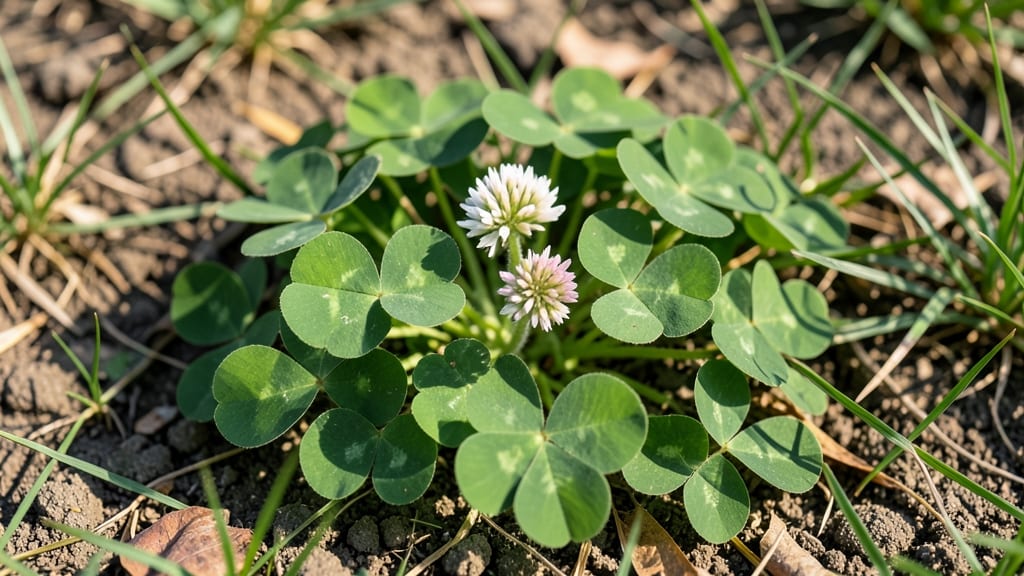
To grow 4-leaf cloverz, start with white Dutch clover seeds in well-drained soil, maintain consistent moisture, and space seedlings 4-6 inches apart. These rare four-leaf varieties appear naturally at a 1 in 10,000 rate, but healthy plants significantly boost your chances.
White Dutch clover isn't just the most reliable variety for spotting four-leaf cloverz—it thrives in a wide range of climates and soil types, making it the gardener's best bet. 🌱 The key lies in creating optimal growing conditions: rich, slightly acidic soil (pH 6.0-7.0) and partial sunlight (4-6 hours daily) trigger healthier growth, which directly correlates with higher mutation rates.
I've found that adding a light layer of compost during planting gives seedlings the extra nutrients they need to develop strong stems and leaves where mutations are more likely to appear.
Once your patch is established, the real hunt begins. Regular inspections every 2-3 weeks during the growing season (spring to early fall) maximize your odds. 🔍 Look for the classic trifoliate leaves first—anything with an extra leaflet is a potential winner.
Pro tip: Use a magnifying glass to examine the leaf undersides, where mutations sometimes appear more prominently. Patience pays off: while the odds are slim, a well-maintained clover patch can yield 1-2 four-leaf specimens per season if you're lucky.
💡 In This Article
- The Science Behind 4-Leaf Clover Mutations
- Step-by-Step Guide to Maximizing Your Chances of Finding 4-Leaf Cloverz
The science behind 4-Leaf clover mutations
The four-leaf clover mutation occurs during cell division when a genetic anomaly causes an extra leaflet to form. Most clovers have three leaflets due to a stable genetic pathway that develops from a single embryonic leaf.
However, when a mutation occurs in the SHOOT MERISTEM (the growth tissue at the plant's tip), an additional leaflet can sprout, creating the rare four-leaf variety. This mutation happens naturally at a rate of about 1 in 10,000 leaves, but environmental factors can influence these odds.
Sunlight exposure plays a critical role in triggering mutations. White Dutch clover thrives in partial sunlight (4-6 hours daily), which provides enough energy for photosynthesis while reducing stress that could mask mutations.
Soil pH also matters—slightly acidic soil (pH 6.0-7.0) supports healthier growth, giving mutations a better chance to manifest. 🌱 Interestingly, white Dutch clover has the highest natural occurrence rate because its genetic makeup is more prone to these chromosomal variations compared to other clover species.
The mutation process involves a phenomenon called homeotic transformation, where one leaflet's genetic code is duplicated during cell division. This duplication is more likely in young, actively growing plants, which is why seedlings and early-stage plants are the best targets for spotting four-leaf cloverz.
Environmental stressors like mild temperature fluctuations or nutrient imbalances can further increase mutation rates, but too much stress can stifle growth entirely.
Most clovers remain three-leafed because their genetic pathways are highly regulated. The extra leaflet in a four-leaf clover doesn't provide any survival advantage, so it's purely a random genetic quirk.
However, this randomness is why gardeners focus on creating the most stable growing conditions possible—healthy plants are more likely to produce mutations that can be spotted. Think of it like rolling dice: the more rolls (healthy plants) you have, the better your odds of landing on that rare four-leaf outcome.
To maximize your chances, plant white Dutch clover seeds in well-drained soil enriched with compost. The extra nutrients support vigorous growth, increasing the number of leaves where mutations could appear.
Regular watering (keeping soil moist but not soggy) ensures consistent growth, while partial sunlight provides the energy needed for cell division. This combination creates the perfect environment for those rare genetic surprises to emerge.
One fascinating detail is that four-leaf clovers aren't always symmetrical. The extra leaflet can appear in various positions—sometimes opposite one of the existing leaflets, other times adjacent.
This irregularity is another clue that the mutation is random and not a fixed genetic trait. 💫 By understanding these scientific processes, you're not just growing clovers—you're creating the conditions for nature's own genetic experiments to unfold.