
Pests
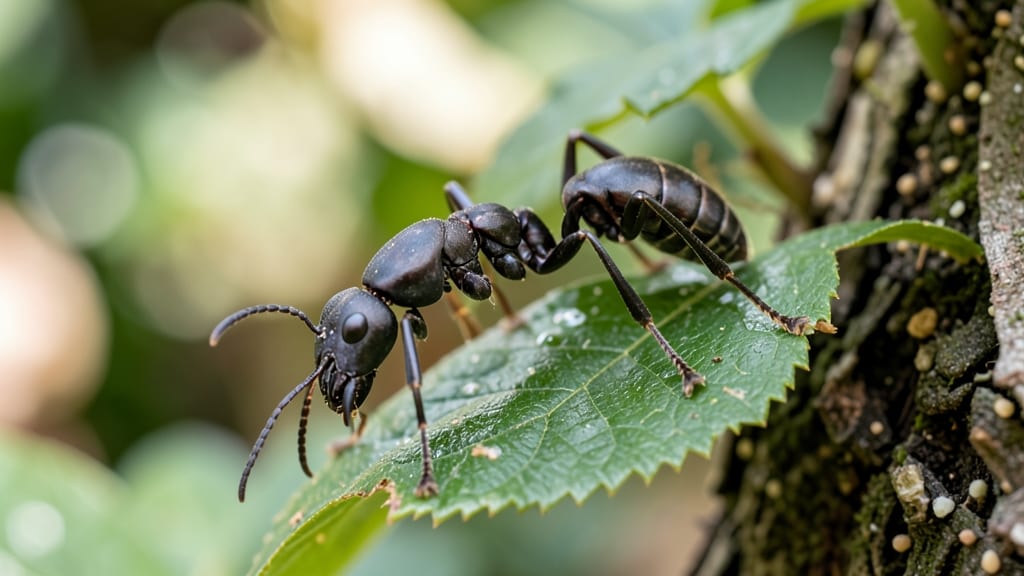
Texas leaf cutter ants what kills them is exposure to soapy water (mixed dish soap), borax-based baits, or diatomaceous earth, which break down their colony systems and foraging networks. These methods eliminate ants without harming surrounding plants or soil ecosystems.
These solutions work because they exploit the ants' biological vulnerabilities. Soapy water dissolves their waxy exoskeleton coatings, while borax disrupts their digestive systems when ingested. 🌟 Diatomaceous earth creates microscopic cuts that dehydrate them over time.
The key is strategic placement—near their trails or nest entrances—to maximize effectiveness while protecting beneficial insects.
For organic gardeners, I recommend starting with soapy water sprays (1 tablespoon dish soap per gallon of water) applied directly to visible trails.
Borax baits (1 part borax to 3 parts sugar) should be placed in shallow containers near the nest, while diatomaceous earth works best as a barrier around garden perimeters.
💡 In This Article
- How Leaf Cutter Ants Die: Biological and Chemical Mechanisms
- Safe and Effective Texas Leaf Cutter Ant Baits and Traps
How leaf cutter ants die: biological and chemical mechanisms
Soapy water works by breaking down the waxy, protective cuticle layer that covers leaf cutter ants' exoskeletons. Their outer shell contains a hydrophobic coating that repels water—like the non-stick surface of a lotus leaf.
When you apply a solution of 1 tablespoon dish soap per gallon of water, the surfactants in the soap penetrate this coating, causing it to dissolve within 15-30 minutes.
This exposes their delicate exoskeletons to dehydration and bacterial infections, effectively suffocating them. 🔥 The key is direct contact: spray trails where ants are actively moving, as their waxy coating is thinnest along their legs and antennae.
Borax-based baits exploit their foraging behavior by mimicking sweet liquids they collect to cultivate fungus gardens. When ants ingest the 1:3 borax-to-sugar mixture, the borax crystals disrupt their digestive systems by binding to essential minerals like calcium and magnesium.
This causes metabolic poisoning over 24-48 hours, preventing the colony from maintaining its fungus farms—which are their primary food source. The ants' social structure means they'll share the poison with nestmates, accelerating colony collapse. Unlike synthetic pesticides, borax breaks down naturally in soil, making it safer for ecosystems.
Diatomaceous earth (DE) kills by creating microscopic abrasions on their exoskeletons. The fossilized algae particles are sharp enough to cut through their waxy coating at a microscopic level, causing rapid dehydration. Food-grade DE works best when applied as a 1/4-inch thick barrier around garden edges or nest entrances.
Ants die within 48 hours of contact, but the process is slower than soapy water—making it better for prevention than immediate eradication. The critical factor is keeping DE dry, as moisture reduces its effectiveness by 70%. 💫
These methods differ from synthetic poisons because they target specific biological weaknesses rather than broad toxicity. Soapy water disrupts physical protection, borax interferes with chemical digestion, and DE causes physical dehydration—each exploiting a different vulnerability in their life cycle.
The most effective approach combines trail disruption (soapy water) with colony-wide poisoning (borax baits), forcing the ants to abandon their foraging patterns while starving their fungus gardens.
For maximum impact, time your applications during their peak activity hours—typically early morning when they're most active collecting leaves. The queen's vulnerability comes last: once worker populations decline, the colony's ability to protect her weakens, allowing natural predators or environmental factors to finish her off.
This multi-pronged approach ensures you're not just killing individual ants, but systematically dismantling their entire social structure. 🌟
What most people overlook is how these methods create a feedback loop: soapy water disrupts their trails, forcing them to expose themselves to borax baits, while DE prevents them from returning to the nest.
The combination creates a lethal cycle that's both efficient and environmentally responsible compared to chemical sprays that harm non-target species.