
Planting
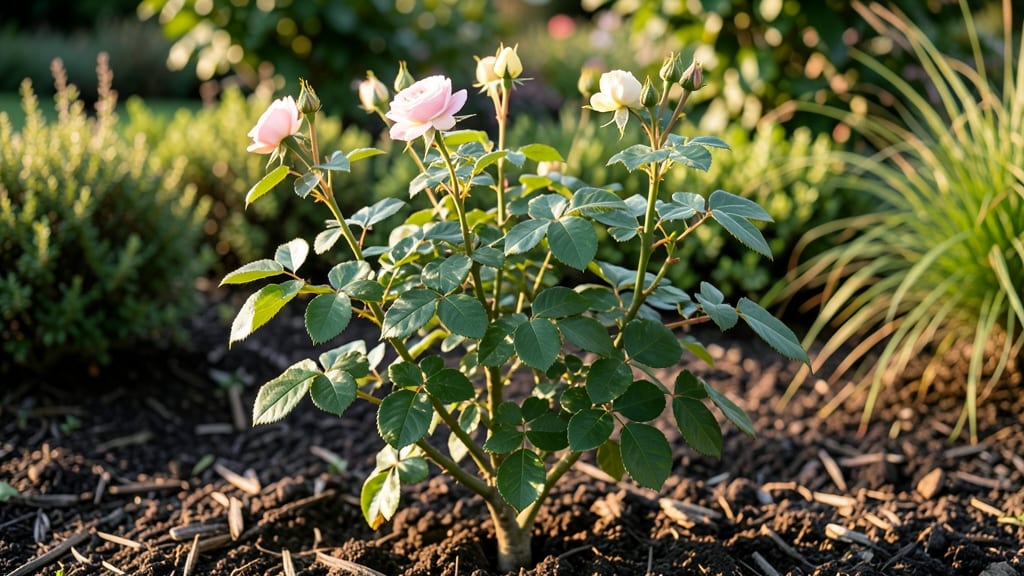
The shape of a rose plant leaf typically features 5-7 serrated edges, an elongated oval form, and a glossy surface, though varieties like climbers or shrubs may have slightly rounded or lobed variations. Leaf size and vein patterns also differ by species.
The leaf shape of rose plants serves as a botanical fingerprint, helping gardeners distinguish between species and varieties. 🌿 For example, hybrid teas often have finely serrated, narrow leaves, while old garden roses like Rosa gallica display broader, more deeply lobed foliage.
Understanding these differences isn't just academic—it directly impacts how you care for your roses, from pruning techniques to disease resistance. The vein patterns, typically pinnate with visible midribs, also vary slightly, creating subtle but crucial visual clues for identification.
What's fascinating is how these traits adapt to environmental conditions. Leaves from roses growing in full sun often develop thicker, waxier surfaces to conserve moisture, while those in shaded areas may appear softer and more delicate.
This natural variation means you'll encounter everything from 5-pointed serrations in modern hybrids to rounded lobes in species like Rosa rugosa. Paying attention to these details can transform your gardening from guesswork into precise plant identification.
💡 In This Article
- Botanical Anatomy of Rose Leaves: Key Morphological Traits
- How to Use Leaf Shape for Rose Plant Identification
Botanical anatomy of rose leaves: key morphological traits
The serrated edges of rose leaves aren't just decorative—they're a survival adaptation. Most rose leaves feature 5-7 sharp, saw-like teeth along each edge, known as acute serrations, which help reduce water loss while protecting against herbivores.
These teeth typically angle outward at 45-60 degrees, creating a distinctive jagged silhouette when viewed from above. 🌿 The spacing between serrations varies by species, with hybrid teas showing closely spaced teeth (about 0.2-0.3 inches apart) while species roses like Rosa rugosa have more widely spaced, rounded lobes.
Leaf arrangement is another critical identifier. Roses exhibit alternate phyllotaxy, meaning leaves grow singly at nodes along the stem rather than in pairs. This creates a spiral pattern when viewed from above, with each leaf emerging at roughly 120-degree angles from the previous one.
The vein structure follows this pattern too—pinnate venation with a prominent central midrib and secondary veins branching outward at 30-45 degree angles. Some species, like Rosa chinensis, show more pronounced secondary veins that create a web-like pattern when backlit.
Surface texture plays a role in identification too. Most rose leaves have a glossy, leathery surface due to a waxy cuticle that helps prevent moisture loss. However, species like Rosa rugosa develop deeply wrinkled, rugose leaves with a velvety texture, while climbers often have thinner, more delicate foliage.
These variations aren't just aesthetic—they reflect different ecological adaptations. Thicker leaves typically belong to roses from drier climates, while softer leaves come from more humid environments.
Size differences also provide clues. Hybrid tea roses usually have narrow, elongated leaves measuring about 2-4 inches long by 0.5-1.5 inches wide, while old garden roses like Rosa gallica produce broader leaves up to 3.5 inches wide.
The leaf base shape varies too—some roses have cordate (heart-shaped) bases, while others show acute or rounded bases. These subtle differences help distinguish between species that might look similar at first glance.
What's particularly interesting is how these traits change with age. Young rose leaves often appear more rounded with fewer serrations before developing their mature shape. This juvenile foliage can sometimes be confused with other plants, making it crucial to examine both mature and developing leaves when identifying roses.
The color also shifts—new growth is typically lighter green, while mature leaves darken to deep green or bluish-green depending on the species.
For gardeners, understanding these traits means you can quickly spot common rose diseases. For example, black spot fungus often appears as dark spots on the upper leaf surface, while powdery mildew creates a white coating on both sides.
Knowing your rose's natural leaf shape helps you distinguish disease symptoms from normal variations. 🌸