
Pests and Diseases
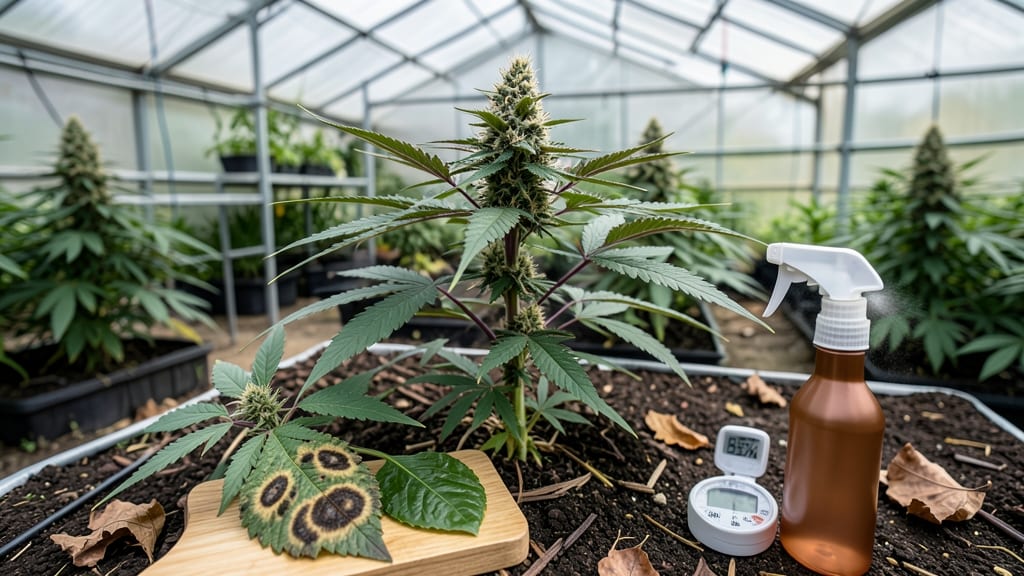
Septoria leaf spot on cannabis turns vibrant green leaves into a sad, speckled mess—🌿 and if you’ve seen those telltale brown spots with yellow halos, you know how fast it spreads.
I’ve battled this fungal blight in my own grow space, and the key isn’t just spraying but fixing the conditions that let it take hold in the first place.
The problem starts with too much moisture and poor airflow—think crowded plants or overhead watering that keeps leaves damp for hours. Septoria thrives in these conditions, and once it gets a foothold, even organic sprays can’t fully erase the damage.
The good news? Pruning for airflow, sterilizing tools, and switching to a bottom-watering system can stop it before it ruins your harvest.
You’ll learn to spot the early signs (tiny gray spots on undersides of leaves) and how to treat it with neem oil or copper sprays—plus, which varieties resist it better. The goal isn’t just to save your plants but to grow stronger, healthier cannabis that won’t invite future infections.
Whether you’re a backyard grower or running a small operation, these steps work for any setup. Let’s get your plants back to thriving—not just surviving.
Root Causes Of Fungal Spread
Septoria leaf spot thrives in cannabis crops due to a mix of environmental stress, poor hygiene, and fungal persistence. Understanding these triggers helps growers take precise action to stop outbreaks before they cripple yields.
Below, we break down the key culprits behind this stubborn fungal disease—so you can tackle them head-on.
The fungus Septoria tritici (or related species) spreads rapidly when leaves stay damp for prolonged periods. Cannabis plants are especially vulnerable during:
- Frequent overhead watering – Splashing water onto foliage creates ideal spores for germination.
- High humidity (80%+) – The fungus thrives in stagnant, moist air, especially in greenhouses or indoor grows with poor airflow.
- Poor soil drainage – Waterlogged roots force plants to retain moisture longer, extending the window for infection.
- Late-night watering – Leaves don’t dry overnight, leaving them susceptible to fungal colonization.
Pro tip: 🌡️ Aim for 60-70% humidity during veg and 40-50% during flower. Use a hygrometer to monitor levels and adjust fans or dehumidifiers as needed.
Fungal spores hitchhike on pruners, scissors, and even hands, spreading from plant to plant like a silent invader. Common contamination sources include:
- Reused tools between plants – Spores linger on blades, especially if not sterilized between cuts.
- Shared growing spaces – If one plant is infected, spores can drift to nearby plants via air currents or splashing water.
- Infested soil or compost – Old grow mixes or unsterilized amendments may harbor dormant spores.
- Worker movement between farms – Clothes, boots, or even hair can carry spores from one grow to another.
Action step: ⏰ Sterilize tools with 70% isopropyl alcohol or a 10% bleach solution between uses. Isolate infected plants immediately and avoid walking through crops unless necessary.
Stressed cannabis plants—whether from nutrient deficiencies, pests, or environmental shocks—lose their ability to fight off pathogens. Septoria leaf spot exploits these vulnerabilities:
- Nitrogen deficiency – Weakens cell walls, making leaves easier targets for fungal penetration.
- Pest damage (spider mites, aphids) – Open wounds from feeding pests create entry points for spores.
- Extreme temperature swings – Sudden cold snaps or heat stress shock the plant’s defenses.
- Overcrowding – Poor air circulation traps moisture and blocks light, stunting growth and immunity.
Fix it: 💪 Optimize nutrients (avoid over-fertilizing) and space plants 12–18 inches apart for airflow. Neem oil or hydrogen peroxide sprays can boost plant resilience as a preventative.
Septoria spores can survive in soil, compost, or even on plant debris for years, lying in wait until conditions are perfect. Key reservoirs include:
- Reused grow mixes – Old soil from previous grows may contain latent spores.
- Compost from infected plant material – Never compost cannabis leaves showing symptoms.
- Contaminated hydroponic systems – Reservoirs or net pots can harbor spores between crops.
Prevention tip: 🔥 Solarize soil (cover with clear plastic for 4–6 weeks in summer) or use steam sterilization to kill dormant spores. For hydroponics, flush systems with 3% hydrogen peroxide between crops.
By addressing these root causes—moisture, contamination, stress, and hidden spores—you can drastically reduce the risk of septoria leaf spot. The key? Proactive hygiene and environmental control beat reactive treatments every time.
How to Fix Fungal Leaf Spots
Now that you know the root causes of septoria leaf spot in cannabis, it’s time to take action! The good news? With the right approach, you can stop the spread, heal your plants, and prevent future outbreaks—even organically.
Below, we break down targeted fixes based on the most common causes, along with preventive measures to keep your grow thriving.
Problem: Excess moisture creates the perfect breeding ground for fungal spores. Solution:
- Adjust your watering schedule—let the top 1–2 inches of soil dry out between waterings. Use a moisture meter or stick your finger in the soil to check.
- Improve drainage by adding perlite, coco coir, or vermiculite to heavy soils. Ensure pots have drainage holes, and avoid saucers that trap water.
- Prune affected leaves (especially lower ones) to improve airflow and reduce humidity near the canopy.
- Pro Tip: 💡 If your grow room feels damp, run a dehumidifier or increase fan circulation to keep humidity below 60%.
Problem: Poor airflow and high humidity slow drying, allowing spores to thrive. Solution:
- Thin out plants—ensure at least 12–18 inches of space between cannabis plants (or branches) for airflow.
- Use oscillating fans to keep air moving, even in veg. Aim for gentle, consistent airflow (not direct blasts that stress plants).
- Remove lower leaves that brush against wet soil or mulch to prevent spore transfer.
- Pro Tip: ✨ Prune strategically—focus on removing leaves with yellow halos (a classic septoria sign) to stop spore spread.
Problem: Fungal spores hitchhike on dirty tools, soil, or even your hands. Solution:
- Sterilize tools with 70% isopropyl alcohol or a 10% bleach solution (rinse well after).
- Replace contaminated soil—if septoria is deep-rooted, repot with fresh, sterile mix (add mycorrhizal fungi or beneficial microbes to boost plant health).
- Disinfect surfaces (tables, pots, trays) with hydrogen peroxide (3%) or vinegar solution.
- Pro Tip: 🔥 Avoid compost tea if your compost is suspect—septoria can lurk in homemade mixes. Stick to store-bought or pasteurized compost instead.
Problem: Once spores take hold, you’ll need fungicides to break the cycle. Solution: 1. Baking Soda Spray (Preventative & Mild Cases)
- Mix 1 tsp baking soda + 1 tsp horticultural oil + 1 drop dish soap in 1 quart of water.
- Spray both sides of leaves every 7–10 days (best in early morning to avoid sunburn).
- Works best when used before symptoms appear.
2. Neem Oil (Fungicidal & Preventative)
- Combine 1 tbsp neem oil + 1 tsp soap (as an emulsifier) in 1 quart of water.
- Spray affected leaves and soil (avoid flowering buds if possible).
- Reapply every 5–7 days until new growth is healthy.
- Pro Tip: 🌡️ Warm the solution slightly (not hot) to improve absorption.
3. Copper Fungicide (For Advanced Cases)
- Use copper sulfate or copper hydroxide (follow label rates—0.5–1 oz per gallon).
- Spray at dusk to avoid leaf burn, and repeat every 10–14 days.
- Caution: 🚨 Avoid overusing copper—it can build up in soil and harm microbes long-term.
4. Hydrogen Peroxide (3%) (Emergency Treatment)
- Mix 1 tbsp 3% H₂O₂ per quart of water and spray directly on spots.
- Do not use during flowering (can damage trichomes).
- Best for: Quickly killing surface spores before they spread.
Once you’ve treated an outbreak, lock in those gains with these long-term strategies:
| Prevention Step | How to Do It |
|---|---|
| Rotate crops | Avoid growing cannabis in the same spot year after year (spores linger in soil). |
| Solarize soil | Cover soil with clear plastic for 4–6 weeks in summer to kill fungi naturally. |
| Use resistant varieties | Some cannabis strains (like early-finishing indicas) are less prone to septoria. |
| Monitor humidity | Keep vegetative stage below 60% RH, flowering below 50%. |
| Quarantine new plants | Isolate new cuttings or clones for 2–4 weeks before introducing them. |
- Remove leaves with:
- Dark brown/black spots with yellow halos (classic septoria).
- Holes or severe necrosis (prevents further spore spread).
- Avoid pruning if:
- Plants are already stressed (e.g., nutrient deficiency, heat stress).
- Flowering stage (pruning can reduce yield—focus on airflow and sprays instead).
Pro Tip: 🎯 Prune in the morning so wounds dry quickly, reducing infection risk.
Septoria leaf spot won’t disappear overnight, but with consistent airflow, organic sprays, and preventive care, you can save your plants and future grows.
Start with one or two fixes (like improving drainage or neem oil sprays), then layer in prevention to keep your cannabis healthy and happy.
Need a quick recap? ✅ Fix moisture issues (drainage, watering). ✅ Boost airflow (fans, spacing). ✅ Spray preventatively (baking soda, neem). ✅ Prune strategically (remove infected leaves early). ✅ Sanitize everything (tools, soil, hands).
Your plants will thank you—and so will your next harvest! 🌿💚
Frequently asked questions
How do I tell if my cannabis leaves have septoria leaf spot vs. another disease?
Look for small, dark brown/black spots with yellow halos—these are classic septoria signs. Unlike powdery mildew (which looks like white dust), septoria spots often appear on older leaves first and may develop tiny black specks (pycnidia) in the center when mature. Early detection is key—check leaf undersides regularly!
Can I still harvest cannabis with septoria leaf spot?
Only if the infection is mild and limited to lower leaves. Remove all visibly infected foliage at least 2 weeks before harvest—this gives buds time to flush out any residual spores. For severe cases, delay harvest until you’ve treated the plants and new growth appears healthy. Never harvest if you see spots on buds or fan leaves.
Will neem oil really stop septoria leaf spot, or is it just a myth?
Neem oil is effective as a preventative and can slow early-stage spread when used consistently (every 5-7 days). For active infections, pair it with copper fungicide or baking soda spray for better results. The key? Apply it when leaves are dry and reapply after rain—neem works best as part of a multi-pronged approach, not as a standalone cure.
How long does it take to see results after treating septoria?
With proper treatment, you’ll typically see new growth free of spots in 2-4 weeks. However, existing spots won’t disappear—focus on stopping the spread and preventing future infections. For fast results, combine neem oil sprays with improved airflow and pruning. Patience is key—rushing treatments often leads to setbacks!
Is septoria leaf spot worse in indoor vs. outdoor grows?
Outdoor grows face higher humidity and rain exposure, making them more vulnerable—but indoor grows can be worse if humidity isn’t controlled. Poor airflow in tented grows or small rooms creates the perfect storm for septoria. The biggest risk in both cases? Overwatering and stagnant air. Monitor your humidity levels (keep veg below 60%, flower below 50%) to minimize risk in any setup.