
Companion Plants
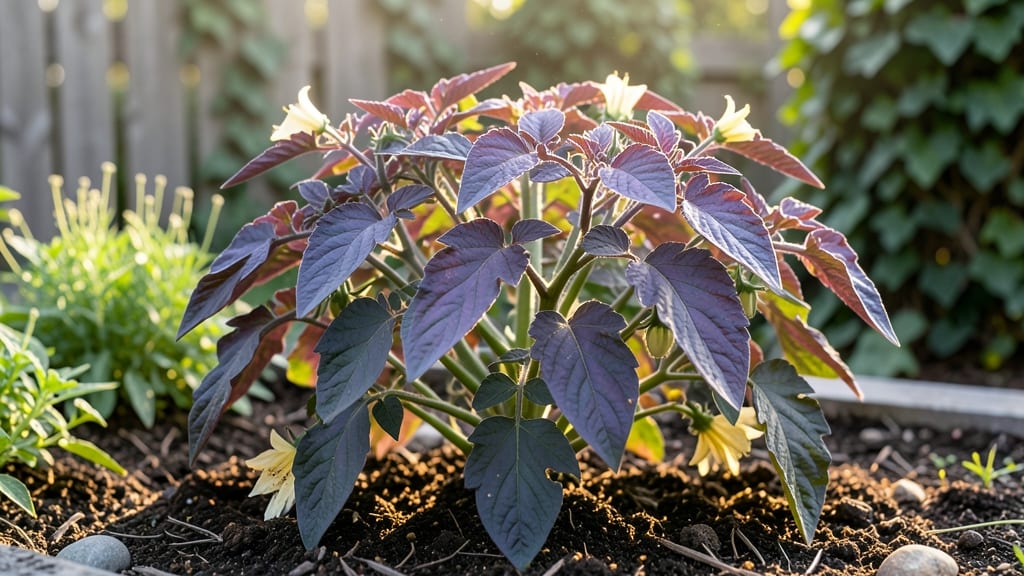
Purple leaf tomato plants turn your garden into a living work of art—vibrant foliage that doubles as a productive food source. 🌿 I’ve grown them for three seasons now, and the contrast of deep purple leaves against ripe red (or yellow) fruit never fails to impress neighbors.
These aren’t just pretty faces; they’re tougher than regular tomatoes, thriving in heat and resisting some common diseases better. The secret to their striking color? Balanced soil fertility—too much nitrogen washes out the purple, leaving dull green leaves.
I use a 5-10-10 fertilizer at planting and switch to compost tea midseason to keep those leaves bold. Watering matters too: deep soak 2-3 times per week prevents leaf scorch, while overhead watering can cause sunburn on those sensitive purple leaves.
By midsummer, you’ll harvest sweet, flavorful tomatoes while the foliage remains a garden showstopper. The purple varieties like ‘Indigo Rose’ even produce darker, richer-tasting fruit—perfect for slicing or sauces. Prune aggressively to focus energy on fruit production, and stake them early to prevent sprawl.
These plants work in containers, raised beds, or in-ground gardens, making them versatile for any space. The key is patience—they grow slower than standard tomatoes but reward you with both beauty and bounty. Let’s get those purple leaves thriving!
📚 In This Guide
- What you need
- Instructions
- Tips and common mistakes
- Wrapping up and next steps
What you need
- ● Purple Leaf Tomato Seeds or Seedlings: 1–2 plants per 2–3 ft of garden space (or 1 plant per 5-gallon container if growing in pots).
- ● Choose varieties like 'Purple Calabash', 'Black Krim', or 'Indigo Rose' for stunning foliage.
- ● Well-Draining Soil: 5–10 lbs of high-quality potting mix or garden soil (amend with compost for nutrients).
- ○ Containers (Optional but Recommended): 5–7 gallon pots (if container gardening) with drainage holes.
- ● Fabric grow bags (alternative for better airflow).
- ● Fertilizer: Balanced organic fertilizer (10-10-10 or 5-5-5) or compost tea for slow-release nutrients.
- ● Support Structures: Cages (5–6 ft tall) or stakes (6 ft long) for indeterminate varieties.
- ○ Trellis (optional for vertical gardening).
- ● Gardening Tools: Trowel or transplanting spade.
- ● Pruning shears (for trimming suckers and dead leaves).
- ● Watering can or hose with a gentle spray nozzle.
- ● Sunlight Access: 6–8 hours of full sun daily (south-facing spot ideal).
- ● Watering Schedule: Consistent moisture (1–2 inches per week; adjust for heat).
- ○ Mulch (Optional): Straw or shredded leaves to retain soil moisture and suppress weeds.
- ● Companion Plants (Bonus!):strong> Basil, marigolds, or borage to deter pests and boost growth.
Step-by-step guide to growing and caring for purple leaf tomato plants
These dramatic plants aren't just beautiful—they produce flavorful fruit too. Here's how to grow them successfully.
🌱 Step 1: Select the Right Variety and Start Seeds Indoors
Choose a purple-leaf variety like 'Purple Calabash' or 'Cherokee Purple' for stunning foliage and rich flavor. Start seeds indoors 6-8 weeks before your last frost date using sterile seed-starting mix in 2-3 inch deep pots. Fill containers to 1 inch below the rim with moistened mix—press gently to eliminate air pockets but avoid compacting.
Plant 2-3 seeds per cell at a depth of ¼ inch—deeper planting delays germination. Mist the surface lightly with water until evenly damp. Cover with a humidity dome or plastic wrap to retain moisture and warmth. Place in a warm spot (75-85°F) for germination, which typically occurs in 7-10 days.
☀️ Step 2: Provide Optimal Light and Transplant Outdoors
Once seedlings emerge, remove the cover immediately to prevent damping-off. Position seedlings under grow lights (14-16 hours daily) to prevent leggy growth. Keep lights 2-4 inches above seedlings and raise as they grow. You'll know light is sufficient when seedlings develop thick stems and deep green leaves spaced 1-2 inches apart.
After 4-6 weeks, when seedlings have 3-4 true leaves, transplant outdoors on an overcast day or in late afternoon. Bury stems deeper than usual—up to the first set of leaves—to encourage stronger root development. Space plants 18-24 inches apart in full sun (6+ hours daily), as purple-leaf varieties thrive with abundant light.
💧 Step 3: Water and Fertilize for Lush Growth
Water deeply 2-3 times per week, ensuring the top 2 inches of soil feel dry before watering again. Purple leaf tomatoes need consistent moisture but hate soggy roots—water at the base to avoid wetting foliage, which can promote disease. Mulch with 2-3 inches of organic mulch (like straw) to retain moisture and suppress weeds.
Fertilize with a balanced, organic fertilizer (10-10-10) every 3-4 weeks once flowers appear. Purple leaf varieties benefit from potassium-rich fertilizer later in the season to boost fruit production. You'll notice vibrant purple foliage and robust growth when care is consistent—this is your signal the plant is thriving.
✂️ Step 4: Prune and Support for Maximum Yield
Prune suckers (side shoots in leaf axils) regularly to direct energy to fruit production. Use clean, sharp pruners to avoid damaging stems. Remove lower leaves that touch the soil to improve air circulation and reduce disease risk. Stake or cage plants immediately—purple leaf varieties can get top-heavy with fruit.
Pinch off the first flower cluster if seedlings are small (under 12 inches), as early flowering can stress young plants. Once established, let flowers develop. Harvest fruit when fully colored and slightly soft to the touch—this ensures peak flavor. Regular pruning and support keep plants upright and productive throughout the season.
🌿 Step 5: Extend the Season and Prevent Common Issues
To prolong harvest, cover plants with frost cloth when temperatures drop below 50°F. Purple leaf tomatoes are more cold-sensitive than green-leaf varieties, so protect them early. Watch for aphids or whiteflies, which love the tender new growth. Spray with neem oil at the first sign of pests—it’s organic and effective.
Yellowing leaves often signal overwatering or nutrient deficiency. Adjust watering if soil stays damp too long, or add iron supplement if leaves pale. Purple leaf varieties are stunning but can be finicky—pay attention to leaf color and growth patterns. With proper care, you’ll enjoy vibrant foliage and delicious fruit all season long.
Tips & tricks for growing stunning purple leaf tomato plants
Between us, these dramatic plants demand a little extra attention—but that's what makes them so rewarding. Here's how to avoid common pitfalls and maximize those vibrant purple leaves.
Germination Success: The 75-85°F warm spot is non-negotiable for those first 10 days of germination. I learned this the hard way after watching seeds take 3 weeks to sprout in a cooler basement. Use a seedling heat mat if your home runs cool, and keep that humidity dome off until you see green—condensation can cause damping-off faster than you can say "failed batch."
Lighting Strategy: Those 14-16 hours of grow light aren't just about preventing leggy seedlings—they're about creating strong stems that can support heavy fruit later. I adjust my lights every week as seedlings grow, keeping them just 2-4 inches above the tallest leaves. Watch for leaves that grow toward the light (etiolation) and reposition immediately.
Transplanting Technique: Burying stems deeper than usual might seem counterintuitive, but it triggers root growth along the buried stem. When transplanting those 4-6 week old seedlings, make sure the soil level is higher than where the stems were growing indoors. This creates a stronger root system that can handle the top-heavy fruit production these varieties are known for.
Fertilizer Timing: The switch to potassium-rich fertilizer later in the season is crucial for fruit development, but don't overdo it. I start with the balanced 10-10-10 when flowers appear, then switch to a 5-10-10 or tomato-specific fertilizer once fruit sets. Too much nitrogen too late will give you lush leaves but poor fruit production—exactly what you're trying to avoid with these showstopper foliage plants.
Pro Tips for Purple Leaf Tomato Plants
- Between us, these dramatic plants demand a little extra attention—but that's what makes them so rewarding.
- Germination Success: The 75-85°F warm spot is non-negotiable for those first 10 days of germination.
- Lighting Strategy: Those 14-16 hours of grow light aren't just about preventing leggy seedlings—they're about creating strong stems that can support heavy fruit later.
Frequently asked questions
Got questions about growing purple leaf tomato plants?
You’re not alone! Here are answers to some of the most common queries to help you cultivate these stunning plants with confidence.
When is the best time to plant purple leaf tomato seeds?
Start seeds indoors 8–10 weeks before your last frost date for a head start. Transplant seedlings outdoors after soil temps hit 55°F (13°C)—typically late spring. Purple leaf tomatoes thrive in warm conditions, so avoid early planting unless you’re in a mild climate. Learn more about timing to maximize growth!
Can purple leaf tomatoes survive cold weather?
Nope! These tender plants cannot tolerate frost—even mature ones. If temperatures dip below 40°F (4°C), cover them with frost cloth or move pots indoors. In zones 8–10, they may overwinter with protection, but most gardeners replant annually. Check your hardiness zone for tips!
Do purple leaf tomatoes produce fruit like regular tomatoes?
Yes! While the leaves are the showstopper, they still yield small, flavorful tomatoes (often red or purple). Expect fewer fruits than heirloom varieties, but the unique foliage makes them a garden favorite. Prune suckers to boost fruit production—just like with other tomatoes!
What pests or diseases should I watch for?
Purple leaf tomatoes face the same threats as other tomatoes: aphids, hornworms, and blight. Monitor leaves for holes or yellowing. Use neem oil for pests or copper fungicide for disease. Their vibrant foliage can hide early signs, so inspect regularly!
Can I grow purple leaf tomatoes in containers?
They thrive in 5-gallon pots or larger with well-draining soil. Choose a container with holes for airflow and place it in full sun (6+ hours daily). Dwarf varieties like ‘Purple Leaf’ work best for small spaces. Pick the right pot size for your plant’s needs!
Wrapping up and next steps
Growing purple leaf tomato plants isn’t just about adding a pop of color to your garden—it’s about creating a thriving, visually stunning, and productive space! 🌿 Their unique foliage and delicious fruit make them a standout choice for any gardener, whether you’re a beginner or a seasoned pro.
With the right companion plants, care, and a little patience, you’ll be enjoying vibrant harvests and a garden that turns heads.
Ready to take the next step? Start by selecting your purple leaf tomato variety and pairing it with the perfect companions—like basil, marigolds, or onions—to boost growth and flavor. Then, watch your garden transform into a masterpiece! 🌱✨