
Diseases
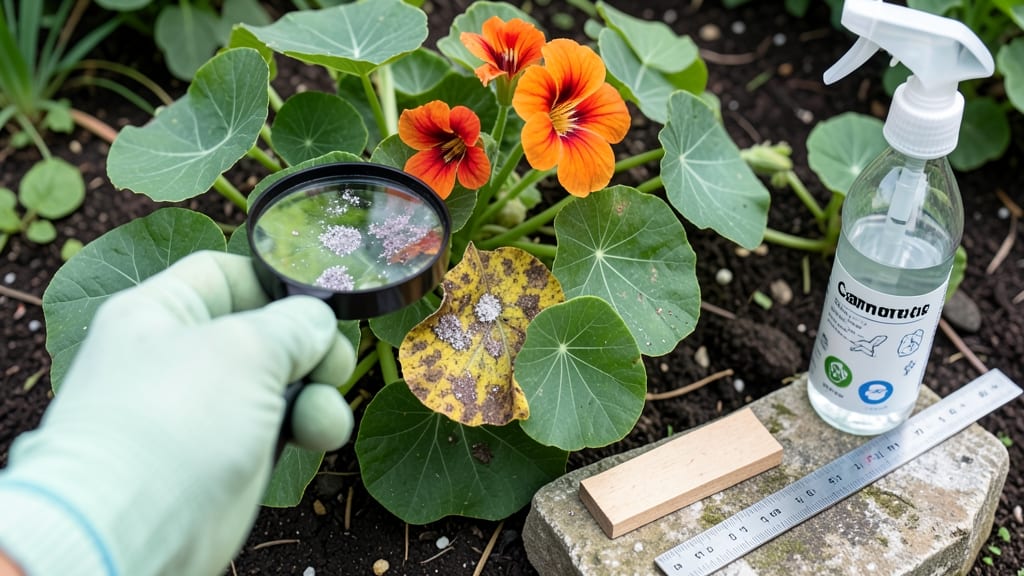
Nasturtium leaf diseases like downy mildew and powdery mildew turn your vibrant blooms into a sad, spotted mess—unless you catch them early. 🌿 I’ve lost entire patches of my favorite nasturtiums to these fungal invaders, but I’ve also saved others by acting fast with simple, organic fixes.
The key is spotting the symptoms before they spread: yellowing leaves, fuzzy white growth, or dark spots that look like someone splattered them with paint.
Most nasturtium leaf diseases thrive in damp, shady conditions, so prevention starts with proper spacing and airflow. I now plant mine in full sun with at least 12 inches between plants, and I avoid overhead watering—just a gentle soak at the base.
If you’ve already got a problem, don’t panic: a mix of neem oil and baking soda spray (1 teaspoon each per quart of water) works wonders when applied every 7–10 days. It’s like giving your plants a shield without harsh chemicals.
With the right care, your nasturtiums will bounce back stronger than ever. I’ve seen plants recover completely within 2–3 weeks of consistent treatment, and the blooms come back even more vibrant.
The secret? Staying one step ahead—removing infected leaves immediately and keeping the soil healthy with compost. Your garden will thank you with those bright, cheerful flowers all season long.
This approach works for any nasturtium variety, whether you’re growing them in containers or flower beds. The same principles apply whether you’re dealing with downy mildew, powdery mildew, or even bacterial blight. Once you master these basics, your nasturtiums will stay lush and disease-free, year after year.
Root Causes Of Nasturtium Leaf Problems
Understanding why nasturtium leaves develop diseases—especially fungal blights—starts with identifying the environmental triggers, pathogen behavior, and plant stress factors at play. These issues rarely occur in isolation; instead, they stem from a mix of biological, physical, and cultural conditions.
Below, we break down the key culprits behind nasturtium leaf diseases, so you can address them proactively.
Fungal pathogens like Alternaria, Botrytis, and Pseudomonas thrive in excess moisture, which creates the perfect breeding ground for spores. Nasturtiums, with their tender leaves, are especially vulnerable when:
- Poor drainage leaves roots waterlogged, weakening the plant’s defenses.
- Frequent overhead watering keeps foliage damp for extended periods, trapping spores against leaves.
- High humidity (above 70%) slows evaporation, prolonging moisture on surfaces.
💡 Pro Tip: Water at the base of the plant in the morning to allow leaves to dry quickly. Avoid mulching too heavily around stems, as this can trap moisture.
Nasturtiums under stress are far more susceptible to infections. Common stress factors include:
| Stress Factor | How It Weakens Leaves | Solution |
|---|---|---|
| Nutrient deficiencies (e.g., nitrogen, magnesium) | Yellowing (chlorosis) reduces photosynthesis, making leaves less resilient. | Test soil and amend with compost or balanced fertilizer. |
| Physical damage (e.g., hail, pests, rough handling) | Open wounds provide entry points for pathogens. | Use row covers or prune damaged leaves promptly. |
| Extreme temperature shifts (e.g., sudden cold snaps) | Cold stress disrupts cellular function. | Choose cold-hardy varieties or use frost cloth. |
🌡️ Watch for: Stunted growth or pale leaves—early signs your nasturtiums are struggling before diseases set in.
Diseases don’t appear out of nowhere—they hitchhike on tools, soil, or even wind. Nasturtiums catch infections from:
- Infected plant debris (e.g., old leaves left in beds or compost piles).
- Contaminated pruners or gloves transferring spores to healthy plants.
- Wind or water splashing from nearby infected crops (e.g., brassicas).
🔥 Prevention Step: Sterilize tools with a 10% bleach solution (1 part bleach to 9 parts water) between uses. Remove and dispose of (not compost) diseased leaves immediately.
Tightly packed nasturtiums or those grown in shaded, congested areas suffer from:
- Reduced airflow, which traps humidity and spores.
- Higher leaf-to-leaf contact, speeding up fungal spread.
💡 Fix It: Space plants 12–18 inches apart and prune to improve airflow. If growing in containers, ensure pots aren’t overcrowded.
Some nasturtium diseases, like downy mildew (Peronospora), persist in the soil as dormant spores. These pathogens:
- Survive in organic matter (e.g., old plant material).
- Reactivate when conditions (moisture + warmth) become favorable.
✨ Solution: Practice crop rotation—avoid planting nasturtiums (or related brassicas) in the same spot for 3–4 years. Solarize soil in late summer by covering beds with clear plastic for 4–6 weeks to kill pathogens.
Even "safe" herbicides or over-fertilization can disrupt nasturtiums’ natural defenses. Symptoms may mimic diseases, including:
- Brown, crispy leaf edges (from salt buildup in soil).
- Stunted growth (from excess synthetic nitrogen).
🔪 Action: Flush soil with water if you suspect chemical damage. Switch to organic fertilizers (e.g., fish emulsion) for a gentler approach.
Nasturtium leaf diseases are opportunistic—they exploit weaknesses in your plants and your growing practices. By tackling moisture control, plant health, airflow, and soil hygiene, you’ll starve pathogens of their ideal conditions.
The next section will cover how to spot these diseases early so you can act before they spread!
Quick Fixes for Nasturtium Leaf Troubles
Reviving your nasturtiums starts with identifying the root cause—but once you’ve spotted the issue, action is key! Below are practical, step-by-step solutions tailored to common nasturtium leaf diseases, from fungal blights to bacterial spots. Each fix includes prevention tips to keep your plants thriving long-term.
Symptoms: Yellowing, white powdery patches, or dark spots with fuzzy edges.
🔥 Immediate Treatment
- Prune Infected Leaves
- Use sterilized pruners (wipe with rubbing alcohol between cuts) to remove all affected foliage.
- Dispose of clippings in the trash (not compost)—fungal spores can survive in soil.
- Apply Fungicide Sprays - Baking Soda Spray: Mix 1 tsp baking soda + 1 quart water + a few drops of dish soap (as a surfactant). Spray early morning or evening to avoid burning leaves.
Reapply every 7–10 days until new growth appears. - Neem Oil: A natural fungicide and insect repellent. Use a 1% solution (1 tbsp neem oil + 1 tsp mild soap per quart of water).
Spray undersides of leaves where spores hide. Apply every 5–7 days for 2–3 weeks. - Copper Fungicide: For severe cases, use a ready-made copper-based spray (follow label instructions). Reapply after rain.
- Improve Airflow
- Space plants 12–18 inches apart to reduce humidity buildup.
- Remove nearby weeds that harbor spores.
- Use a fan on low speed near plants for 10–15 minutes daily (if growing indoors).
💡 Prevention Tips
- Rotate crops: Avoid planting nasturtiums in the same spot yearly.
- Water at the base: Keep leaves dry by watering early in the day (never overhead).
- Mulch properly: Use straw or pine needles (not thick layers) to allow airflow.
- Choose resistant varieties: Opt for ‘Alaska’ or ‘Dwarf Jewel’ nasturtiums, which tolerate humidity better.
Symptoms: Water-soaked brown spots with yellow halos, often oozing bacteria.
🍳 Treatment Steps
- Remove and Destroy Affected Leaves
- Cut off spotted leaves immediately and burn or trash them (do not compost).
- Wear gloves—bacterial infections spread easily.
- Disinfect Tools and Hands
- Wash pruners with 70% isopropyl alcohol before and after use.
- Rinse hands with soapy water to avoid cross-contamination.
- Use Copper or Hydrogen Peroxide Spray
- Copper fungicide (as above) can help prevent spread.
- Hydrogen peroxide spray: Mix 1 tbsp 3% hydrogen peroxide per quart of water. Spray every 3–4 days until new growth appears.
- Adjust Watering Habits
- Water only in the morning and avoid wetting leaves.
- Use a soaker hose or drip irrigation to keep foliage dry.
🔥 Prevention Tips
- Sterilize soil: Solarize soil in late summer by covering it with clear plastic for 4–6 weeks to kill bacteria.
- Rotate planting locations every 2–3 years.
- Avoid overhead watering—stick to drip irrigation or hand watering at the base.
Symptoms: Holes, sticky residue (honeydew), or fine webbing on leaves.
👨🍳 Natural Pest Control
- Blast Off Pests with Water
- Spray leaves with a strong stream of water to knock off aphids or mites.
- Introduce Beneficial Insects
- Release ladybugs or lacewings (available at garden centers) to eat pests naturally.
- Apply Insecticidal Soap
- Mix 1 tbsp castile soap + 1 quart water. Spray directly on pests (avoid flowers). Reapply every 3–5 days.
- Use Diatomaceous Earth (DE)
- Sprinkle food-grade DE around the base of plants. It dehydrates pests but is harmless to plants.
✨ Prevention Tips
- Encourage biodiversity: Plant marigolds or basil nearby to repel pests.
- Inspect new plants before bringing them indoors or into the garden.
- Remove debris: Clear fallen leaves where pests hide.
Symptoms: Yellowing, curling, or crispy edges (not fungal/bacterial).
🔪 Fixing the Problem
- Check Watering Practices
- Overwatering? Let soil dry 1–2 inches deep between waterings. Use a moisture meter if unsure.
- Underwatering? Water deeply once a week (more in extreme heat).
- Adjust Sunlight Exposure
- Move pots to partial shade if leaves scorch in direct afternoon sun.
- Use shade cloth (30–50%) for outdoor plants in hot climates.
- Fertilize Correctly
- Too much nitrogen? Switch to a balanced 10-10-10 fertilizer or compost tea.
- Deficient in magnesium? Sprinkle Epsom salt (1 tbsp per gallon of water) monthly.
🎯 Prevention Tips - Test soil pH: Nasturtiums prefer 6.0–7.0.
Adjust with lime (to raise pH) or sulfur (to lower pH). - Mulch lightly: Use straw or wood chips to retain moisture without suffocating roots. - Monitor weather: Cover plants with frost cloth in cold snaps or shade cloth during heatwaves.
Final Pro Tip: 💡 Always sterilize tools and containers before reuse—old fungal/bacterial spores can reinfect plants! With these fixes, your nasturtiums should bounce back in 2–4 weeks, and your garden will stay disease-free with consistent care.
Frequently asked questions
What are the most common nasturtium leaf diseases I should watch for?
The three most troublesome nasturtium leaf diseases are downy mildew (grayish-white fuzzy patches), powdery mildew (white powdery coating), and bacterial blight (water-soaked brown spots with yellow halos). These thrive in damp, humid conditions, so proper spacing and airflow are your first line of defense.
Can I still use my nasturtium leaves if they have small spots?
Only if the spots are very minor and the rest of the leaf is healthy. Nasturtium leaves are edible, but avoid any with yellowing, powdery growth, or oozing bacteria. For cooking, use the youngest, healthiest leaves from the center of the plant. When in doubt, toss the questionable leaves to prevent spreading diseases to other plants.
How often should I spray my nasturtiums with neem oil to prevent diseases?
Apply a neem oil spray every 5–7 days during humid seasons or after heavy rain. For prevention, a monthly application works well when conditions are dry. Always spray in the early morning or evening to avoid leaf burn, and focus on the undersides of leaves where fungal spores hide. Mix 1 tablespoon neem oil with 1 teaspoon mild soap per quart of water for best results.
Will pruning diseased leaves help stop the spread?
Pruning infected leaves immediately removes the food source for pathogens and stops spores from spreading. Always use sterilized pruners (wipe with rubbing alcohol between cuts) and dispose of diseased leaves in the trash—not compost. This simple step can save your entire plant from further damage.
Can nasturtium leaf diseases spread to other plants in my garden?
Yes, many nasturtium diseases—especially fungal ones like downy mildew—can spread to nearby plants through wind, water splashing, or contaminated tools. To prevent cross-contamination, sterilize your tools between plants, avoid overhead watering, and remove infected nasturtiums completely. Keep nasturtiums spaced 12–18 inches apart to improve airflow and reduce disease risk.