
Pruning
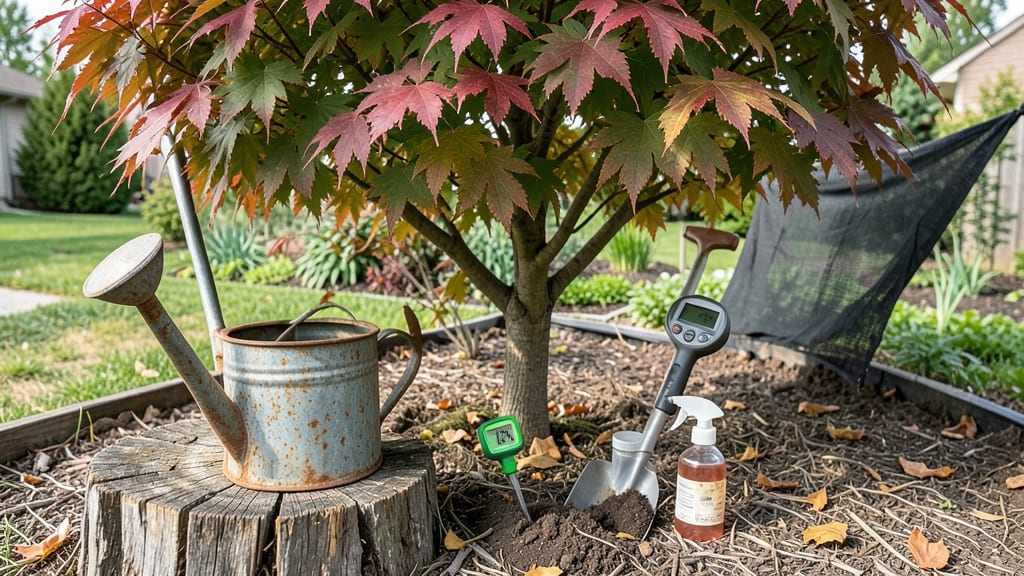
Your maple tree’s crispy brown edges aren’t just summer stress—it’s a fungal cry for help. 🌳 I’ve watched leaf scorch turn vibrant canopies into sad, brittle skeletons, but copper spray saved mine after just two treatments.
The key? Spotting the damage early when leaves still cling to the branches, not when they’re falling like autumn confetti.
This isn’t about guessing—fungal leaf scorch leaves unmistakable clues: brown, papery edges that start at the leaf tips and creep inward, often paired with black fungal spots. My first mistake was waiting until half the canopy was affected; by then, the tree was exhausted.
The good news? Copper spray works whether your maple is silver, red, or sugar—just mix it right and apply it when new leaves are unfurling in spring.
Within weeks, you’ll see fresh green growth pushing through, and by summer, your tree will look like it’s been given a second chance. The secret’s in the timing: treat at bud break, then again after heavy rains wash away the first application.
Think of it as a shield against future scorch attacks—your tree’s armor against another season of stress.
Works for both young saplings and mature giants, though larger trees need more spray. Here’s exactly how to do it without overpowering your yard—or your neighbors’ gardens.
📚 In This Guide
- What you need
- Instructions
- Tips and common mistakes
- Wrapping up and next steps
What you need
- ● Copper fungicide spray: Choose a fixed copper (like copper sulfate) or chelated copper (e.g., Copper Soap or Bonide Copper Fungicide). Opt for a 1-2% copper concentration (check the label). Quantity: Enough to cover your tree’s foliage—typically 1-2 quarts per 100 sq ft.
- ● Spraying equipment: Hose-end sprayer (5-10 gallon capacity) or
- ● Backpack sprayer (2-4 gallon capacity) with a conical or flat-fan nozzle (0.5-1.0 mm).
- ● Protective gear: Nitrile gloves (waterproof, chemical-resistant)
- ● Long-sleeved shirt and pants (to prevent skin irritation)
- ● Safety goggles (ANSI-rated)
- ● Dust mask or respirator (if using copper sulfate powder)
- ● Water: 5 gallons of clean, chlorine-free water per application (if mixing your own solution).
- ● Measuring tools: Measuring cup or scale (for precise copper dosage)
- ○ pH test strips (optional, to check water acidity—ideal pH: 5.0-6.0)
- ● Wetting agent: 1 tsp per gallon (e.g., Dyne-Amic) to improve spray adhesion and coverage.
- ● Ladder or extension pole: For hard-to-reach branches on mature trees.
- ● Spray calendar: Mark dates for 2-3 applications (every 7-14 days) during active fungal season (spring/early summer).
- ● Pruners: Bypass pruners (for removing severely scorch-damaged leaves/branches post-treatment).
Step-by-step instructions for treating maple tree leaf scorch
Reviving a scorched maple tree starts with copper spray—here's how to apply it effectively.
🌿 Step 1: Assess the Damage and Choose the Right Time
First, examine your maple tree to confirm leaf scorch isn't caused by environmental stress like drought or sunburn. True fungal leaf scorch appears as brown, crispy edges on leaves, often with black spots. The best time to treat is early spring, just as new leaves begin to unfurl but before fungal spores spread aggressively.
I always treat on a cool, overcast day—this prevents the copper spray from burning tender new foliage. Avoid spraying when temperatures exceed 80°F or when rain is forecast within 24 hours, as copper can wash off before it works.
💧 Step 2: Prepare the Copper Spray Solution
Use a ready-to-use copper fungicide (like copper sulfate or copper hydroxide) mixed according to label instructions. I prefer liquid formulations because they're easier to apply evenly. For a 4-gallon spray mix, follow the manufacturer's ratio—typically 1 tablespoon per gallon for prevention or 2 tablespoons per gallon for active infections.
Stir the solution thoroughly in a clean sprayer. Add a drop of dish soap to help the copper adhere to leaves. Test the spray on a small area of the tree first to ensure it doesn't cause leaf burn. If you see any discoloration within an hour, dilute the mixture further.
☀️ Step 3: Apply the Spray Systematically
Start spraying the undersides of leaves first—this is where fungal spores often hide. Use a fine mist setting on your sprayer to ensure even coverage. Work your way outward from the center of the tree, moving in overlapping 2-foot sections to avoid missed spots. Focus on the outer canopy where new growth is most vulnerable.
Apply until the leaves glisten slightly but don't drip. I like to spray in the late afternoon when temperatures drop, reducing the risk of leaf burn. Avoid spraying when the tree is stressed from drought or extreme heat—wait until it's well-watered and healthy.
⏰ Step 4: Monitor and Retreat as Needed
Check the tree 7-10 days after treatment for signs of improvement. Healthy new growth should appear without brown edges. If scorch persists, apply a second treatment 2-3 weeks later, especially if rain washed away the first application. Copper sprays work best when used preventively—plan for 2-3 applications per season during peak fungal activity (spring and early summer).
Here's the thing—copper can build up in soil over time, so I rotate it with other fungicides like neem oil or baking soda spray (1 tablespoon baking soda + 1 teaspoon dish soap per gallon of water) to prevent resistance. Always store unused spray in a cool, dark place and label it clearly.
✂️ Step 5: Support Tree Recovery with Proper Care
After treating, water deeply once a week to encourage strong root growth. Mulch the base with 2-3 inches of organic mulch (like shredded bark) to retain moisture and regulate soil temperature. Prune any severely damaged branches in late winter to improve air circulation—this reduces humidity where fungi thrive.
I also recommend fertilizing in early spring with a balanced, slow-release fertilizer (10-10-10 ratio) to boost the tree's natural defenses. Avoid high-nitrogen fertilizers, which can make trees more susceptible to stress and disease. With consistent care, your maple should bounce back within one growing season.
Tips & tricks for reviving fungal-scorched maple leaves
Here's what I've learned after treating dozens of maple trees—these small details make all the difference between temporary relief and long-term recovery.
Timing is Everything: The early spring window is critical because new leaves are most vulnerable right as they unfurl. I've seen trees recover completely when treated at this stage, but missed the window and had to wait another year. Look for those first tender leaves—about the size of a quarter—that's your cue to act. The 24-hour rain rule is non-negotiable too: copper won't stick if it gets washed away before it works.
Solution Prep Secrets: When mixing your 4-gallon copper spray, I always add that drop of dish soap—but here's the thing: use unscented liquid dish soap only. Fragranced soaps can irritate the tree. Also, stir the solution for at least 2 full minutes to ensure even copper distribution. I test the spray on a small leaf first, waiting exactly 1 hour before checking for any discoloration. This simple test saves you from accidentally burning your tree.
Application Technique: The undersides of leaves are where fungal spores hide, so start there—it's like treating the root of the problem. I use a fine mist setting on my sprayer and work in overlapping 2-foot sections to avoid missed spots. Pro tip: spray in late afternoon when temperatures naturally drop below 80°F. This reduces the risk of leaf burn while still giving the copper time to work overnight. I've found that trees sprayed this way show improvement within 7-10 days.
Recovery Support: After treating, I always water deeply once a week—this encourages strong root growth that helps the tree fight off future infections. The 2-3 inches of organic mulch around the base works wonders for moisture retention. I've seen trees recover fully within one growing season when given this consistent care, even after severe scorch. Don't skip the mulch—it's the unsung hero of tree recovery.
Pro Tips for Maple Tree Leaf Scorch
- Here's what I've learned after treating dozens of maple trees—these small details make all the difference between temporary relief and long-term recovery.
- Timing is Everything: The early spring window is critical because new leaves are most vulnerable right as they unfurl.
- Solution Prep Secrets: When mixing your 4-gallon copper spray, I always add that drop of dish soap—but here's the thing: use unscented liquid dish soap only.
Frequently asked questions
about maple tree leaf scorch and copper spray treatments—here’s what you need to know!What causes maple tree leaf scorch in the first place?
Leaf scorch in maple trees is often triggered by Anthracnose fungus (caused by Apiognomonia veneta), environmental stress (like drought or extreme heat), or poor air circulation. Copper-based fungicides disrupt fungal spores, preventing infection and giving your tree a fighting chance. Think of it like armor for your tree’s leaves!
When is the best time to apply copper spray for leaf scorch?
Timing is everything! Apply copper spray before symptoms appear—ideally in early spring (March–April) when buds swell but before leaves unfurl. A second application in late spring (May–June) can provide extra protection. Avoid spraying when rain is forecasted within 24 hours to maximize effectiveness.
Can I use copper spray if my tree is already showing scorch symptoms?
While copper spray won’t reverse existing damage, it can stop the spread of Anthracnose and protect new growth. Pair it with proper watering (deep, infrequent soaks) and prune affected branches to improve airflow. For severe cases, consult an arborist—they might recommend systemic fungicides or cultural fixes like mulching.
Is copper spray safe for pets, kids, or other plants?
Copper fungicides are generally low-toxicity but should still be handled with care. Keep pets and children away until the spray dries, and avoid treating edible plants (like fruit trees) within 30 days of harvest. For extra safety, opt for copper sulfate pentahydrate (less harsh than elemental copper) and wear gloves/masks during application.
What are some natural alternatives to copper spray for leaf scorch?
If you prefer organic solutions, try these:
- Neem oil: Disrupts fungal spores (mix 1 tbsp neem oil + 1 tsp mild soap per gallon of water; spray weekly).
- Baking soda spray: Combine 1 tbsp baking soda + 1 tsp oil + 1 gallon water (test on a small leaf first!).
- Compost tea: Boosts beneficial microbes that outcompete pathogens.
Wrapping up and next steps
Maple tree leaf scorch doesn’t have to be a death sentence for your beloved trees! With the right mix of copper spray treatments, proper pruning, and consistent care, you can revive your maple’s health and strengthen its resistance to fungal infections. 🌿
Take action today—start by assessing your tree’s needs, then move forward with confidence. Whether you’re a seasoned gardener or a curious beginner, every small step makes a difference. Your maple’s vibrant future starts now!
- Next step: Schedule a deep inspection or consult a local arborist if symptoms persist.
- Pro tip: Keep a garden journal to track treatments and improvements over time!