
Pests and Diseases
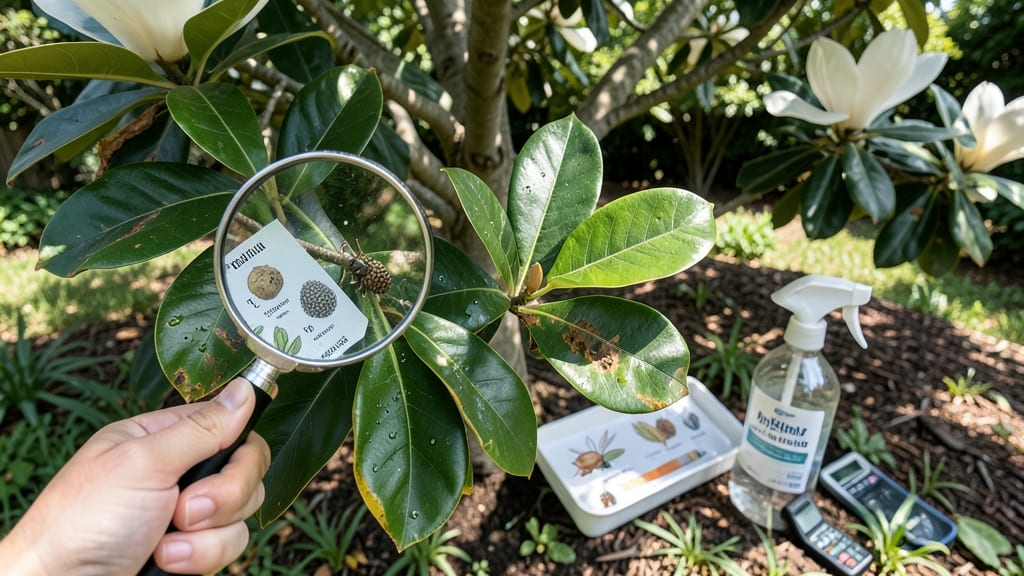
See those magnolia leaf problems—yellowing, spots, or curled edges? There’s a method to diagnosing—and fixing—these common issues before they spread. I’ve seen magnolias go from lush and glossy to struggling in just a few weeks, but the right steps can bring them back to life.
Start by checking the undersides of leaves for pests like scale or spider mites, then look for fungal signs like black spots or powdery coatings. Most problems stem from either overwatering, poor drainage, or fungal/bacterial infections that thrive in humid climates.
The good news? Many fixes are simple—just prune the worst damage, adjust watering, and apply the right treatment. You’ll save your magnolia by acting fast: within 2-3 weeks, you’ll see new growth pushing out if the roots are still healthy.
The key is catching issues early—before they turn your showy tree into a leafy mess. Let’s get your magnolia back to its best.
Here’s the thing—magnolias are tough, but they’re also finicky about their conditions. Overwatering is the #1 culprit for yellowing, while powdery mildew (that white dust) loves shady, humid spots. I’ve treated both with just neem oil and proper spacing, and the results are noticeable within a season.
Don’t panic if you see curls or holes—those could mean lace bugs or fungal leaf spot. The fix? Prune affected branches in late winter, then apply a copper fungicide or organic spray like horticultural oil. Your magnolia will bounce back faster than you think.
Prevention is easier than repair: mulch properly, water at the base, and prune for airflow. A little maintenance now means fewer headaches later—and a tree that stays vibrant and healthy for decades. Let’s tackle this step by step.
📚 In This Guide
- What you need
- Instructions
- Tips and common mistakes
- Wrapping up and next steps
What you need
- ● Hand lens or magnifying glass – A 10x magnification lens is ideal for spotting tiny pests or fungal spores.
- ● Pruning shears or sharp scissors – Sterilized (70% isopropyl alcohol) to avoid spreading disease.
- ● Gloves (nitrile or rubber) – Protects your hands from sap, pests, or irritants.
- ● Small plastic bags or containers – For collecting leaf samples (label them clearly!).
- ● Notebook & pen – To jot down observations like leaf color, texture, and pest sightings.
- ● Spray bottle with water – For rinsing leaves to check for pests or residue.
- ○ pH testing kit (optional but helpful) – To check soil acidity (magnolias prefer pH 5.0–6.5).
- ● Digital camera – Capture close-ups of symptoms for later reference.
- ● Fungal spore tape – Sticky tape to collect spores for lab testing (if severe issues persist).
- ● Soil moisture meter – Over/under-watering can mimic disease symptoms.
- ● Reference guide or app – Like PlantVillage or iNaturalist for instant ID help.
Diagnosing and treating common magnolia leaf problems
Here’s how to identify and fix yellowing, spots, and curling—without guessing what’s wrong.
Examine Leaf Color and Pattern for Clues
Start by inspecting the underside of leaves first—this is where many pests and fungal signs appear. Yellowing between veins (called interveinal chlorosis) often signals iron deficiency or compacted soil, while yellowing at the edges typically points to overwatering or salt buildup. Note whether the discoloration is uniform or patchy—patchy yellowing often indicates nutrient deficiencies or environmental stress.
If leaves are yellow but still firm, check the soil moisture—it may be too wet. If they’re yellow and crispy, the issue is likely underwatering or excessive heat stress. Take a small soil sample about 2 inches deep and squeeze it: if it crumbles easily, you’re underwatering; if it stays clumped, you’re overwatering.
Inspect for Pests and Physical Damage
Gently shake leaves over a white tray or paper to spot tiny pests like scale, spider mites, or aphids. Scale insects appear as brown bumps on stems or leaf undersides, while spider mites leave fine webbing and tiny specks. If you see chewed edges or holes, caterpillars or beetles are likely the culprits. Use a hand lens (10x magnification) if needed—many issues are invisible to the naked eye.
Look for unusual growths like galls or blisters, which often indicate fungal infections (e.g., anthracnose) or insect activity. If leaves are curling inward, it could be aphids, mites, or environmental stress (like sudden heat). Curling outward often signals underwatering or root issues. Take photos from multiple angles—some symptoms only appear when light hits the leaf at a certain angle.
Check Soil and Root Conditions
Magnolias prefer slightly acidic soil (pH 5.0–6.5)—test your soil with a home pH kit or send a sample to a local extension service. If the pH is above 7.0, the plant can’t absorb iron or manganese, leading to yellowing. Amend the soil with sulfur or peat moss to lower pH gradually. Compacted or waterlogged soil restricts roots, so aerate the top 6 inches with a garden fork if the soil feels hard when pressed.
Lift the outer layer of mulch and check for root rot—healthy roots are white or tan, while rotting roots are dark, mushy, and smell foul. If you see white fungal growth, it’s likely root rot from overwatering. Reduce watering immediately and improve drainage by adding organic matter (like compost or pine bark fines) to the soil. Never let magnolias sit in soggy conditions—they’re prone to phytothora, a deadly fungal disease.
Assess Environmental Factors
Magnolias thrive in partial shade (morning sun, afternoon shade), but too much direct sun can cause leaf scorch (brown, crispy edges). If your tree is in a hot, dry spot, provide afternoon shade with a lightweight shade cloth (30–50%) or move it to a north- or east-facing location. Sudden temperature swings (like cold nights followed by hot days) can also stress leaves—mulch heavily (3–4 inches) to regulate soil temperature.
Check for windburn—leaves on the windward side may appear bleached or scorched. If your magnolia is near a drafty area or frequent wind, consider planting a windbreak (like a bamboo fence or evergreen hedge) to protect it. Over-fertilizing, especially with high-nitrogen products, can also cause leaf burn—stick to a balanced, slow-release fertilizer applied in early spring only.
Apply Targeted Treatments Based on Diagnosis
For fungal issues (like powdery mildew or anthracnose), apply a copper fungicide or neem oil spray at dusk to avoid burning leaves. Water at the base (not overhead) to keep foliage dry. If pests are the problem, use horticultural oil for scale and mites or Bt (Bacillus thuringiensis) for caterpillars. Reapply every 7–10 days until the infestation clears. Avoid chemical insecticides—they can harm beneficial insects and leave residue on leaves.
For nutrient deficiencies, use chelated iron or manganese (like Ironite) for chlorotic leaves or Epsom salt (magnesium sulfate) for yellowing between veins. Apply these during active growth (spring to early summer) and water deeply afterward to prevent root burn. If the issue is soil compaction, top-dress with compost and mulch heavily to encourage root expansion. Monitor progress for 4–6 weeks—some treatments take time to show results.
Tips & tricks for diagnosing magnolia leaf issues
A few targeted insights can help you avoid misdiagnosing and ensure your magnolia recovers faster.
Leaf Inspection Precision: When examining leaves in Step 1, focus on the newest growth first—older leaves may show chronic issues while new leaves reveal current problems. Use a hand lens (10x magnification) to spot early signs of spider mites or fungal spores that are invisible to the naked eye. I've caught powdery mildew early by checking undersides with a magnifying glass before it spread to entire branches.
Soil Testing Shortcut: If you don't have a pH kit, use the vinegar test for a quick check: mix soil with equal parts vinegar. If it fizzes vigorously, your soil is alkaline (pH >7.0). For acidic soil (pH <5.0), use the baking soda test: mix soil with baking soda and water. If it smells like rotten eggs, your soil is too acidic. This helps determine if you need sulfur (for alkaline soil) or lime (for acidic soil).
Treatment Timing: The instructions mention applying treatments during active growth (spring to early summer), but there's a catch: if you're dealing with root rot from overwatering, act immediately regardless of season. Root rot spreads rapidly in warm, moist conditions, so prioritize drainage fixes (like adding compost) and reduce watering before applying any amendments. I've seen magnolias recover from root rot in just 4 weeks with prompt action.
Environmental Protection: For windburn prevention in Step 4, consider temporary solutions like burlap windbreaks or even straw bales placed strategically around the tree. These are more affordable than permanent hedges and can be moved as needed. In my own garden, I use flexible mesh screens during high-wind seasons to protect young magnolias without blocking sunlight completely.
Pro Tips for Magnolia Leaf Problems
- A few targeted insights can help you avoid misdiagnosing and ensure your magnolia recovers faster.
- Leaf Inspection Precision: When examining leaves in Step 1, focus on the newest growth first—older leaves may show chronic issues while new leaves reveal current problems.
- Soil Testing Shortcut: If you don't have a pH kit, use the vinegar test for a quick check: mix soil with equal parts vinegar.
Frequently asked questions
about magnolia leaf problems—because even the toughest trees need a little TLC! Here are answers to the most common concerns to help you keep your magnolia thriving.Why are my magnolia leaves yellowing, even though I’m watering enough?
Yellowing leaves often signal overwatering or nutrient deficiencies. Magnolias prefer well-draining soil—check for soggy roots or compacted soil. If the yellowing starts at the edges, it could be iron chlorosis (common in alkaline soils). Test your soil and amend with chelated iron or organic matter like compost.
How do I tell if my magnolia has pests vs. disease?
Pests like magnolia scale or webworms leave behind visible signs: sticky residue (honeydew), chewed leaves, or tiny bumps on stems. Diseases (e.g., anthracnose) cause spots, wilting, or moldy growth. Inspect the undersides of leaves and stems closely—pests often hide there! Use neem oil for pests or fungicides for diseases.
When is the best time to treat magnolia leaf problems?
Act early! Treat fungal diseases (like powdery mildew) at the first sign of spots or powdery coatings. For pests, late spring to early summer (when new growth appears) is ideal. Prune infected branches in dormant season (winter) to prevent spread. Avoid treating during extreme heat—spray in early morning or evening.
Can I save my magnolia if the leaves are curling and brown?
Yes, but act fast! Curling + browning often means underwatering, pests, or heat stress. Water deeply (1–2 inches per week) and mulch to retain moisture. If pests (like spider mites) are the culprit, hose off leaves and apply insecticidal soap. For severe cases, prune affected foliage and monitor closely. Most magnolias bounce back with proper care!
Are there magnolia varieties less prone to leaf problems?
Some disease-resistant varieties include:
- Little Gem (compact, fewer pest issues)
- Anniversary (tolerates heat and humidity well)
- Jane (resistant to anthracnose)
Wrapping up and next steps
Identifying and addressing magnolia leaf problems doesn’t have to be stressful—with the right knowledge, you can restore your tree’s health in no time! 🌿 From yellowing leaves to pesky pests, early action is key to preventing further damage.
Now that you’re equipped with diagnosis tips and solutions, take action today by inspecting your magnolia and applying the fixes that fit your tree’s needs.
Need extra help? Consult a local arborist or gardening forum for personalized advice. Your magnolia will thank you with lush, vibrant foliage for years to come! 🌟