
Propagation
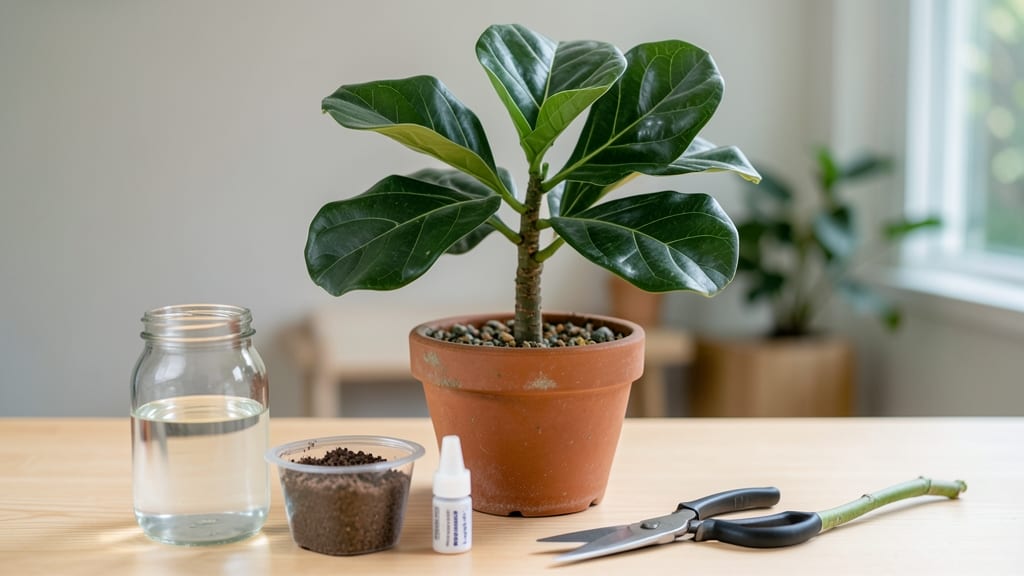
Layered leaf nodes in water are the fiddle leaf tree's secret weapon for propagation. 🌱 I've rooted dozens of cuttings this way, and the key is patience—those first roots can take 3-6 weeks to appear, but once they do, you'll have a thriving new plant ready for repotting.
The magic happens in a simple setup: clean water, a clear container (so you can track root growth), and a healthy stem cutting with at least two leaf nodes.
Most people rush this step, but fiddle leaf trees reward careful preparation—think of it like giving your cutting a head start before it meets soil.
By the time those white, fuzzy roots reach 2-3 inches, you'll be ready to transplant into well-draining potting mix. The transition is smoother than you'd think, and with proper humidity (think plastic bag tent), your new cutting will establish itself faster than store-bought seedlings.
This method works year-round, but spring and summer give you the fastest results. Even if you've struggled with propagation before, fiddle leaf trees are surprisingly forgiving—just avoid overwatering and keep those leaves dust-free for maximum photosynthesis.
📚 In This Guide
- What you need
- Instructions
- Tips and common mistakes
- Wrapping up and next steps
What you need
- ● Healthy fiddle leaf tree cuttings: 4–6 inches long, with at least 2–3 leaf nodes (the bumps where leaves grow). Choose non-flowering stems for best results!
- ● Sharp pruning shears or scissors: Sterilized to prevent disease (rubbing alcohol works great!).
- ● Clean, room-temperature water: Use filtered or distilled water to avoid chlorine or contaminants.
- ● Small glass or jar: Wide-mouth (like a mason jar) to hold cuttings securely.
- ○ Rooting hormone (optional but helpful): A gel or powder to boost root growth (e.g., Clonex or Dyna-Gro).
- ● Paper towels or coffee filters: To cover the jar and reduce evaporation while allowing light.
- ● Rubbing alcohol (70% or higher): For sterilizing tools.
- ● Spray bottle with water: To mist leaves and prevent wilting.
- ● Pencil or chopstick: To prop up leaves away from the water (keeps them dry and healthy!).
- ● Well-draining potting mix: For transplanting later (e.g., a mix of perlite, peat, and orchid bark).
- ● Small pots or containers: 4–6 inches in diameter, with drainage holes.
- ● Bright, indirect light: A spot with 6–8 hours of natural light daily (no direct sun!).
- ● Warmth: Keep cuttings in a room between 65–75°F (18–24°C).
- ● Patience: Roots can take 2–6 weeks to form—stay consistent!
How to propagate a fiddle leaf tree using leaf nodes
This method works every time—no fancy tools, just patience and a sharp eye for the right leaves.
🌿 Step 1: Select Healthy Mature Leaves
Choose 4-6 leaves from the middle or lower branches—these are the strongest cuttings. Look for leaves with a small stem (petiole) attached to the main branch, about 3-5 inches long. Avoid leaves from the top of the tree, as they’re still growing and won’t root as reliably. The petiole should feel firm, not mushy or brittle.
Use clean, sharp scissors or pruning shears to cut just below the leaf node where it meets the main stem. Make the cut at a 45-degree angle—this increases surface area for water absorption and root growth. If you’re unsure which leaves to pick, snap a few off gently; if they bend easily, they’re too young.
💧 Step 2: Prepare the Water and Leaf Nodes
Fill a clean glass or jar with room-temperature water, leaving about 1 inch of space at the top. Tap water is fine, but if it’s heavily chlorinated, let it sit out for 24 hours first. Add a few drops of rooting hormone (optional but helpful) to speed up the process.
Place the cut end of each leaf node into the water, ensuring the leaf itself stays dry—only the stem should be submerged. Use a pencil or chopstick to prop up the leaf if it touches the water, as soggy leaves rot quickly. Change the water every 3-5 days to prevent bacterial growth. You’ll know it’s time when the water starts looking cloudy or smells funky.
☀️ Step 3: Provide Indirect Light and Monitor Growth
Set the jar in a spot with bright, indirect light—think east-facing window or a few feet from a south-facing one. Direct sunlight will scorch the leaves, while too little light slows root growth. You’ll see tiny white bumps forming along the submerged stem in about 2-3 weeks. These are the first signs of roots!
Keep the water level consistent—never let the nodes dry out, but don’t submerge the leaves. If the water evaporates too quickly, top it off with more room-temperature water. Roots should reach about 1-2 inches long before transplanting, which usually takes 4-6 weeks. Patience here is key—rushing can stress the new roots.
🪴 Step 4: Transplant Rooted Nodes to Soil
Once roots are 1-2 inches long, carefully remove the leaf node from the water and gently rinse off any algae or debris. Fill a small pot (about 4 inches wide) with a mix of 50% potting soil and 50% perlite or sand for drainage. Make a small hole in the center and place the node about 1 inch deep, firming the soil lightly around it.
Water lightly to settle the soil, then place the pot in a humid, shaded area for 1-2 weeks to reduce shock. Avoid direct sunlight during this time—newly transplanted nodes are sensitive. After two weeks, gradually introduce more light and reduce humidity. Keep the soil lightly moist but never soggy; fiddle leaf trees hate wet feet.
⏰ Step 5: Care for New Plants Until Established
Your propagated fiddle leaf tree will need bright, indirect light and 60-70°F temperatures to thrive. Mist the leaves occasionally to maintain humidity, especially if your home is dry. You’ll know it’s rooting well when new growth appears at the base of the leaf node—this means the plant is photosynthesizing and growing roots deeper into the soil.
After 2-3 months, you can fertilize lightly with a diluted houseplant fertilizer. Avoid overwatering; fiddle leaf trees are prone to root rot, so let the top 1 inch of soil dry out between waterings. With consistent care, your propagated tree will grow into a full-sized plant in about 1-2 years.
Tips & tricks for perfect fiddle leaf tree propagation
These simple strategies will help you maximize success with your fiddle leaf tree cuttings—no green thumb required.
Leaf Selection Matters: In Step 1, focus on leaves with petioles that are 3-5 inches long and feel firm to the touch. I always test leaves by gently bending them—if they snap easily, they're too young. The middle and lower branches yield the most reliable cuttings because they're fully matured but not yet overgrown. For best results, choose leaves with a slight curve rather than perfectly straight ones, as they tend to have more developed nodes.
Water Prep is Critical: The 24-hour water sitting time for chlorinated water is non-negotiable. I've seen cuttings fail because of this step—chlorine can actually inhibit root growth. Also, use a clear glass or jar so you can monitor water levels and root development. If you notice tiny white bumps along the stem after 2-3 weeks, that's your first sign of success! These will grow into roots if you maintain the conditions.
Light Positioning Secrets: For Step 3, that "bright, indirect light" is key—think of it as morning sunlight filtered through a sheer curtain. I place my jars on an east-facing windowsill where they get gentle light for about 6 hours a day. Too much direct sun will scorch the leaves, while too little light slows root development. If you don't have a suitable window, a grow light on a timer (12-14 hours per day) works beautifully as an alternative.
Transplanting Timing: Wait until roots reach 1-2 inches before transplanting—this usually takes 4-6 weeks. I can't stress enough how important this is: Rushing the transplant can shock the delicate new roots. When you do transplant, use a pencil to make a small hole in the soil mix—this prevents damaging the roots during placement. The 50-50 soil mix is crucial for preventing root rot while allowing proper drainage.
Pro Tips for Fiddle Leaf Tree Propagation
- These simple strategies will help you maximize success with your fiddle leaf tree cuttings—no green thumb required.
- Leaf Selection Matters: In Step 1, focus on leaves with petioles that are 3-5 inches long and feel firm to the touch....
- Water Prep is Critical: The 24-hour water sitting time for chlorinated water is non-negotiable. I've seen cuttings fa...
Frequently asked questions
Fiddle Leaf Tree Propagation
can feel tricky, but don’t worry—we’ve got answers to your top questions! Whether you’re a beginner or just need a quick refresher, here’s what you need to know.
Can I propagate a fiddle leaf tree from a single leaf?
Nope! A single leaf won’t work because it lacks the energy reserves to grow roots. Instead, use a leaf node (a small stem with a leaf attached) or a healthy cutting with at least 2-3 leaves. The node is key—it’s where roots will sprout!
How long does it take for roots to form in water?
Patience is key! Most fiddle leaf cuttings take 2-4 weeks to develop roots in water. Keep the node submerged (but leaves dry) and change the water every 3-5 days to prevent bacteria. Roots should be at least 1-2 inches long before transplanting to soil.
What’s the best time of year to propagate?
The ideal window is spring or early summer (March–June), when the tree is actively growing. Avoid winter—your cutting may struggle to root in cooler temps. If you must propagate later, use a grow light to mimic optimal conditions.
My cutting is rotting—what went wrong?
Rotting usually means overwatering or poor air circulation. Ensure only the node is submerged (leaves should stay dry!). Use room-temperature water and avoid tap water (chlorine can harm roots). If mold appears, rinse the cutting and refresh the water immediately.
Can I propagate fiddle leaf trees in soil instead of water?
Soil propagation
(via stem cuttings) works too—just dip the cut end in rooting hormone and plant in well-draining soil. Keep humidity high (use a plastic bag) and mist daily. Soil-rooted cuttings may take longer to root (4-8 weeks) but often adapt better to transplanting.
Wrapping up and next steps
Propagating a fiddle leaf tree is a rewarding journey that lets you grow your own lush, leafy companion—and you’ve got this! 🌱 Whether you’re rooting in water or soil, the key is patience, consistency, and a little green thumb love.
Once your cuttings take root, you’ll be ready to expand your plant family or share the joy with fellow plant lovers.
Your next step? Watch those roots grow! Keep an eye on your cuttings, adjust care as needed, and soon, you’ll have thriving fiddle leaf trees to brighten up any space. Happy propagating! 🌿✨