
Shrubs
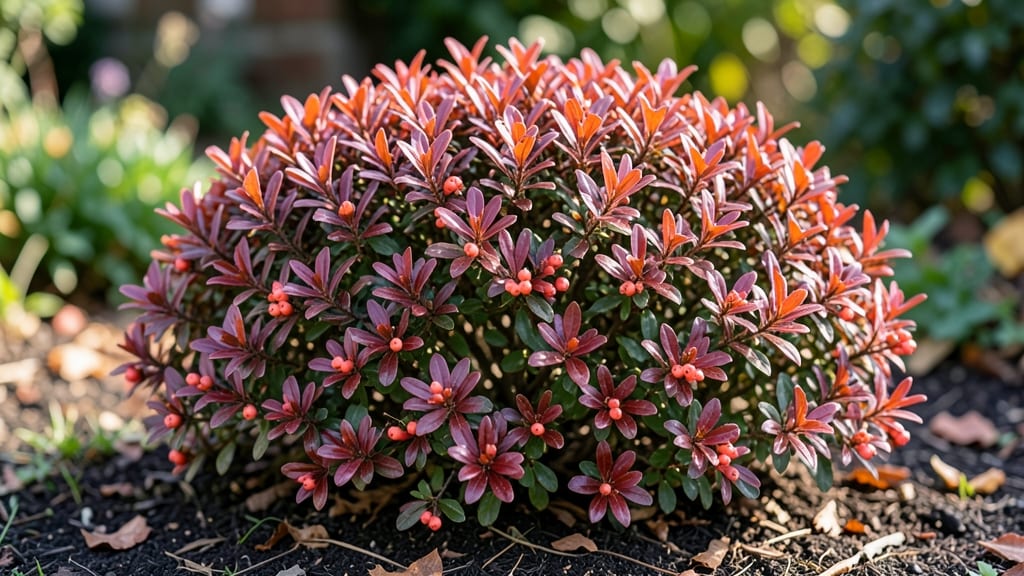
That deep burgundy foliage stays stunning through every season—no matter how cold your winters get. 🌿 The dark red leaf bush (Berberis thunbergii 'Atropurpurea') is the secret weapon for gardeners who want bold color without the fuss of seasonal replacements.
I planted mine last spring, and it's now the focal point of my front yard, thriving through snow and heat alike.
You'll need well-draining soil, 6 hours of sunlight daily, and space to spread 3-5 feet wide—it grows slowly but steadily. The best time to plant is in early spring or fall, when temperatures are mild but not extreme.
Cold-hardy down to USDA Zone 4, this bush handles frost like a champ, while warmer climates appreciate its shade tolerance.
Keep it watered during the first year, then let it fend for itself—drought-tolerant once established. Prune in late winter to shape it, and fertilize lightly in spring with balanced 10-10-10 for vibrant leaves.
No major pest issues, but watch for spider mites in dry spells (a quick spray of water usually fixes it).
Perfect for hedges, borders, or as a standalone specimen. The berries add winter interest too—just don’t eat them (they’re toxic). Once planted, this bush needs almost no attention and repays you with year-round drama. Ready to add some evergreen elegance?
📚 In This Guide
- What you need
- Instructions
- Tips and common mistakes
- Wrapping up and next steps
What you need
- ● Dark Red Leaf Bush Plant: 1 nursery-grown Ilex verticillata 'Red Sprite' or similar cultivar (3–5 gallons in size for best results).
- ● OR Seeds (if propagating from scratch—germination can be slow!).
- ● Soil: 1 bag (40 lbs) of well-draining, acidic potting mix (pH 5.0–6.0). Pro tip: Mix in 20% perlite or sand for aeration!
- ● Fertilizer: 1 (15 lb) bag of slow-release, acid-loving plant fertilizer (e.g., 10-10-10 or 8-3-9).
- ● 1 bottle of iron chelate (to maintain vibrant foliage color).
- ● Mulch: 2–3 cubic feet of pine bark or shredded leaves (keeps roots cool and retains moisture).
- ● Planting Tools: 1 garden trowel (for digging small holes).
- ● 1 hand pruners (sterilized with rubbing alcohol).
- ● 1 garden fork (to loosen compacted soil).
- ● Watering Supplies: 1 hose with adjustable nozzle (or a watering can for container plants).
- ○ 1 soaker hose (optional, for deep watering).
- ● Safety Gear: 1 pair of gardening gloves (nitrile-coated for grip).
- ● 1 sun hat or UV-protective clothing (if planting in full sun).
- ● Location Prerequisites: Full sun to partial shade (4–6 hours of sunlight daily).
- ● Space: 3–5 feet wide and 4–6 feet tall at maturity (check your bush’s tag!).
- ● Wind protection (if in an exposed area—these shrubs appreciate shelter!).
- ● 1 plant support stake (for young or top-heavy bushes).
- ● 1 pH testing kit (to monitor soil acidity over time).
- ● 1 decorative border or edging (to define the planting area).
- ● 1 bird feeder (these bushes attract pollinators and wildlife—bonus beauty!).
Step-by-Step guide to planting and maintaining a dark red leaf bush
Here's how to cultivate vibrant, long-lasting color that thrives year after year with minimal fuss.
🌱 Step 1: Select the Ideal Planting Location
Dark red leaf bushes thrive in partial shade to full sun, but they tolerate morning sun better than harsh afternoon rays. Choose a spot that receives at least 4-6 hours of dappled sunlight daily—this prevents leaf scorch while maintaining deep color intensity. Avoid areas where strong winds could damage tender new growth.
Test your location by observing how sunlight moves across the area at different times of day. The perfect spot will have filtered light during peak afternoon hours, which preserves the rich burgundy foliage. If your yard has only full sun, plant near a structure or tree that provides afternoon shade.
🪴 Step 2: Prepare the Soil for Optimal Growth
Dark red leaf bushes prefer well-draining, slightly acidic soil with a pH between 5.5 and 6.5. Before planting, amend the soil with 2-3 inches of organic compost mixed into the top 12 inches of native soil. This improves drainage while providing essential nutrients for vibrant foliage.
Dig a hole twice as wide as the root ball but no deeper—planting too deep suffocates roots and causes stress. Loosen the sides of the hole with a garden fork to encourage root expansion. If your soil drains poorly, mix in 20% perlite or coarse sand to prevent waterlogging, which can lead to root rot.
☀️ Step 3: Plant with Proper Spacing and Support
Space bushes 3-5 feet apart depending on the mature size of your variety—check the tag for specific spacing recommendations. Handle the root ball carefully to avoid breaking roots; place it in the hole so the top of the root ball sits 1 inch above ground level for proper drainage.
Backfill with native soil mixed with compost, pressing gently to remove air pockets. Water deeply to settle the soil and eliminate gaps. For larger varieties, install a stake or support at planting to help stabilize the bush as it grows. Mulch with 2-3 inches of shredded bark or pine needles to retain moisture and suppress weeds.
💧 Step 4: Water and Fertilize for Year-Round Vibrancy
Water deeply once a week during the first growing season, ensuring moisture reaches 6-8 inches below the soil surface. Dark red leaf bushes are drought-tolerant once established, but consistent watering for the first year encourages strong root development. You'll know you're watering correctly when the top 2 inches of soil feel dry to the touch before the next watering.
Fertilize in early spring with a balanced, slow-release fertilizer (10-10-10) applied at half the recommended rate. Avoid high-nitrogen fertilizers, which promote leafy growth at the expense of color intensity. In late summer, apply a low-phosphorus, high-potassium fertilizer to support winter hardiness and vibrant foliage.
✂️ Step 5: Prune and Maintain for Long-Term Health
Prune in late winter or early spring before new growth begins. Remove dead, diseased, or crossing branches first, then shape the bush by cutting back overly long stems by one-third. Use clean, sharp pruners to make cuts at a 45-degree angle just above a leaf node to encourage new growth.
Dark red leaf bushes rarely need heavy pruning, but light annual trimming keeps them compact and encourages dense foliage. Avoid pruning in fall, as new growth won’t harden off before winter. After pruning, apply a 2-inch layer of mulch around the base to protect roots and retain moisture during the growing season.
Tips & tricks for perfect dark red leaf bush planting
Transforming your garden into a year-round color show starts with these essential planting strategies that make all the difference.
Location Intelligence: The 4-6 hours of dappled sunlight mentioned in Step 1 is non-negotiable for maintaining that signature burgundy hue. I recommend testing your location by placing a white piece of paper in potential spots at different times of day—if it shows significant heat spots (visible as darker areas), that's where afternoon sun is hitting directly. These bushes will tolerate morning sun beautifully, but afternoon rays can scorch their delicate foliage, turning vibrant reds into sad browns.
Soil Science: When amending your soil with 2-3 inches of organic compost as directed in Step 2, don't just dump it in—mix it thoroughly with the native soil down to 12 inches. I've seen many gardeners make the mistake of just piling compost on top, which creates a barrier that prevents roots from accessing the nutrients below. For that 20% perlite or sand addition when drainage is poor, I suggest using horticultural sand specifically designed for gardening—regular sand can compact and defeat the purpose.
Planting Precision: That 1-inch elevation of the root ball above ground level in Step 3 is crucial for preventing root rot. Many new gardeners get nervous about "burying too deep" and actually plant too shallow, which exposes roots to temperature fluctuations. After planting, I press down firmly around the base—not just the center—to create good soil contact all around the root ball. This helps establish stability immediately, especially important for larger varieties that might need staking.
Watering Wisdom: The deep watering technique in Step 4 requires patience—don't just give it a quick sprinkle. I use a soil probe or long screwdriver to check moisture levels at 6-8 inches down after watering. If it comes out dry, you need to water longer. For the first year, I set a timer for 20 minutes when watering new plants, then check the soil—this helps prevent both underwatering and overwatering, which can both stress the plant.
Pro Tips for Dark Red Leaf Bush
- Transforming your garden into a year-round color show starts with these essential planting strategies that make all the difference.
- Location Intelligence: The 4-6 hours of dappled sunlight mentioned in Step 1 is non-negotiable for maintaining that signature burgundy hue.
- Soil Science: When amending your soil with 2-3 inches of organic compost as directed in Step 2, don't just dump it in—mix it thoroughly with the native soil down to 12 inches.
Frequently asked questions
Got questions about your dark red leaf bush? You’re not alone! Here are some of the most common queries—plus quick, practical answers to help you keep your shrub thriving.
What’s the best way to prune a dark red leaf bush for healthy growth?
Prune in late winter or early spring before new growth starts. Use clean, sharp shears to remove dead, diseased, or crossing branches first. Lightly shape the bush by trimming back overgrown stems by 1/3 to encourage fuller foliage. Avoid heavy pruning in fall—it can stress the plant before winter.
How cold-hardy is this shrub, and can it survive winter?
Most dark red leaf bushes (like Berberis thunbergii varieties) are hardy in USDA zones 4–8. They tolerate down to -20°F (-29°C) with proper care. Mulch the base with 2–3 inches of organic mulch (like shredded bark) in late fall to insulate roots. Young plants may need winter protection with burlap wraps.
Why are the leaves on my bush turning yellow or brown?
Yellowing leaves often signal overwatering or poor drainage. Brown edges or crispy leaves usually mean underwatering or heat stress. Check soil moisture—it should be damp but not soggy. If yellowing spreads, test for chlorosis (iron deficiency), common in alkaline soils. Apply chelated iron or adjust soil pH if needed.
Are there any deer-resistant alternatives to dark red leaf bushes?
While dark red leaf bushes can deter deer (thanks to their thorns), they’re not fully resistant. For deer-proof options, try:
Add a physical barrier (like fencing) or use deer repellent sprays for extra protection. Most dark red leaf bushes take 2–3 years to reach maturity and display their vibrant, deep red foliage. Young plants may start with green or bronze leaves before shifting to the signature hue. Full color intensity often appears by the second or third summer. Patience pays off—mature bushes offer year-round interest!
How long does it take for a dark red leaf bush to mature and show its best color?
Wrapping up and next steps
The dark red leaf bush is a stunning, low-maintenance shrub that brings bold color and texture to your garden year-round. Whether you're a seasoned gardener or just starting, its vibrant foliage and adaptability make it a perfect addition for adding drama and depth to any landscape. 🌿
Ready to elevate your outdoor space? Start by selecting the right variety for your climate, then plant and care for it with confidence—your garden will thank you! For extra inspiration, explore complementary plants or design ideas to create a cohesive, eye-catching display.