
Diseases
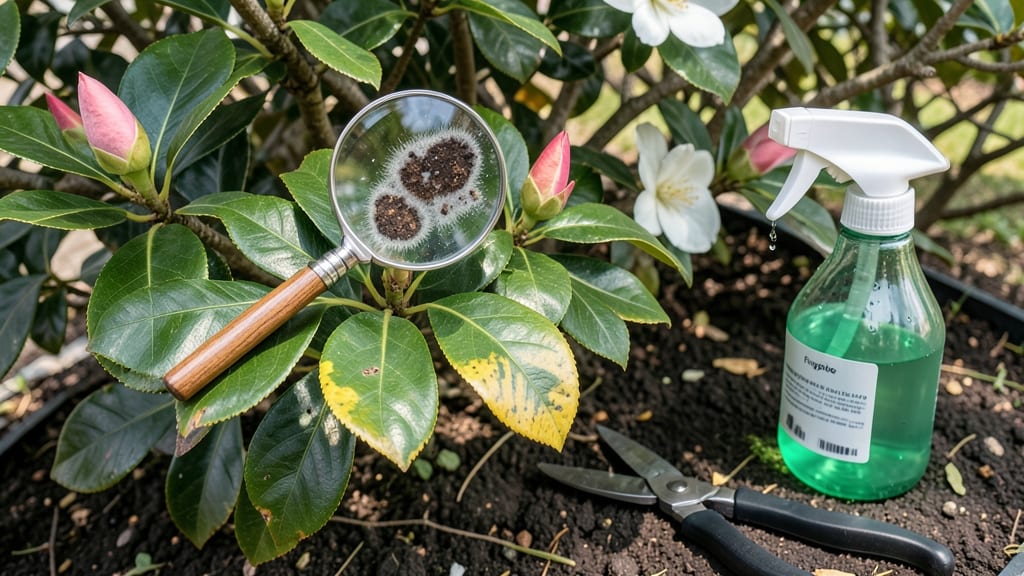
When your camellia leaves start showing signs of camellia leaf diseases—spotted, curled, or covered in black spots—you’re probably dealing with fungal blight. 🌿 I’ve seen this happen to even the hardiest camellias, and the key to saving them is catching the problem early before it spreads to the whole plant.
The right mix of pruning, fungicides, and soil care can turn things around faster than you’d expect.
Most fungal diseases on camellias—like petal blight or anthracnose—start with poor air circulation, wet foliage, or overcrowded branches. I’ve learned the hard way that skipping pruning or ignoring leaf litter under the plant turns a minor issue into a full-blown crisis.
The good news? With a few adjustments—like thinning out branches and cleaning up fallen leaves—you can create an environment where fungi struggle to take hold.
Once you spot the symptoms, act fast: remove infected leaves immediately, apply a copper-based fungicide, and make sure your plant isn’t sitting in soggy soil. Within a few weeks, you’ll see new growth pushing through, and those unsightly spots will fade—if you’ve caught it early enough.
The goal isn’t just to treat the disease but to break the cycle so your camellia stays healthy for years.
This works for both outdoor shrubs and container-grown camellias, though container plants need extra attention to drainage. If you’ve already lost a few leaves, don’t panic—most camellias bounce back surprisingly well once the infection is under control. Let’s get those leaves looking vibrant again.
Root Causes Behind Leaf Troubles
Understanding why camellia leaves develop diseases is the first step to prevention. These issues rarely pop up out of nowhere—they’re usually the result of environmental stress, pathogen invasion, or cultural mismanagement.
Below, we break down the key triggers behind common camellia leaf diseases, so you can address them before they spiral.
Fungi are the #1 culprit behind camellia leaf diseases, thriving in damp, humid conditions. Here’s how they exploit your plant:
- Overhead Watering 💦 Water droplets lingering on leaves create the perfect breeding ground for fungi like Colletotrichum (anthracnose) or Phyllosticta (camellia leaf spot). Unlike roots, leaves aren’t designed to dry quickly—soaking them keeps spores active for days.
- Poor Air Circulation 🌬️ Dense foliage or tight plantings trap moisture, raising humidity around leaves. Fungal spores spread faster in still air, turning minor spots into full-blown infections. Pro tip: Prune to open the canopy and space plants at least 3–4 feet apart.
- Warm, Wet Weather 🌡️ Fungi love temperatures between 70–85°F (21–29°C) with high humidity (above 70%).
If your region has frequent rain or you’re in a coastal area, fungal diseases like camellia blight become more aggressive. Solution: Avoid watering in the evening and use fungicides preventatively (copper-based or neem oil) during peak risk periods.
Bacterial leaf diseases (e.g., Xanthomonas or Pseudomonas) spread through wounds, tools, or even splashing water. Unlike fungi, bacteria multiply rapidly, causing oily spots, wilting, or leaf drop.
- Contaminated Tools or Hands 🔪 Pruners, shears, or even gloves can transfer bacteria from infected to healthy plants. Action step: Sterilize tools with 70% isopropyl alcohol before and after use.
- Physical Damage to Leaves ⚔️ Hail, strong winds, or rough handling create entry points for bacteria. Once inside, they trigger bacterial leaf spot, visible as water-soaked lesions that ooze when wet.
- Stress from Over-Fertilization 🌱 Too much nitrogen or synthetic fertilizers weaken camellias, making them susceptible to bacterial infections. Fix: Use balanced, organic fertilizers (like compost or fish emulsion) and follow the 1-2-2 ratio (N-P-K) for camellias.
Even without pathogens, camellias suffer when their basic needs aren’t met. Stress opens the door for diseases to move in:
- Improper Watering (Too Much or Too Little) 💧
- Overwatering: Soggy soil leads to root rot, which stresses the plant and makes leaves vulnerable to fungal attacks.
- Underwatering: Drought-stressed camellias have weak cell walls, making them easier targets for pathogens.
- Nutrient Deficiencies 🍃 Lack of magnesium (Mg) or iron (Fe) causes yellowing (chlorosis), which signals poor health. Weak leaves can’t fight off diseases as effectively. Test soil pH (camellias prefer 5.5–6.5) and amend with chelated iron or Epsom salt if needed.
- Extreme Temperature Shifts ❄️☀️ Sudden cold snaps or heatwaves shock camellias, reducing their resistance. Preventative tip: Mulch with pine bark or wood chips to regulate soil temperature and protect roots.
Some pests don’t just damage leaves—they carry pathogens or create wounds that invite infections. Watch for:
- Scale Insects & Mealybugs 🛡️ These sap-suckers weaken plants and excrete honeydew, a sticky substance that fosters sooty mold (a secondary fungal issue). Control them with neem oil or horticultural oil sprays.
- Spider Mites 🕷️ Their feeding scars disrupt leaf tissue, making it easier for bacteria or fungi to colonize. Combat them with water sprays (to increase humidity) or predatory mites.
Diseases don’t stay put—they hitchhike on debris, tools, or even your shoes. Prevention starts with cleanliness:
- Leaving Infected Debris 🍂 Fallen leaves with spots or lesions should be removed and destroyed (don’t compost them!). Pathogens can survive in organic matter for months.
- Reusing Contaminated Mulch 🌿 Old mulch may harbor fungal spores. Replace it with fresh, sterile options like pine straw or cypress mulch.
- Ignoring Benches or Greenhouse Surfaces 🏠 Fungal spores can linger on hard surfaces. Wipe down benches, pots, and tools with a 10% bleach solution (1 part bleach to 9 parts water) to break the disease cycle.
Revive Your Camellia’s Health
If your camellia’s leaves are showing signs of disease, don’t panic—most issues can be turned around with the right care. Below, we’ve mapped out practical, step-by-step solutions for common fungal infections, bacterial spots, and environmental stressors.
Follow these fixes based on the symptoms you’ve spotted, and don’t forget the prevention tips to keep your camellia thriving long-term!
Fungal diseases thrive in damp, shaded conditions. Act fast to prevent spread!
🔥 Step 1: Remove Infected Leaves
- 👨🍳 Snip off any leaves with dark brown spots, yellowing, or fuzzy white growth (powdery mildew).
- ⏰ Do this in the morning so the plant has time to dry before evening humidity sets in.
- 🗑️ Dispose of infected leaves in the trash (not compost)—fungi can survive and reinfect.
🍳 Step 2: Apply Fungicide
- 💡 Best options:
- Neem oil (natural, safe for bees when used early in the day).
- Copper fungicide (kills a wide range of fungi; follow label rates).
- Baking soda spray (1 tsp baking soda + 1 quart water + a drop of dish soap; spray undersides of leaves).
- 🌡️ Apply when leaves are dry and temperatures are below 85°F (fungicides can burn leaves in extreme heat).
🌿 Step 3: Improve Airflow & Light
- ✂️ Prune overcrowded branches to allow sunlight and air to circulate.
- 🌞 Move camellias to a spot with 4–6 hours of sunlight (avoid dense shade).
- 💨 Use a fan on low setting near the plant for 10–15 minutes daily if humidity is high.
🔄 Prevention Tips for Fungi
- 💡 Water at the base (avoid wetting leaves).
- 🌧️ Water in the morning so foliage dries quickly.
- 🍂 Clean up fallen leaves around the plant (fungi love hiding there).
- ✨ Space plants 3–5 feet apart to reduce humidity buildup.
Bacterial infections spread quickly—isolate and sanitize!
🔪 Step 1: Sterilize Your Tools
- 🧼 Wash pruners with 70% isopropyl alcohol or a 10% bleach solution (1 part bleach to 9 parts water) before and after trimming.
- 🚫 Avoid pruning in wet weather—bacteria spread via water splashes.
🍳 Step 2: Prune Aggressively
- ✂️ Cut out infected leaves and stems (including ½ inch of healthy tissue below the spot).
- 🗑️ Bag and discard infected plant debris (do not compost).
💊 Step 3: Use Copper or Antibacterial Spray
- 💡 Best options:
- Copper fungicide (also works on bacteria).
- Hydrogen peroxide spray (3% solution, spray until damp; repeat every 7–10 days).
- ⏰ Apply in the evening to avoid leaf burn from UV exposure.
🌿 Step 4: Adjust Watering Habits
- 💧 Water deeply but infrequently (let soil dry between waterings).
- 🚰 Use drip irrigation instead of overhead sprinklers.
- 🌧️ Avoid watering late in the day (keeps leaves wet overnight).
🔄 Prevention Tips for Bacteria
- 💡 Plant in well-draining soil (amend with compost or perlite if needed).
- 🌡️ Space plants properly to reduce humidity.
- 🍂 Mulch with bark or gravel (not organic mulch, which can harbor bacteria).
- 🌱 Rotate crops if growing camellias in containers (avoid replanting in the same soil).
Sometimes, "disease-like" symptoms are actually nutrient deficiencies, pests, or weather damage.
💡 Step 1: Check for Hidden Pests
- 🔍 Inspect leaves for aphids, spider mites, or scale insects (common culprits).
- 🍳 Treat with insecticidal soap or neem oil if pests are found.
🥗 Step 2: Adjust Soil & Fertilizer
- 📊 Test soil pH (camellias prefer 5.5–6.5). Use sulfur to lower pH if needed.
- 💪 Fertilize with acid-loving plant food (e.g., 8-3-9 or 10-10-10 with iron).
- 🍎 Avoid over-fertilizing (too much nitrogen = soft, susceptible leaves).
🌞 Step 3: Protect from Extreme Conditions
- 🌡️ Shield from afternoon sun if leaves look scorched (use shade cloth).
- 🌧️ Mulch heavily (2–3 inches) to retain moisture and regulate soil temperature.
- 💧 Water consistently (camellias hate drought stress but also dislike soggy roots).
🔄 Prevention Tips for Stress
- 💡 Plant in partial shade (especially in hot climates).
- 🌱 Choose disease-resistant varieties (e.g., ‘Nuccio’s Gem’ or ‘Spring’s Promise’).
- 🌿 Prune for airflow (avoid dense, bushy growth).
- ✨ Monitor regularly—catch issues before they spread!
With these targeted fixes, your camellia should bounce back in 4–6 weeks. Stay vigilant, and soon you’ll be admiring healthy, vibrant foliage—no more mysterious spots or wilting leaves! 🌿✨
Frequently asked questions
Can I use household items like vinegar or baking soda to treat camellia leaf diseases?
Yes, but with caution! A baking soda spray (1 tsp baking soda + 1 quart water + a drop of dish soap) works well for fungal diseases like powdery mildew. For vinegar, use a diluted solution (1 tbsp white vinegar per gallon of water) as a fungicide, but avoid spraying when the sun is strong—it can burn leaves. Always test on a small area first.
How do I tell if my camellia has a fungal infection vs. a bacterial infection?
Fungal spots often appear as dry, brown, or powdery patches (like powdery mildew) and may have fuzzy growth. Bacterial spots, however, look oily, water-soaked, or yellowish and often ooze when wet. Check the edges: fungal spots have feathery or irregular borders, while bacterial spots are usually ragged or greasy-looking.
Will pruning help prevent camellia leaf diseases?
Pruning improves air circulation and sunlight exposure, both of which reduce humidity around leaves—the perfect breeding ground for fungi. Remove dead or crowded branches and thin out dense foliage to create space. Just remember to sterilize your tools with 70% isopropyl alcohol to avoid spreading bacteria.
Can I save a camellia that’s already lost most of its leaves to disease?
It depends on the severity! If the roots are still healthy (check by gently scraping soil away), the plant can often regrow. Prune back severely infected branches, apply a copper fungicide, and adjust care (like watering habits and sunlight). For container-grown camellias, repotting into fresh, well-draining soil may help. Patience is key—new growth can take 4–8 weeks.
Are there any camellia varieties that are more resistant to leaf diseases?
Yes! Varieties like ‘Nuccio’s Gem’, ‘Spring’s Promise’, and ‘Tanya’ are bred for better disease resistance. These hybrids often handle humidity and fungal pressure better than heirloom types. If you’re in a high-risk area, ask your local nursery for disease-resistant cultivars suited to your climate.