
Leaf Blower
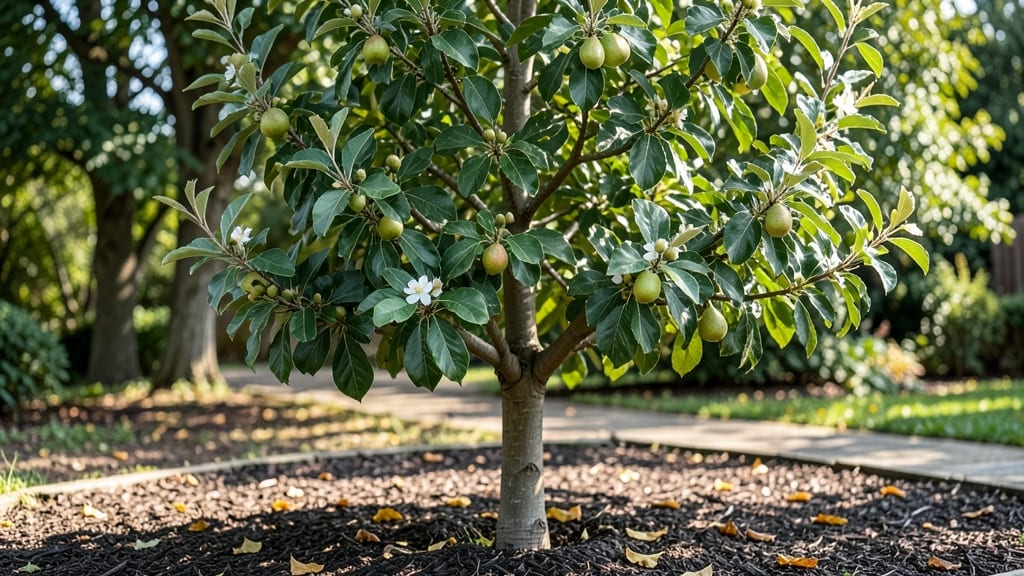
A Bartlett pear leaf is oval-shaped with serrated edges, glossy dark green tops, and lighter undersides, featuring a slightly waxy texture. These leaves grow on Pyrus communis trees and help identify the fruit-bearing variety before harvest season.
A Bartlett pear leaf is one of the easiest ways to confirm you're dealing with the classic Bartlett variety before the fruit even ripens. 🌿 The serrated edges and waxy surface aren't just for show—they help repel pests while allowing sunlight to penetrate efficiently.
I always check for these specific traits when scouting orchards, as they're far more reliable than fruit color alone. The undersides often develop a faint powdery coating as the leaves mature, which is another key identifier for experienced growers.
What makes these leaves particularly interesting is how their appearance changes with the seasons. New growth emerges with a vibrant reddish tint before hardening into the signature dark green, and autumn brings subtle yellowing along the edges.
This seasonal transformation gives growers a natural calendar for pruning and pest control timing.
💡 In This Article
- Visual and Botanical Features of Bartlett Pear Leaves
- Optimal Conditions for Growing Bartlett Pear Trees
Visual and botanical features of Bartlett pear leaves
Bartlett pear leaves stand out with their oval shape measuring about 2-4 inches long and 1-2 inches wide, tapering slightly at the base. The edges feature fine serrations that create a sawtooth pattern, which helps distinguish them from Anjou leaves that have smoother margins.
The upper surface boasts a deep, glossy green hue that reflects light beautifully, while the undersides appear lighter with a subtle waxy bloom that repels water and dust.
The leaf veins form an intricate network with a central midrib and secondary veins branching out at 45-degree angles, creating a pattern almost like a feather.
This vein structure helps the leaf efficiently transport nutrients and water from the tree's roots to the fruit. 🌿 What's fascinating is how the leaf's texture changes with age—young leaves start with a soft, almost fuzzy appearance before developing their signature waxy coating as they mature.
Seasonal color shifts provide another clue for identification. New growth emerges with pinkish-red hues that gradually darken to the mature green, while autumn brings golden-yellow edges before leaf drop. This color progression differs from Bosc pears, whose leaves maintain a duller green throughout the season.
The waxy coating also makes Bartlett leaves slightly slippery to the touch when rubbed between fingers, a trait shared with other pear varieties but more pronounced in Bartletts.
One of the most reliable distinguishing features is the leaf's size-to-serration ratio. Bartlett leaves have shorter, more frequent serrations compared to Anjou's longer, less frequent teeth. The glossy finish also helps them withstand rain better than other varieties, reducing fungal risks.
This combination of visual traits makes Bartlett leaves a botanist's favorite for quick field identification.
For growers, these leaf characteristics directly impact fruit quality. The waxy surface helps maintain moisture levels in the leaves, which translates to juicier pears.
The serrated edges also create more surface area for photosynthesis, giving Bartlett trees their reputation for high yields. 🌱 Understanding these botanical details helps explain why Bartlett pears consistently produce fruit with that signature sweet-tart balance.