
Pests and Diseases
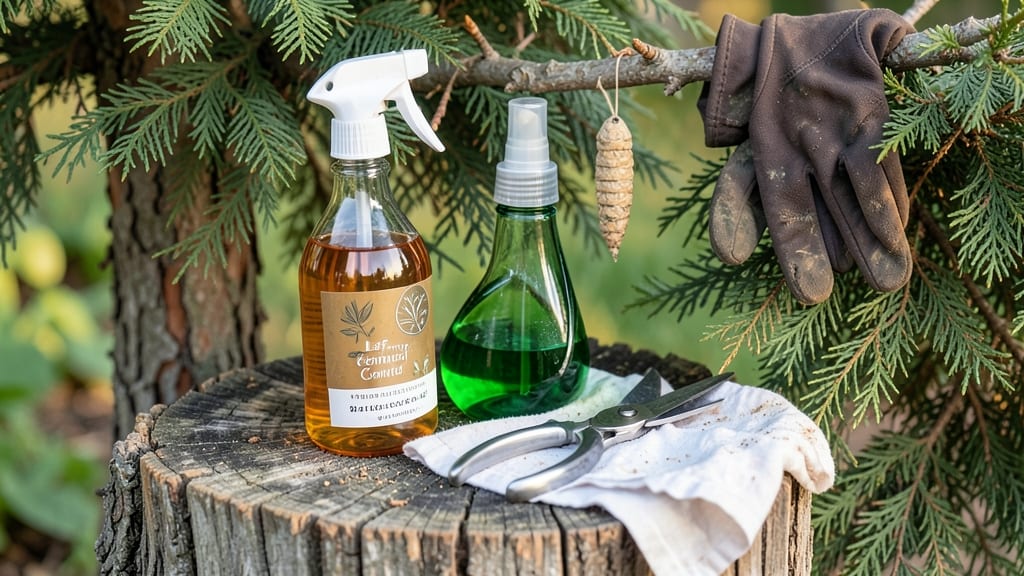
Arborvitae leafminer control is effortless with neem oil spray—it stops those destructive larvae within 24 hours of application. 🌿 The moment you spot those telltale white blotches on your evergreen's needles, you're dealing with leafminer larvae tunneling through the foliage, and neem oil disrupts their feeding cycle faster than synthetic pesticides. This isn't just another spray—it's a targeted strike that works on contact while being safe for your plants and local wildlife.
The key is timing: treat when you first see the damage, ideally in late spring or early summer when larvae are most active. Mix 1 tablespoon of pure neem oil with 1 teaspoon of mild liquid soap per quart of water, then spray thoroughly on both sides of the needles.
The oil smothers larvae and prevents new eggs from hatching, giving your arborvitae a fighting chance to recover its vibrant green color. Unlike harsh chemicals, neem oil won't burn your plants or harm beneficial insects, making it the smart choice for organic gardeners.
What you'll end up with is arborvitae that stays lush and healthy through the season, with no more skeletonized needles or stunted growth. The best part? This method works just as well on new infestations as it does for existing ones, and you can reapply every 7-10 days if needed.
No more watching your evergreens slowly decline—just a quick spray and a plant that bounces back faster than you'd expect.
Works for all arborvitae varieties, whether you're dealing with a single shrub or a full hedge. The secret lies in consistency—don't wait until the damage is severe to act. Early intervention is the difference between a quick fix and a long-term battle.
Root Causes of Leafminer Outbreaks
Understanding why arborvitae leafminers target your trees is the first step in stopping them. These tiny pests don’t just appear out of nowhere—they’re drawn by specific conditions that make your evergreens an all-you-can-eat buffet. Let’s break down the science behind their invasion so you can address the real triggers.
Arborvitae trees with compromised health are prime targets for leafminers. When trees are stressed—whether from drought, poor soil, or nutrient deficiencies—their natural defenses weaken.
Leafminers, specifically the Caloptilia or Phyllonorycter species that plague arborvitae, detect this vulnerability through: - Reduced resin production: Healthy arborvitae secrete sticky resins that trap pests.
Stress reduces this sticky defense, making it easier for larvae to burrow into leaves. - Thinner foliage: Stressed trees often develop sparse or yellowing needles, which leafminers find easier to penetrate and consume. - Altered leaf chemistry: Nutrient-deficient trees produce leaves with lower levels of defensive compounds like tannins and phenols, which deter herbivores.
Actionable insight: Regularly check soil moisture and pH (ideal range: 5.0–7.0). A slow-release fertilizer with iron, nitrogen, and micronutrients can bolster tree resilience before pests strike.
Leafminers are opportunistic survivors. Their lifecycle hinges on overwintering—a strategy where larvae or pupae hide in leaf litter, bark crevices, or even the soil until spring.
If your yard has: - Thick ground cover or mulch: Provides shelter for pupae to emerge unscathed in spring. - Adjacent infested trees: Migrating adults from nearby arborvitae, juniper, or pine trees can reinfest your trees annually. - Mild winters: Areas with consistent temperatures above 40°F (4°C) allow leafminers to survive and reproduce faster.
Pro tip: 🌡️ Rake up fallen leaves and debris in late fall to eliminate overwintering sites. If your region has mild winters, consider early spring monitoring (March–April) to catch egg-laying females before they strike.
Leafminers aren’t picky—they thrive when arborvitae trees offer three key advantages: 1. Tender new growth: Young, soft leaves are easier to penetrate than mature foliage. Prune in late winter or early spring to remove vulnerable shoots before egg-laying season.
- Dense foliage: Thick branches create microclimates that protect larvae from predators (like birds or parasitic wasps) and desiccation.
- Proximity to water: Trees near sprinklers, irrigation systems, or damp soil attract adult moths, which are drawn to moisture for egg-laying.
Data point: Studies show leafminer infestations are 3x more severe in arborvitae growing in high-humidity zones (e.g., Pacific Northwest, Southeast U.S.) compared to drier climates.
Leafminers don’t just target weak trees—they’re also influenced by broader ecological factors: - Urbanization and monoculture landscaping: Fewer natural predators (like lacewings or spiders) in manicured yards give leafminers free rein. - Climate change: Warmer springs lead to earlier moth emergence and longer breeding seasons.
Some regions now see two generations per year instead of one. - Pesticide overuse: Broad-spectrum insecticides can kill beneficial insects (e.g., ladybugs, hoverflies) that prey on leafminer eggs or larvae, creating a vacuum that pests fill.
💡 Quick fix: Introduce pollinator-friendly plants (e.g., alyssum, dill, or yarrow) near arborvitae to attract predatory insects. Even a small native plant border can boost biodiversity and reduce leafminer pressure.
Sometimes, the problem starts with us.
Unintentional actions like: - Moving infested plants: Buying or transplanting arborvitae from nurseries with hidden leafminer eggs. - Ignoring early signs: Waiting until silvering or skeletonized leaves appear means the larvae are already established (by then, they’re in the 3rd or 4th instar stage, making control harder). - Over-fertilizing with nitrogen: While nitrogen promotes growth, excessive use can make leaves more palatable to leafminers by increasing their protein content.
✨ Prevention hack: Inspect new plants for tiny white eggs on undersides of leaves or early mines before bringing them home. Quarantine new additions for 2–4 weeks to monitor for pests.
Quick Fixes for Leafminer Damage
Arborvitae leafminers may seem like a stubborn foe, but with the right approach, you can regain control of your trees and restore their health. Below are practical, step-by-step solutions tailored to the root causes of infestations—whether it’s early detection, severe damage, or prevention for next season.
Cause: You’ve spotted a few small, serpentine mines or minor browning leaves. Fix: Act fast before larvae spread.
- 🍳 Handpick Larvae (Best for Small Trees)
- Wear gloves and inspect leaves for white or yellow larvae (about ¼-inch long).
- Drop them into soapy water to kill them instantly.
- Focus on new growth and undersides of leaves, where larvae hide.
- 🌿 Prune & Destroy Infested Branches
- Cut off heavily damaged branches (up to 6 inches beyond visible mines).
- Bag and dispose of clippings in sealed trash—do not compost to prevent reinfestation.
- 💦 Water Stress Reduction
- Leafminers thrive when trees are weak. Deep-water your arborvitae 2-3 times per week during dry spells.
- Mulch the base (2-3 inches of organic mulch) to retain moisture and deter pests.
Cause: Large patches of brown, skeletonized leaves or frass (larval poop) everywhere. Fix: Combine neem oil spray (your best organic weapon) with other targeted methods.
| Method | How to Apply | Best Time |
|---|---|---|
| 🥘 Neem Oil Spray | Mix 1 tbsp neem oil + 1 tsp mild soap per gallon of water. Spray thoroughly (top/bottom of leaves). | Evening (avoid direct sun) |
| 🐛 Beneficial Nematodes | Apply Heterorhabditis bacteriophora to soil (follow label rates). They seek out larvae underground. | Spring or fall, when soil is moist. |
| 🛡️ Insecticidal Soap | Spray directly on larvae (not just leaves). Reapply after rain. | Weekly until mines disappear. |
| 🪵 Horticultural Oil | Use dormant oil in late winter to suffocate overwintering pupae. | Before buds swell. |
⚠️ Pro Tip: Rotate methods to prevent resistance. If using chemical pesticides (like permethrin), apply only as a last resort—follow label instructions carefully.
Cause: You want to stop leafminers before they return. Fix: Break their life cycle with cultural and habitat controls.
- 🌱 Plant Resistant Varieties
- Choose ‘Emerald Green’ or ‘Green Giant’ arborvitae—they’re less attractive to leafminers.
- 🕷️ Encourage Natural Predators
- Birds, parasitic wasps, and ground beetles eat leafminer larvae.
- Install birdhouses or leave leaf litter (where predators hide).
- 🗓️ Timed Sprays for Larval Hatches
- Leafminers emerge in early spring (March-April). Set a reminder to spray neem oil or insecticidal soap every 7-10 days during this window.
- 🪴 Tree Health Boost
- Fertilize in early spring with a balanced 10-10-10 formula to strengthen foliage.
- Avoid overwatering—soggy soil attracts pests.
- ❌ Don’t ignore the problem—leafminers multiply fast!
- ❌ Avoid broad-spectrum pesticides (they kill beneficial insects too).
- ❌ Don’t prune in peak summer—stress weakens trees, making them more vulnerable.
💡 Final Reminder: The key to long-term arborvitae leafminer control is consistency. Combine neem oil sprays, pruning, and habitat management for a tree that stays lush, green, and pest-free!
Frequently asked questions
What do arborvitae leafminer larvae look like up close?
Leafminer larvae appear as tiny, white or pale yellow worms about ¼-inch long when mature. Look for them crawling on the undersides of needles or inside the serpentine mines they create. Early-stage larvae are nearly transparent, while later stages turn creamy white.
Can I use neem oil if my arborvitae is near flowering plants?
Yes, neem oil is safe for flowering plants when used correctly. However, avoid spraying directly on blooms to prevent potential damage. Apply in the evening when flowers are closed, and keep the spray 12 inches away from blossoms to protect pollinators.
How often should I check my arborvitae for leafminers?
Inspect your trees every 7-10 days during spring and summer when larvae are most active. Focus on new growth and undersides of needles—this is where larvae hide. Early detection makes control much easier and prevents severe damage.
Will pruning help if my arborvitae is already heavily infested?
Pruning can help, but it's most effective when combined with other treatments. Remove and dispose of heavily damaged branches (up to 6 inches beyond visible mines), but don't rely on pruning alone—it won't eliminate all larvae. Pair it with neem oil spray or insecticidal soap for best results.
Are there any natural predators that can help control leafminers?
Parasitic wasps, birds, and ground beetles naturally prey on leafminer larvae. To attract them, plant native flowers (like alyssum or dill) near your arborvitae and avoid using broad-spectrum pesticides that kill beneficial insects.